# Gold Price Outlook as U.S. Consumer Stress Signals Recession Risk
U.S. consumer stress is rising sharply, and that matters for gold price trends because worsening household finances can slow economic growth, lift recession fears, and revive safe-haven demand for bullion. For Indian investors, the latest U.S. data adds an important macro signal to watch alongside XAUUSD, the U.S. dollar, Treasury yields, and the rupee.
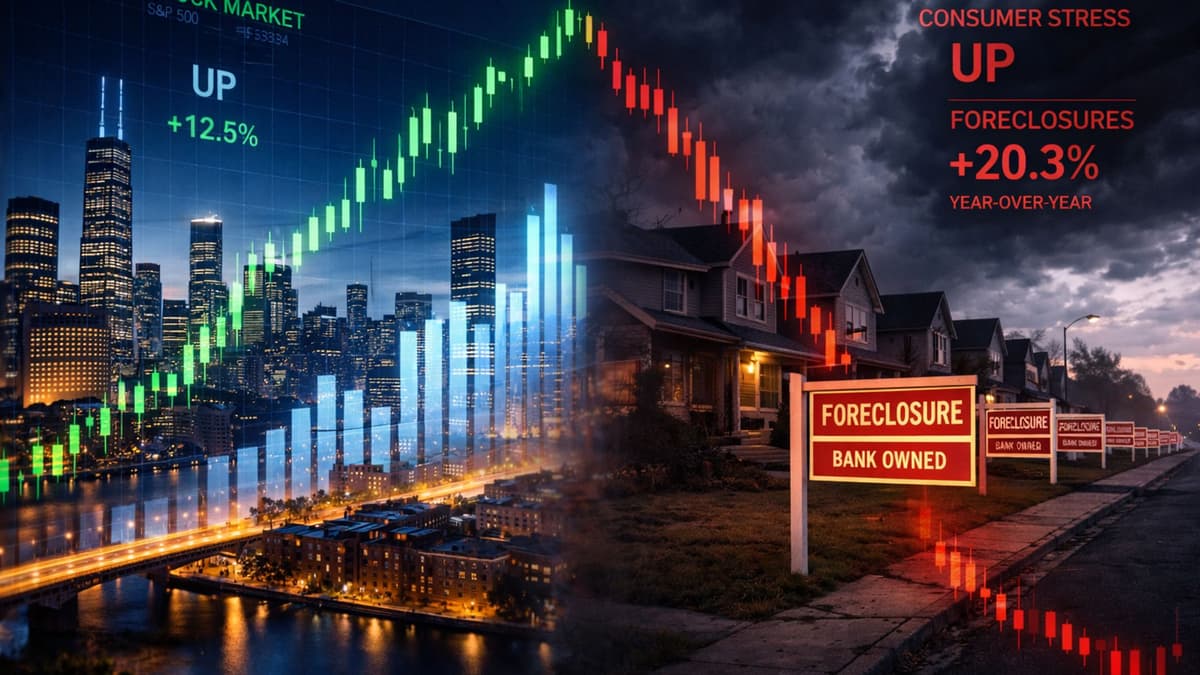
LegalShield’s latest Consumer Stress Legal Index shows that foreclosure-related legal requests jumped 20.3% year-over-year in the first quarter, hitting their highest level since the pandemic began. The broader index also remained elevated at 72.9, up 11.6% from a year ago, pointing to persistent pressure on U.S. households.
What does rising U.S. consumer stress mean for gold price outlook?
Rising U.S. consumer stress supports a constructive gold price outlook because deeper financial strain can weaken growth and increase safe-haven buying. When investors start pricing in recession risk, gold and other precious metals often benefit.
The source data points to a widening K-shaped U.S. economy. Equity markets have remained relatively healthy, but households are facing increasing financial pressure. That gap matters for bullion because strong stock performance can coexist with underlying economic weakness for a time, but broad household stress often becomes a more serious macro signal later.
According to LegalShield, the broader Consumer Stress Legal Index, or CSLI, tracks more than 150,000 monthly legal consultations. That index stood at 72.9 and was up 11.6% from a year ago. The report said this continued elevation signals persistent strain across multiple areas of household finances.
For gold investors in India, this kind of U.S. stress indicator matters because the United States still drives global risk sentiment. If household weakness starts to feed into slower spending, weaker growth, or a shift in Federal Reserve expectations, XAUUSD can react quickly.
Why are foreclosure risks rising in the United States?
Foreclosure risks are rising because housing-related costs are climbing, especially insurance, and many households can no longer absorb sudden payment increases. LegalShield said foreclosure-related legal requests surged 20.3% year-over-year in the first quarter, reaching their highest level since the onset of the pandemic.
The report said the spike shows a shift from financial concern to concrete distress. More households are now seeking legal assistance to manage housing-related issues rather than simply asking precautionary questions.
In an interview with Kitco News, Matt Layton, senior vice president of Consumer Analytics for LegalShield, said the data offers little reason to expect near-term improvement. He said, “Nothing in our data is currently leading us to expect improvement going forward.”
How much are housing costs contributing?
Housing costs are contributing heavily, with insurance emerging as a major pressure point. Quoting Dallas Federal Reserve data, the report said insurance premiums are up about 70% since 2019 and now make up 14% of the average monthly mortgage payment.
Layton said many consumers do not fully anticipate these changes until the payment shock arrives. He told Kitco News, “Most people don’t even know when that happens. They just see their March payment jump by $200 or $400—and if they were already struggling, that’s a non-negotiable increase.”
For Indian investors tracking global gold price drivers, this matters because housing stress can spill into credit conditions, consumer demand, and broader market sentiment. A deteriorating U.S. housing backdrop often pushes investors toward safe-haven assets such as gold.
How soon could rising foreclosure stress hit the real economy?
The impact could show up quickly because LegalShield’s foreclosure index typically leads actual foreclosure filings by 30 to 45 days. That makes the current jump an early warning signal rather than a backward-looking statistic.
Layton said financial pressure tends to deepen in stages. He explained that households first try to decide which bills to pay, but as stress persists, they move deeper into the funnel until some can no longer make house payments.
He also warned that rising consumer stress could lead to slower economic activity through the summer. If that slowdown becomes clearer in U.S. macro data, gold price action could strengthen, especially if markets begin to anticipate weaker growth or a more cautious Federal Reserve.
Why does this matter for Indian gold buyers?
This matters for Indian gold buyers because U.S. recession risk can lift international bullion prices in troy ounce terms, even if local rupee pricing also depends on USD/INR. A stronger gold price in XAUUSD can raise domestic rates, while rupee weakness can amplify those gains further for Indian consumers and investors.
That means Indian buyers should watch not only COMEX and spot gold, but also U.S. consumer data, housing indicators, and rupee moves. A global safe-haven bid can quickly translate into higher local gold prices.
What do bankruptcy trends say about recession risk and bullion demand?
Bankruptcy trends are worsening, and that strengthens the recession-risk narrative that often supports bullion demand. LegalShield’s Bankruptcy Index has more than doubled since the Federal Reserve began raising interest rates in 2022 and continues to climb.
Layton said the trend suggests bankruptcy filings will increase through mid-2026. He added that the bankruptcy index typically leads official filings by up to two quarters, making it another forward-looking warning sign for household balance sheets.
Although current stress levels remain below the peaks seen during the 2008 financial crisis, Layton said the direction is troubling. He told Kitco News, “We’re nowhere near those highs. But we’re on an upward trajectory in that direction, and our data shows nothing that would suggest that changes.”
Could multiple stress signals trigger a broader downturn?
Yes, that is the key risk. Layton said consumer financial stress, foreclosure activity, and bankruptcy trends are all rising at the same time, and that combination has historically preceded broader economic downturns.
He said, “I don’t know how much longer all of these can continue to rise together without triggering some type of recession.” For gold, that kind of warning matters because recession fears often increase demand for safe-haven assets and can shift investor flows into precious metals.
How is inflation adding to household stress and supporting safe-haven interest?
Inflation is making the pressure worse by raising essential living costs, especially gasoline. In its Consumer Price Index report published Friday, the U.S. Bureau of Labor Statistics said the gasoline index jumped 21.2% last month and accounted for nearly three-quarters of the monthly all-items increase.
Layton pointed to gas prices as an example of how quickly external shocks can hit already-stretched households. He said, “Everyone’s got to fill up their car. That’s money coming directly out of the same households that are already reporting higher stress.”
For gold price outlook, this creates a more complex macro mix. Sticky inflation can keep pressure on interest rates, but it can also undermine real household purchasing power and increase economic fragility. That combination often keeps gold relevant both as an inflation-sensitive asset and as a safe-haven trade.
What should Indian investors watch next for gold price direction?
Indian investors should watch whether rising U.S. consumer stress starts feeding into weaker growth data, higher foreclosure filings, and stronger recession fears. The most important near-term signals are follow-through in actual filings over the next 30 to 45 days, bankruptcy data through mid-2026, inflation trends, and any shift in Federal Reserve rate expectations.
If U.S. household stress keeps building while growth slows, gold could find fresh support in global markets. For India, the next layer is currency impact: if XAUUSD rises and USD/INR stays firm or moves higher, domestic bullion prices could remain elevated even faster than global benchmarks suggest.