# Gold Price Jumps to $4,771 as Dollar and Yields Weaken
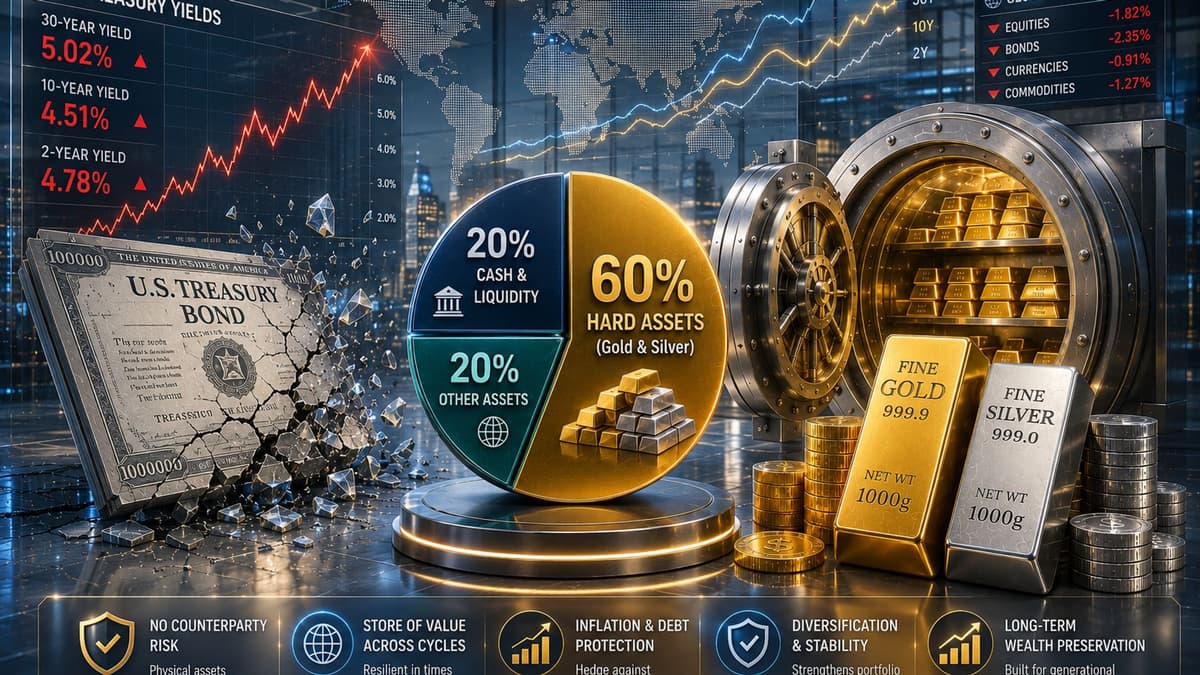
Gold prices rose sharply in early U.S. trading as a weaker U.S. dollar index and softer bond yields improved sentiment for bullion. Silver also moved higher, though its gains were smaller than gold’s.
June gold futures were last up $93.90 at $4,771.70 per troy ounce, while May silver futures rose $0.321 to $75.24. For Indian investors, the move matters because global XAUUSD strength can support domestic gold rates even if the rupee stays stable, and INR weakness would amplify that effect further.
Why did gold prices rise today?
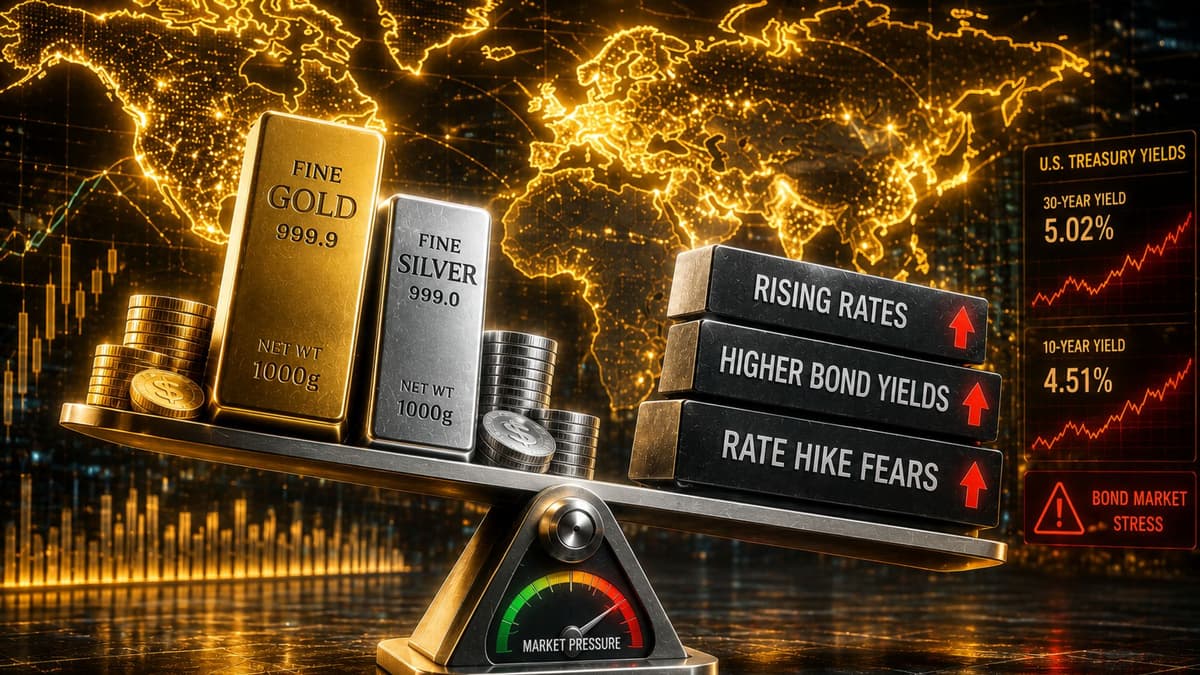
Gold prices rose because the U.S. dollar index weakened and bond yields eased, making non-yielding precious metals more attractive. Those two outside-market signals gave both gold and silver a bullish backdrop at midweek.
A softer dollar typically improves gold demand because bullion becomes cheaper for buyers using other currencies. Lower yields also reduce the opportunity cost of holding gold, which does not pay interest.
The key outside markets showed Nymex WTI crude oil around $100.00 a barrel, a lower U.S. dollar index, and the benchmark 10-year U.S. Treasury yield at 4.28%. Together, those signals helped lift gold price momentum in futures trading.
For Indian buyers, international gold moves often filter into local prices through import costs, MCX gold contracts, and rupee-dollar conversion. If global gold remains elevated near record levels, Indian retail prices can stay firm even during periods of softer wedding or festive demand.
How is the Iran war affecting gold and silver prices?
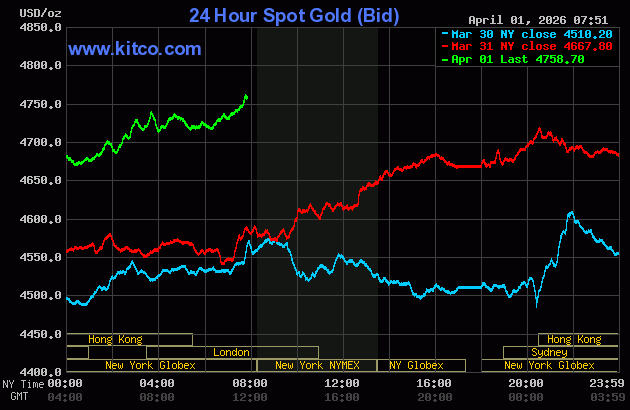
The Iran war is shaping safe-haven demand, oil prices, and broader risk sentiment, all of which influence gold and silver. On this trading day, however, markets focused more on hopes for de-escalation than on fresh panic.
The latest developments included several major geopolitical signals:
- Donald Trump said he foresees the U.S. exiting the Iran war in two to three weeks and was set to address the nation.
- Iran launched attacks on Israel, Bahrain, Kuwait, an oil tanker off Qatar, and the UAE.
- Trump threatened to pull the U.S. from NATO in comments to The Telegraph.
- The U.K. will host a multi-nation meeting on reopening the Strait of Hormuz.
- WTI crude oil slipped to near $100 on optimism that the Iran war could move toward resolution.
- Asian and European stocks rallied the most in a year on hopes that the war may end.
- A third U.S. aircraft carrier is heading to the Middle East as the conflict continues.
For Indian investors, the Strait of Hormuz remains a critical watchpoint because it affects crude oil flows and India’s imported energy bill. If oil spikes again, it could weaken the rupee and indirectly push domestic gold prices higher even if international bullion steadies.
What is the CFTC watching in crude oil futures?
The Commodity Futures Trading Commission is watching crude oil futures for unusual trading activity after sharp price swings linked to Iran-war headlines. That matters for gold because volatile oil prices can reshape inflation expectations, risk appetite, and safe-haven flows.
According to Bloomberg, CFTC Enforcement Director David Miller said on Tuesday that the regulator is monitoring trading in the crude oil futures market. Speaking on the sidelines of an event in New York, Miller said: “I can’t comment on what we’re investigating or not investigating. All I’ll just say is we’re watching.”
Miller declined to comment further. Bloomberg had reported last week that trading in Nymex crude oil futures spiked lower in the minutes before a March 23 social media post from President Donald Trump about postponing strikes on Iran.
This matters to bullion traders because energy shocks can quickly spill into inflation trades, bond markets, and the U.S. dollar. If oil volatility deepens, gold could see sharper two-way moves as traders reassess both geopolitical risk and Federal Reserve expectations.
What are the key technical levels for gold price now?
Gold bulls remain focused on a breakout toward $5,000, while bears need to force prices below $4,300 to regain near-term control. Current trading levels show gold is still in the middle of a wide and volatile range.
June gold futures levels
According to the technical outlook in the source report, June gold futures bulls’ next upside price objective is a close above solid resistance at $5,000.00. The bears’ next near-term downside price objective is pushing futures prices below solid technical support at $4,300.00.
The immediate upside resistance levels are:
- $4,800.00
- $4,900.00
- $4,700.00
- $4,600.00
For Indian investors tracking COMEX and MCX, these resistance and support zones are important because they often influence short-term trading sentiment in domestic bullion markets. A sustained push above $4,800 in international markets could translate into another leg up in Indian gold rates if the rupee does not strengthen meaningfully.
What are the key technical levels for silver price now?

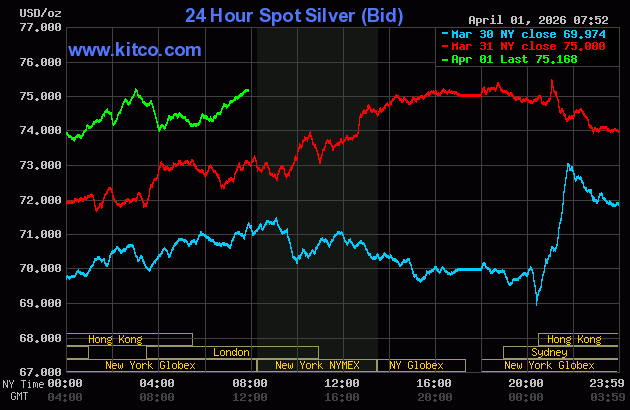
Silver is still targeting a move above $80.00, while bears are eyeing a deeper drop below the March low of $61.21. The metal rose on the day, but its technical structure remains finely balanced.
May silver futures levels
The report said May silver futures bulls’ next upside price objective is closing prices above solid technical resistance at $80.00. The next downside price objective for bears is a close below solid support at the March low of $61.21.
The immediate resistance levels are:
- $76.00
- $77.50
- $72.00
- $70.00
For Indian investors, silver often shows higher volatility than gold and can react more sharply to changes in industrial demand and risk sentiment. If silver clears $76 and $77.50 decisively, domestic silver prices may strengthen quickly, especially if the rupee weakens alongside rising global commodity prices.
How do spot and futures gold prices differ?
Gold trades through spot and futures pricing systems, and the distinction matters when investors compare international quotes with market headlines. Spot gold refers to on-the-spot purchase and immediate delivery, while futures prices refer to delivery at a later date.
The source note added that, due to year-end positioning market liquidity, the December gold futures contract is currently the most actively traded on the CME. Even so, the article’s main trading references were for June gold futures and May silver futures.
For Indian readers, this distinction is useful when comparing COMEX prices, XAUUSD spot moves, and MCX contracts. Futures prices can diverge from spot prices because of interest rates, time to delivery, and market positioning.
Gold now heads into the next trading sessions with three major watchpoints: whether the U.S. dollar index stays weak, whether the 10-year Treasury yield remains near or below 4.28%, and whether Iran-war headlines push crude oil sharply away from $100 a barrel. If the dollar and yields continue to soften, gold price momentum could test $4,800 next, a level Indian bullion investors should watch closely.