# Gold Price Jumps as Dollar Weakens After Oil Shock Reversal
Spot gold and spot silver rallied sharply in early U.S. trading on Wednesday as the U.S. dollar weakened, U.S. Treasury yields eased, and crude oil prices plunged on hopes of an Iran ceasefire deal. For Indian investors, the move matters because global bullion prices, the dollar trend, and oil-led inflation expectations all feed directly into imported gold costs and rupee gold pricing.
Why did gold price rise sharply today?
Gold price rose because a weaker U.S. dollar, lower U.S. Treasury yields, and a sudden collapse in crude oil prices revived buying across precious metals. Those three macro drivers improved demand for bullion even after stronger-than-expected U.S. jobs data.
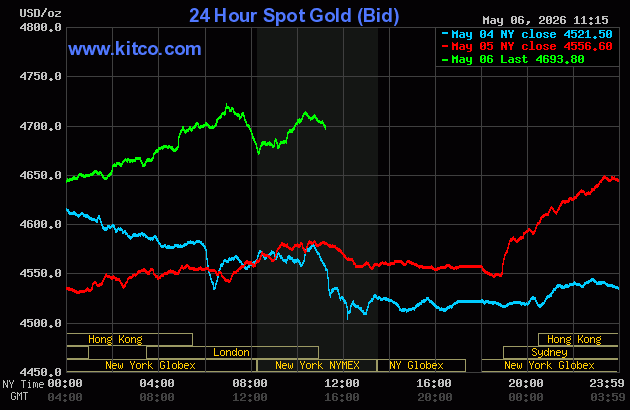
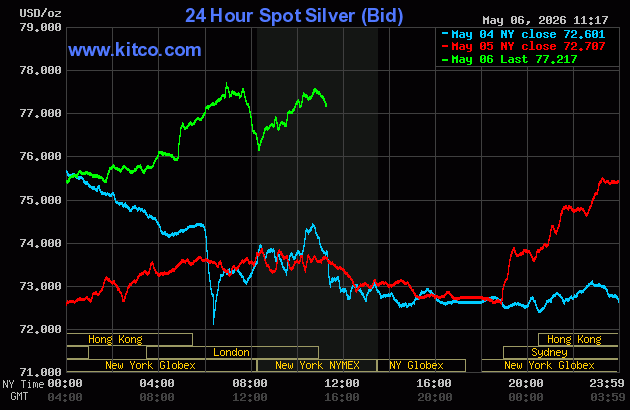
At the time of writing, spot gold traded near $4,683.28 per troy ounce, up 2.77% over the past 24 hours. Spot silver traded at $76.840, up 5.52% from Tuesday’s price.
The rally showed that cross-asset flows, not just economic data, drove XAUUSD and silver higher. In particular, traders shifted focus to falling oil, softer yields, and a weaker dollar.
What caused crude oil to collapse and why did that help bullion?
Crude oil fell sharply after reports suggested the U.S. and Iran were moving closer to an initial peace deal, reducing the geopolitical risk premium built into energy prices. That shift helped gold by easing inflation fears and pulling markets toward duration-sensitive assets.
How far did Brent and WTI fall?
Brent crude fell as much as 11% to $97.48 a barrel. WTI dropped 11.3% to $90.74.
Reuters reported that the U.S. and Iran were moving closer to an initial peace deal. Iran’s Revolutionary Guard navy also said the Strait of Hormuz could reopen after the end of “threats from aggressors.”
Why does lower oil affect gold?
Lower oil prices reduce immediate inflation-risk hedging in energy and can push investors toward bonds and precious metals. In this case, the move pulled inflation-risk hedges out of crude and into duration-sensitive assets.
That repricing supported gold because markets began to factor in lower energy inflation and less restrictive Federal Reserve risk. Gold often benefits when the inflation scare cools but real-market stress shifts into the dollar and bond-yield channel.
For Indian investors, lower crude can also matter beyond bullion. India imports both oil and gold, so a drop in oil can improve macro sentiment, ease inflation pressure, and influence the rupee, all of which can shape domestic gold prices.
How did the U.S. dollar and Treasury yields support gold?
Gold gained because the U.S. dollar index fell and the 10-year U.S. Treasury yield moved lower. A softer dollar makes gold cheaper for non-U.S. buyers, while lower yields reduce the opportunity cost of holding non-yielding bullion.
The 10-year U.S. Treasury yield fell to 4.370%. The U.S. dollar index slipped 0.48% to 97.97.
Later market levels still showed the same broad pattern. The benchmark 10-year U.S. Treasury note yield traded near the 4.4% area, while the U.S. dollar index remained softer.
For Indian buyers, this combination is important. If international gold rises while the dollar weakens, the final impact on MCX gold and local jeweller rates depends heavily on the USD/INR exchange rate. A stable or stronger rupee can cushion part of the global price rise, while a weaker rupee can amplify it.
Why did stronger ADP jobs data not stop the gold rally?
Gold kept rising because the market treated oil, yields, and the dollar as the dominant drivers, not the ADP payrolls surprise. In short, macro cross-asset repricing outweighed the firmer U.S. labor signal.
ADP said private-sector employment rose by 109,000 in April, while annual pay increased 4.4%. The detailed ADP breakdown showed gains led by:
- Education and health services: 61,000
- Trade, transportation and utilities: 25,000
- Construction: 10,000
- Financial activities: 9,000
The stronger ADP print keeps Friday’s nonfarm payrolls report in focus. However, it did not blunt the rally in gold and silver because traders were reacting more strongly to the reversal in oil, the drop in Treasury yields, and the weaker U.S. dollar.
Traders are also watching the EIA crude oil inventory report later Wednesday. That report could help confirm whether the oil selloff reflects only a fading geopolitical premium or a broader supply-demand reset.
How did global stock markets react to the Iran de-escalation trade?
Global equities rallied as investors embraced a risk-on move tied to easing Middle East tensions. The rebound in stocks happened alongside gains in gold and silver, showing that the day’s driver was broader relief over oil and trade disruption rather than a simple safe-haven panic bid.
In the United States:
- S&P 500: up 0.85%
- Nasdaq: up 1.06%
- Dow: up 1.10%
- FTSE 100: up 2.07%
- CAC 40: up 2.91%
- DAX: up 1.87%
- South Korea’s Kospi: up 6.45%
- Hong Kong’s Hang Seng: up 1.22%
- Australia’s ASX 200: up 1.30%
That warning matters for Indian investors because India remains highly sensitive to disruptions in energy shipping lanes and imported commodity costs. Even if headline tensions ease, logistics and insurance costs can still affect inflation expectations, the rupee, and precious metals demand.
What are the key outside market levels traders are watching?
The main outside markets still point to softer energy, a weaker dollar, and lower yields than earlier stress peaks. Those signals remain central for near-term gold price direction.
Nymex WTI crude oil was trading around $96.33 a barrel, while Brent crude was near $102.97. The U.S. dollar index stayed softer, and the 10-year U.S. Treasury note yield held near the 4.4% area.
For bullion traders, these outside markets often matter as much as gold-specific flows. A renewed drop in yields or another leg down in the dollar could keep support under XAUUSD, while any rebound in oil tied to fresh geopolitical stress could quickly change inflation expectations again.
What are the technical levels for gold price now?
Gold is extending its rebound after Monday’s selloff, and the next major upside test sits in the $4,722.77 to $4,750 resistance zone. A breakout there would strengthen the bullish case for another push higher.
Gold upside levels
Spot gold bulls’ next upside price objective is to push above $4,722.77 to $4,750. If gold clears that zone, the chart opens the door to a move toward $4,800 to $4,850.
First resistance is seen at $4,722.77 and then at $4,750.

Gold downside levels
Bears’ next near-term downside objective is a break below $4,600. If gold loses that level, deeper downside targets come in at $4,568.89 and then $4,514.12.
First support is seen at $4,600 and then at $4,568.89.
For Indian investors tracking rupee gold, these global dollar-per-ounce levels can quickly transmit into domestic prices, especially if USD/INR moves sharply around U.S. payroll data or oil headlines.
What are the technical levels for silver price now?
Silver is also strengthening, and bulls now need a break above the $77.00 to $77.80 resistance zone to extend the rally. If silver clears that band, the next upside target comes into view quickly.
Silver upside levels
Spot silver bulls’ next upside price objective is to drive prices above $77.00 to $77.80. A move above that resistance zone would target $78.50.
First resistance is seen at $77.00 and then at $77.80.
Silver downside levels
The next downside price objective for the bears is a break below $75.00. If silver falls through that level, deeper downside targets are $73.80 and then $72.82.
Next support is seen at $75.00 and then at $73.80.
Silver often shows higher volatility than gold, so Indian investors in bullion, silver coins, or MCX silver contracts may want to watch whether momentum sustains above the $77.00 area.
The next key watchpoint is whether Friday’s U.S. nonfarm payrolls data, the EIA oil inventory figures, and any fresh headlines on Iran and the Strait of Hormuz confirm this shift toward lower oil, softer yields, and a weaker dollar. If they do, gold price could make a fresh attempt on $4,722.77 to $4,750, with direct implications for India’s imported bullion costs and domestic market pricing.