Why is gold price stuck near key support levels today?
Gold price is holding near a major support zone because renewed U.S. dollar strength and firmer bond yields are limiting fresh buying in bullion. Spot gold started the new trading day around $5,000 an ounce, while spot silver continued to swing between $80 and $81 an ounce.Gold and silver remain inside broader consolidation patterns rather than breaking into a fresh rally. Even with rising geopolitical stress in the Middle East, traders have not added strong new bullish positions in precious metals.
For Indian investors, that matters because global gold price moves in XAUUSD often feed directly into domestic bullion rates. If the U.S. dollar stays firm, it can keep international gold gains capped even when safe-haven demand remains elevated.
Where are gold and silver trading now?
Spot gold is trading around $5,000 per troy ounce. Spot silver is bouncing between $80 and $81 per ounce, showing that both precious metals are testing support rather than building upside momentum.Those levels suggest the market is stabilizing, but not yet trending decisively higher. Analysts say buyers still need a stronger catalyst to push prices out of their current ranges.
What is driving pressure on gold and silver right now?
The main pressure on gold and silver is coming from a stronger U.S. dollar, higher inflation fears, and elevated Treasury yields. These forces are offsetting the usual safe-haven appeal that bullion often gains during geopolitical crises.Analysts say the U.S.-Israel war against Iran is supporting the U.S. dollar because investors are worried about global financial market liquidity. Although the U.S. dollar index has failed to hold above 100 points, it is not facing heavy selling pressure and was trading at 99.17.
That stronger dollar makes gold more expensive for non-dollar buyers and reduces some near-term demand. For Indian buyers, any move in the dollar also affects the rupee cost of imported gold, which can influence local jewellery and investment demand.
Why has gold lost some of its safe-haven appeal?
Gold has lost some near-term safe-haven appeal because investors are currently choosing the U.S. dollar over bullion during the conflict. David Morrison, Senior Market Analyst at Trade Nation, said momentum indicators do not point to a clear bullish trend in either gold or silver.“The daily MACD isn’t particularly supportive of higher prices, as it currently slopes downward, albeit shallowly. Gold has lost its ‘flight to safety’ appeal. And it looks unlikely to capitalise on any further chaos, as that role appears to have been snapped up by the U.S. dollar,” Morrison said.
That shift in investor preference is important. In periods when the dollar absorbs more fear-driven flows, gold can hold support but still struggle to rally sharply.
How are oil prices, inflation fears and Treasury yields affecting gold?
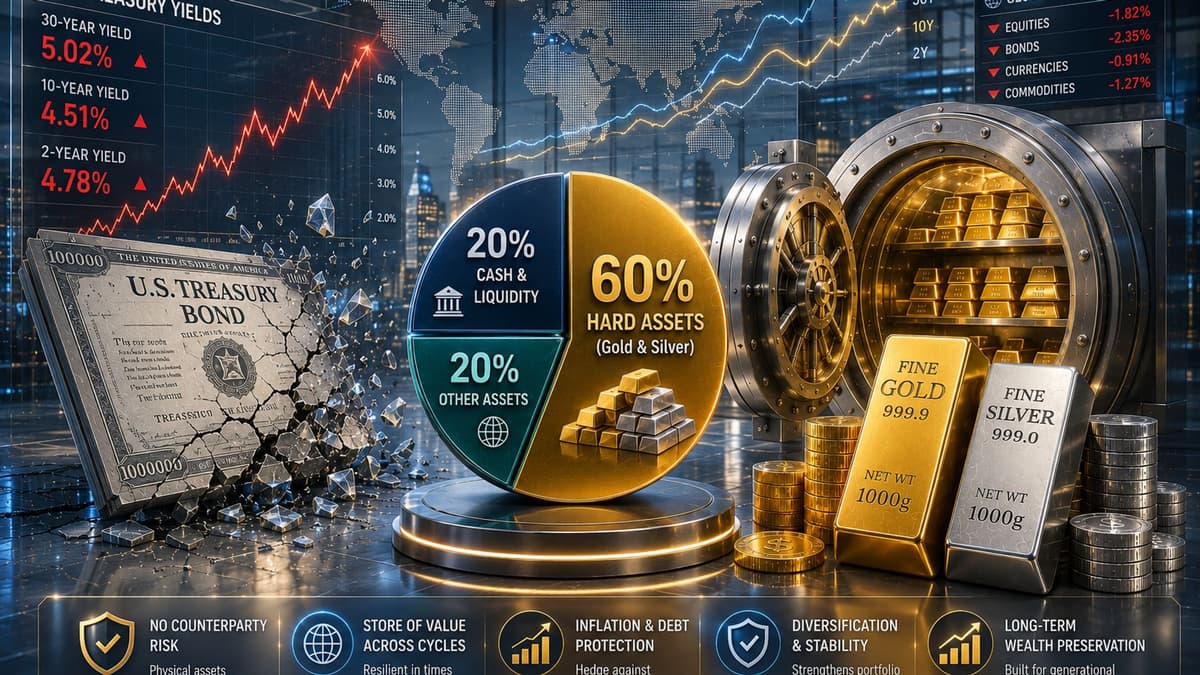
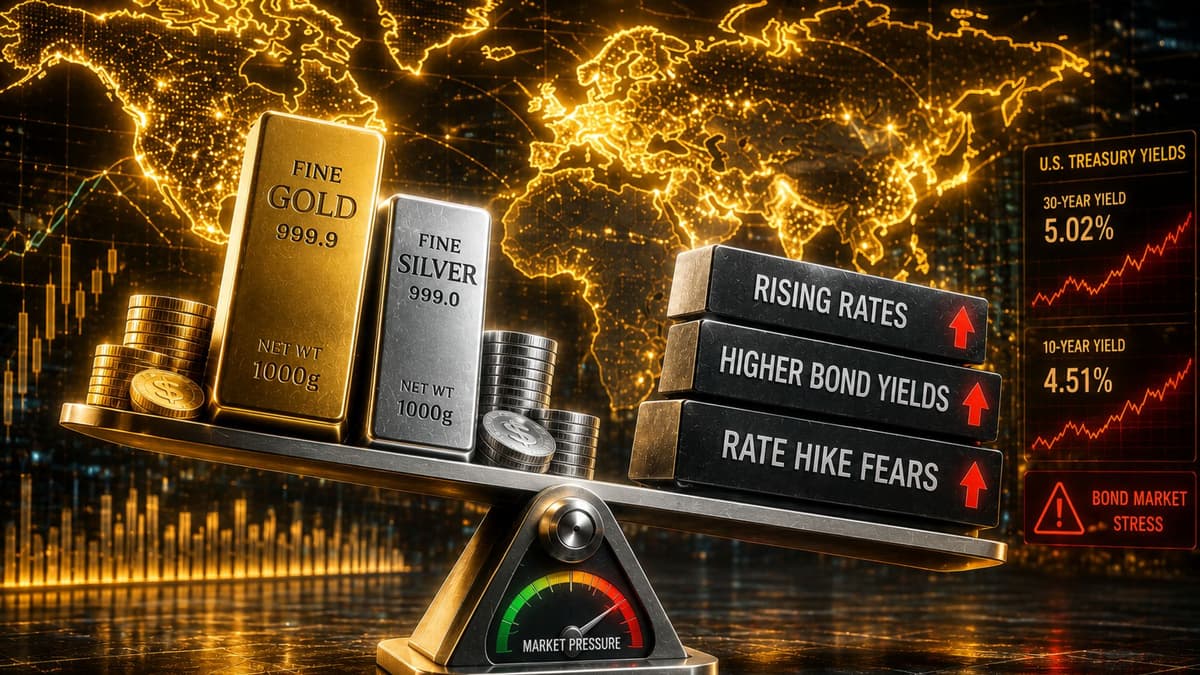
Higher oil prices are increasing inflation fears, and that is keeping Treasury yields elevated, which creates another headwind for gold price. West Texas Intermediate crude is trading above $95 a barrel, while 10-year U.S. yields are staying above 4%.Gold typically performs better when real yields are falling or when investors expect easier monetary policy. But if rising oil prices worsen inflation, the Federal Reserve may need to hold a neutral stance for longer, reducing support for non-yielding assets such as gold.
For Indian investors, higher oil prices also matter beyond bullion. Costlier energy can worsen imported inflation and pressure the rupee, which may support domestic gold prices in INR even if international prices remain range-bound.
Why is the Federal Reserve a key trigger for gold now?
The Federal Reserve is central to the gold outlook because markets are reassessing how quickly U.S. interest rates may fall. The Fed kicks off its two-day monetary policy meeting today, and traders are closely watching the signal from the FOMC meeting tomorrow.If the Federal Reserve keeps the door open to rate cuts, gold price could recover. If it sounds more cautious because of war-related inflation and oil supply risks, bullion may continue to face resistance.
What are markets pricing in for U.S. rate cuts?
Markets have sharply reduced expectations for Federal Reserve rate cuts in the second half of 2026. That repricing has directly weakened sentiment toward gold.Carsten Fritsch, Commodity Analyst at Commerzbank, said rate-cut expectations have been scaled back aggressively. “By the end of last week, Fed funds futures were no longer pricing in even a 25-basis-point rate cut by the end of the year. This means that almost 50 basis points of expected rate cuts have been priced out of the market since the start of the war,” he said in a note Tuesday.
That is a major shift because lower rate expectations usually support the dollar and bond yields. Both factors can weigh on gold and silver in the short term.
Why are gold ETF flows important here?
Gold ETF outflows show that institutional investors have already been reducing exposure as rate-cut bets fade. Fritsch said holdings in the gold ETFs tracked by Bloomberg fell by 37 tons over the past two weeks, effectively reversing all inflows since mid-January.ETF selling often signals weaker investment demand in the paper gold market. If that trend continues, bullion may struggle to break decisively above current resistance levels.
Fritsch also said the Fed's guidance will be critical for the next move. “If the door remains open for interest rate cuts, the gold price could rise again. However, the considerable uncertainty surrounding the duration of the war and the disruption to oil supplies is likely to make the Fed cautious about making too clear a statement on the future interest rate path.”
Could gold and silver still rally if the Iran war drags on?
Yes, gold and silver could still attract fresh safe-haven demand if the war in Iran turns into a prolonged conflict. Analysts are not giving up on precious metals, even though short-term selling pressure remains in place.Some analysts say an extended conflict could revive demand for bullion as a hedge against geopolitical risk, supply chain disruption, and broader market instability. That means support levels in gold and silver remain important for traders watching whether consolidation turns into a new advance.
Commodity analysts at Societe Generale said gold looks deceptively well-behaved. That suggests price action may look calm on the surface even while macro risks continue to build underneath.
What is Saxo Bank saying about the gold outlook?
Ole Hansen, Head of Commodity Strategy at Saxo Bank, said the long-term case for gold and other hard assets remains intact, even though the near-term backdrop has turned more difficult. He noted that gold continues to hold above its 50-day moving average, although it still looks vulnerable to further weakness.“The long-term case for holding hard assets remains intact; however, rising inflation concerns-lifting long-end yields and supporting a stronger dollar-have created short-term headwinds, encouraging profit-taking following an extended period of strong gains,” Hansen said in a social media post.
For Indian investors, that message is important. If global gold remains above key technical support while inflation, war risk and currency volatility stay elevated, domestic gold prices may remain supported in rupee terms even if international bullion does not immediately break higher.
What should Indian investors watch next in gold and silver?
Indian investors should watch three immediate triggers: the Federal Reserve's post-meeting guidance, the path of the U.S. dollar index, and whether the Iran conflict disrupts oil supplies further. Those factors will likely decide whether gold price rebounds from around $5,000 per ounce or slips deeper into consolidation.A softer Fed stance could help gold recover, especially if the dollar weakens below current levels. But if oil stays above $95 a barrel, 10-year yields remain above 4%, and ETF outflows continue after the recent 37-ton drop, bullion may stay under pressure in the near term.
For the Indian market, rupee movement will remain a crucial secondary driver. Even if international gold trades sideways, a weaker INR can keep local gold rates firm, making global support zones especially relevant for Indian buyers considering fresh allocation to precious metals.