# Gold Price Gains Strategic Power as Central Banks Double Down
Gold is increasingly becoming a strategic monetary asset, not just a passive reserve holding. Central banks are still buying bullion at elevated prices and, in a notable shift, are also monetizing gold for liquidity as geopolitical fragmentation reshapes reserve management.
Why are central banks still buying gold at high prices?
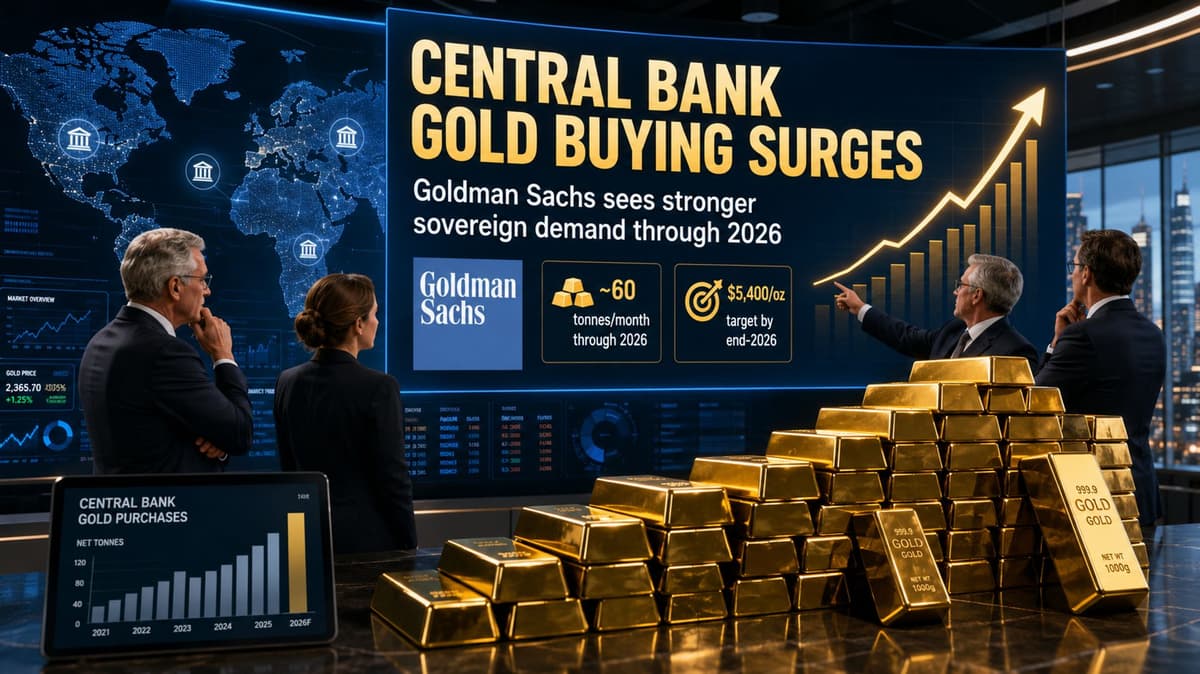
Central banks are still buying gold because they see it as protection against geopolitical risk and financial system fragmentation. According to the source article, many analysts expect central bank demand to remain a pillar of the gold market for the foreseeable future.
A recent central bank survey identified geopolitical tensions as the single biggest risk to the global economy this year. That ranking put geopolitical stress ahead of inflation and other traditional macroeconomic concerns.
This matters for gold price support because central banks are not treating bullion as a tactical trade. They are accumulating gold as a long-term reserve asset even when XAUUSD and global bullion prices remain elevated.
What makes gold attractive to central banks now?
Gold offers something fiat currencies and sovereign debt cannot: independence. Gold carries no counterparty exposure and cannot be frozen, sanctioned, or manipulated by foreign governments.
In a fragmented world where cross-border finance can become a geopolitical tool, that feature has become more valuable. For reserve managers, gold is not simply a store of value in troy ounces held in vaults; it is a form of financial insurance.
How is gold being used as a liquidity asset, not just a reserve asset?
Central banks are now using gold as a source of liquidity, marking an important shift in how bullion functions in the global monetary system. The source article says that last month, led by Turkey’s central bank, gold was monetized and used as an important source of liquidity.
That development shows gold is no longer seen only as a passive reserve asset. It is rebuilding its role as a functional monetary asset in real-world funding and balance-sheet management.
Why does gold monetization matter for investors?
Gold monetization matters because it strengthens the case that official-sector demand is structural, not temporary. If central banks can both hold gold and mobilize it for liquidity, bullion becomes more useful than a static asset sitting in vaults.
That change can support long-term gold price demand because it expands gold’s role in the reserve system. In simple terms, central banks are showing that gold is not just something they want to own; it is something they can actively use.
Which countries are adding to gold reserves?
Countries including Poland, Uzbekistan, and China have continued to add gold to their reserves. According to the source article, these central banks have often stepped in during price pullbacks.
That pattern suggests disciplined reserve accumulation rather than speculative buying. These are deliberate moves to strengthen financial resilience and reduce exposure to external shocks.
Are these central bank gold purchases speculative?
No, these purchases are described as strategic rather than speculative. The source article emphasizes that these actions are deliberate efforts to make reserve portfolios more resilient in a more uncertain global environment.
This distinction matters for Indian investors because strategic buying by central banks can create a firmer underlying floor for bullion demand. Even when short-term price momentum weakens, official-sector buying can remain supportive.
What does geopolitical uncertainty mean for gold price outlook?
Geopolitical uncertainty remains the dominant long-term driver of gold’s value, according to the article. That is because gold directly addresses risks created by sanctions, reserve vulnerability, and dependence on foreign-controlled financial systems.
As geopolitical tensions rise, central banks appear more willing to hold assets that sit outside the liabilities of another country. Gold’s safe-haven appeal therefore extends beyond retail fear trades and into sovereign reserve strategy.
Why is gold seen as independent in a fragmented world?
Gold is seen as independent because it has no issuer and no direct counterparty risk. Unlike sovereign bonds or foreign currency reserves, it does not depend on another government’s promise to pay.
That independence is especially important in a world where sanctions and financial restrictions can reshape trade, payments, and reserve access. For many countries, holding more gold is a way to reduce vulnerability.
What does this shift mean for retail and institutional investors?
Retail investors may be questioning gold’s role, but central banks and increasingly institutional investors are giving a clearer answer: gold remains a portfolio anchor in a more complex world. The source article says institutional investors are beginning to follow the official sector’s lead as traditional diversification strategies come under strain.
Many retail investors still focus on short-term moves tied to interest rate expectations, currency swings, and speculative positioning. Those factors will continue to drive volatility in gold price action.
Will gold still face near-term volatility?
Yes, gold will still face near-term volatility from interest rate expectations, currency movements, and changes in speculative positioning. The article makes clear that none of the structural positives eliminate short-term pressure.
However, those shorter-term risks exist within what the article describes as a broader, sturdier structural trend. That means investors should assess gold not only through daily XAUUSD moves, but through the bigger shift in global reserve behavior.
Why should Indian investors pay attention to central bank gold demand?
Indian investors should pay attention because sustained central bank demand can influence global bullion prices, which feed directly into domestic gold rates in rupees. When official-sector buying remains strong, it can help support international gold price levels even during temporary corrections.
For Indian households, jewellers, and long-term savers, that matters because local gold prices reflect both global bullion trends and INR movement against the U.S. dollar. If geopolitical stress keeps safe-haven demand elevated and central banks continue accumulating reserves, domestic gold prices could remain structurally supported.
This is particularly relevant in India, where gold serves both as an investment and a cultural store of wealth. If the global financial system becomes more fragmented, the same qualities attracting central banks to gold — independence, liquidity, and resilience — may also keep Indian investor interest strong.
Investors should now watch whether more central banks follow Turkey’s example in monetizing gold for liquidity, and whether countries such as Poland, Uzbekistan, and China continue buying on pullbacks. Those signals may say more about gold’s long-term direction than the next swing in rate-cut expectations.