# Gold Price Gains in Choppy Trade as Safe-Haven Demand Returns
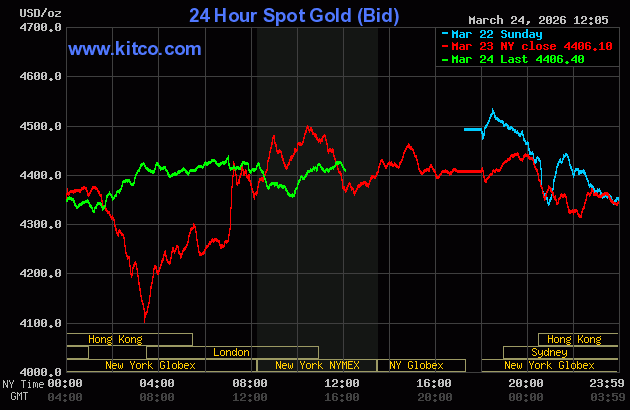
Gold prices edged higher in volatile two-way trading as safe-haven demand returned after markets reassessed hopes of a Middle East de-escalation. According to Kitco News, April gold futures were last up $21.30 at $4,428.20 in midday U.S. trading, while May silver futures rose $1.165 to $70.46.
The rebound in bullion was limited, however, because the U.S. dollar index strengthened, U.S. Treasury yields climbed, and inflation worries stayed in focus. For Indian investors, that mix matters because global XAUUSD moves, a firmer dollar, and rupee swings can all affect domestic gold rates.
Why is gold price rising today?
Gold price is rising because safe-haven buying returned as traders concluded that hopes for a de-escalation in the Middle East war were fading. Monday had brought optimism that tensions might cool, but by Tuesday the broader market was reassessing that view.
That shift supported both gold and silver. Safe-haven flows typically lift precious metals when geopolitical risk rises, especially when investors seek protection from uncertainty in global markets.
April gold futures were last up $21.30 at $4,428.20. May silver futures were up $1.165 at $70.46.
For Indian buyers, stronger geopolitical demand can keep bullion prices elevated even when local jewellery demand is price-sensitive. If the Indian rupee weakens while global gold price stays firm, domestic gold prices can rise faster than international benchmarks.
What is limiting gold's upside despite safe-haven demand?
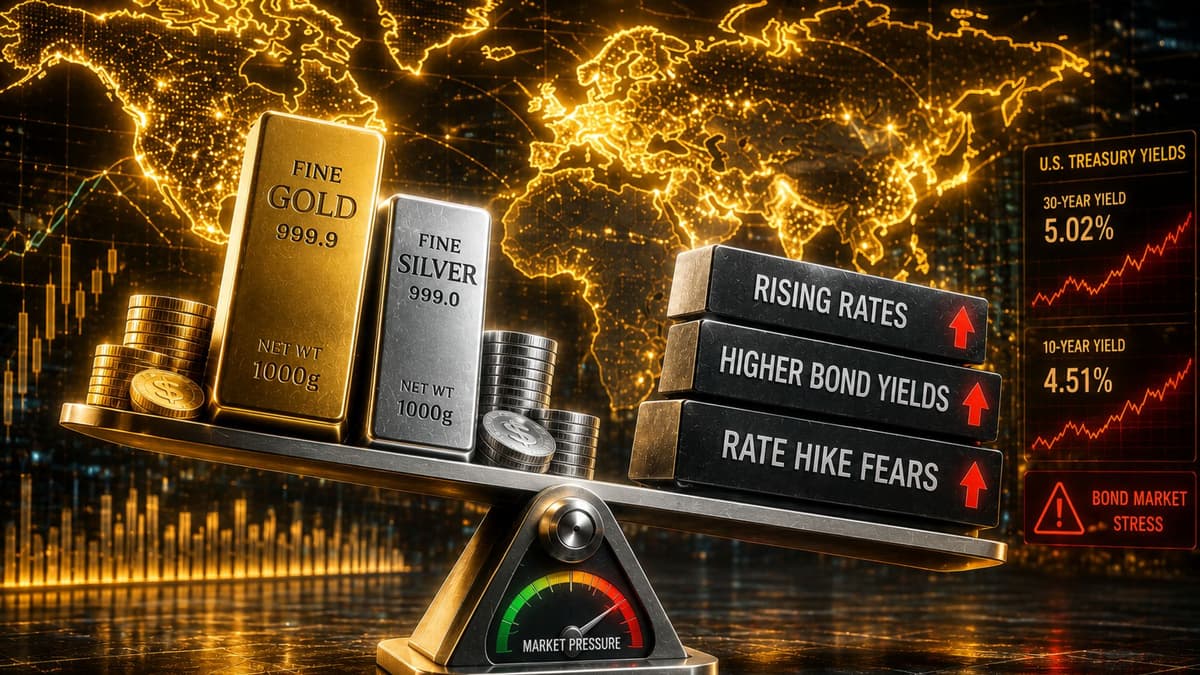
Gold's upside is capped by a stronger U.S. dollar, higher bond yields, and persistent inflation worries. These forces often reduce the appeal of non-yielding bullion even when safe-haven demand is improving.
The key outside markets showed Nymex WTI crude oil trading higher at around $91.50 a barrel. Higher crude oil prices can reinforce inflation concerns, which adds another layer of complexity for gold traders.
At the same time, the U.S. dollar index moved higher. A stronger dollar can pressure gold because bullion priced in dollars becomes more expensive for non-U.S. buyers.
The yield on the benchmark 10-year U.S. Treasury note was around 4.4 percent. Rising yields can compete with gold for investor flows because Treasury securities offer income, while gold does not.
For Indian investors, these global factors feed directly into imported gold costs. India relies heavily on imported bullion, so moves in the dollar, oil, and U.S. yields can quickly influence local pricing and sentiment.
What do the futures and spot market signals mean for gold traders?
Gold traders should watch both spot and futures pricing because the market operates through two primary pricing mechanisms. The spot market quotes prices for on-the-spot purchase and immediate delivery, while the futures market sets prices for delivery at a future date.
According to the source note, year-end positioning and market liquidity have made the December gold futures contract the most actively traded on the CME. That liquidity point matters because the most active contract often gives traders the clearest signal on price discovery and market positioning.
Even so, the reported benchmark in this session was April gold futures at $4,428.20. Indian investors tracking international gold price trends should note the difference between spot gold, front-month futures, and the most actively traded contract, because headlines can reference different benchmarks.
What are the key technical levels for gold price now?
Gold remains technically weak in the near term, even after today's modest gain. Kitco News reported that April gold futures bulls need a close above solid resistance at $4,750.00 to regain stronger control.
The bears' next near-term downside objective is to push futures prices below solid technical support at this week's low of $4,100.00. That level is important because a break below it would signal renewed downside pressure in XAUUSD futures trading.
Gold resistance levels
The first resistance level stands at $4,500.00. The next resistance is this week's high at $4,537.10.
If bulls clear those levels, traders will then focus on the larger upside target of $4,750.00. A close above that zone would materially improve the technical outlook.
Gold support levels
The first support level is today's low at $4,306.30. The next support comes in at $4,250.00.
Below that, the major downside objective remains this week's low of $4,100.00. A drop under that support would strengthen the bearish case.
What does the Wyckoff rating show?
The Wyckoff Market Rating for April gold futures is 3.5. That rating suggests bears still hold the near-term technical advantage, even though prices posted a modest intraday rise.
For Indian investors, that means global gold price momentum remains fragile. Any domestic rally could still face volatility if international bullion fails to break resistance.
What are the key technical levels for silver price?
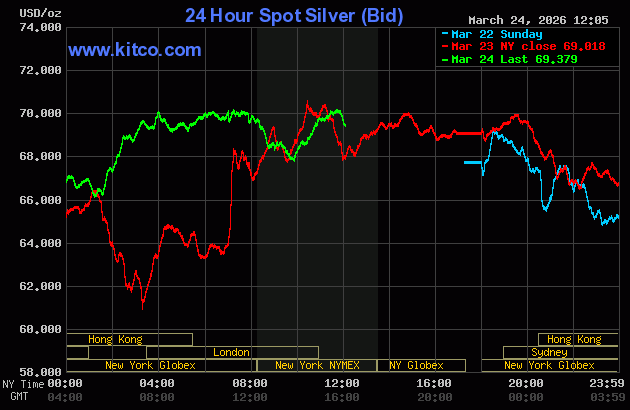
Silver also moved higher, but its chart remains technically challenging. May silver futures were last up $1.165 at $70.46, reflecting improved sentiment in precious metals alongside gold.
Silver bulls' next upside price objective is a close above solid technical resistance at $80.00. That would be the key signal that buyers are regaining stronger control.

The bears' next downside objective is a close below solid support at $60.00. That level remains the major line in the sand on the downside.
Silver resistance levels
The first resistance is this week's high at $71.03. The next resistance level is $72.50.
A move above those levels would bring the broader $80.00 upside objective into clearer view. Until then, silver remains in a volatile trading range.
Silver support levels
The next support is today's low at $66.115. Below that, traders are watching $65.00.
A break under those levels would increase pressure on silver and could spill over into broader precious metals sentiment. Like gold, May silver futures carry a Wyckoff Market Rating of 3.5.
How should Indian investors read today's gold market move?
Indian investors should treat today's gain as a cautious safe-haven bounce, not a full bullish breakout. Gold rose because geopolitical anxiety returned, but the stronger U.S. dollar, 4.4 percent Treasury yield, and inflation concerns are still limiting upside.
That balance matters for India because domestic gold prices reflect more than just international futures. Rupee movement against the dollar, import costs, and local demand can amplify or soften the impact of moves in global bullion.
If Middle East tensions remain elevated, safe-haven demand could continue to support gold. But if U.S. yields and the dollar keep rising, gold may struggle to decisively clear resistance at $4,500.00 and $4,537.10.
The next key watchpoint is whether April gold futures can hold support at $4,306.30 and then challenge $4,500.00. For Indian market participants, that combination of geopolitical headlines, XAUUSD technical levels, and USD-INR moves will likely shape the near-term path for gold price and bullion demand.