# Gold Price Forecast: Commerzbank Sees $5,000 in a Powerful H2
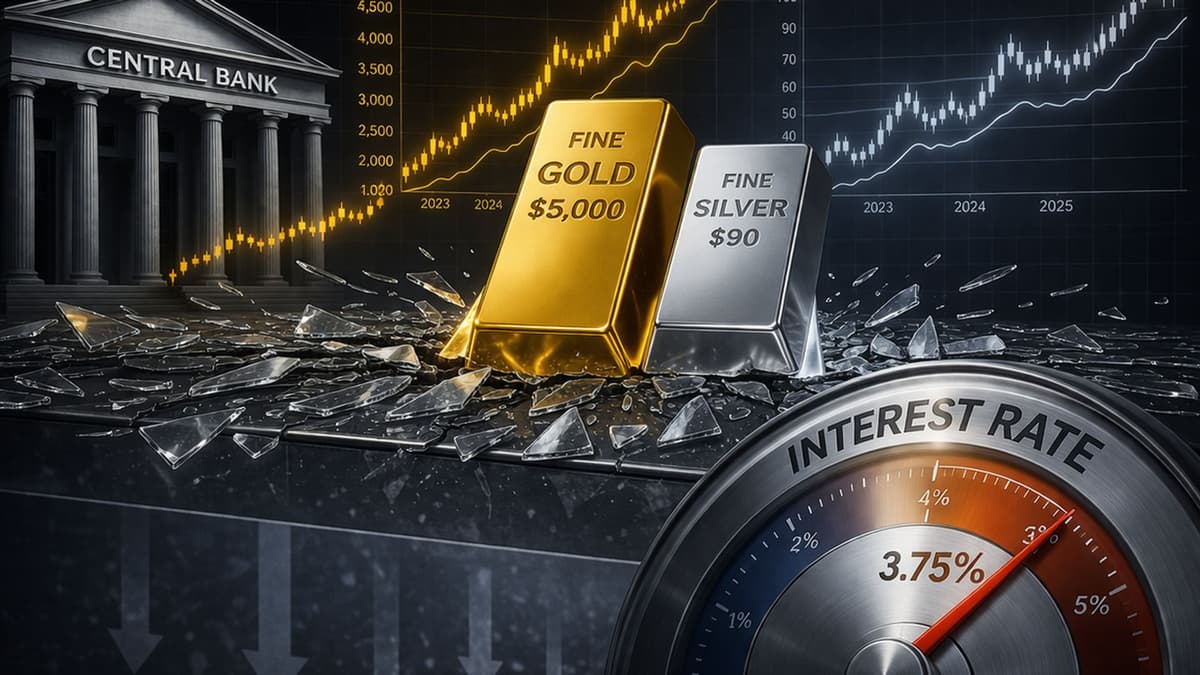
Gold prices could climb to $5,000 per troy ounce by the end of this year and $5,200 by the end of 2027, according to Commerzbank, which says renewed Federal Reserve rate cuts in the second half of the year should lower real interest rates and revive bullion demand. The bank also forecasts silver at $90 by year-end and $95 by end-2027.
The call comes after a notable technical shift in the gold market. Last week, gold held support at its 200-day moving average and snapped a three-week losing streak. Monday’s follow-through buying added to the bullish setup, even as oil prices kept rising and the market wrestled with inflation concerns.
For Indian investors, the outlook matters because any sustained rally in XAUUSD can feed directly into domestic bullion rates, although the final move in India will also depend on the USD/INR exchange rate and import-linked pricing.
Why does Commerzbank expect gold prices to rise to $5,000?
Commerzbank expects gold prices to rise because it believes the weak price action seen through March will not last and that lower U.S. real interest rates will improve the appeal of bullion. The bank upgraded its precious metals forecasts on Friday despite the sharp pullback in gold over the past two months.
The German bank now sees gold ending this year around $5,000 an ounce, up from its December forecast of $4,900 an ounce. It also expects the rally to continue, with gold ending 2027 at $5,200 an ounce.
Commerzbank’s bullish view combines both technical and fundamental signals. Gold recently defended its 200-day moving average, a level many traders track closely, and then posted stronger follow-through buying at the start of the new week.
That combination suggests the market may have absorbed the recent correction and could be preparing for a fresh advance if macro conditions turn more supportive.
How do Federal Reserve rate cuts support the gold price?
Federal Reserve rate cuts support gold by reducing the opportunity cost of holding a non-yielding asset. When real interest rates fall, gold tends to become more attractive relative to bonds and cash.
Thu Lan Nguyen, Head of FX and Commodity Research at Commerzbank, said the bank expects the Federal Reserve to resume its rate-cutting cycle at the end of this year. Commerzbank forecasts the Fed will cut its benchmark rate by a total of 75 basis points by the middle of next year.
Nguyen said U.S. inflation is still likely to settle above the inflation target in the coming year. In that environment, nominal rates may fall while inflation remains sticky, pushing real interest rates lower over the longer term.
That matters for bullion because lower real rates reduce the penalty of owning gold, which does not pay interest. In practical terms, a softer real-rate backdrop often supports gold price, bullion, and broader precious metals demand.
For Indian investors, Fed easing can also influence global capital flows, the U.S. dollar, and imported commodity prices. If international gold rises sharply and the rupee weakens against the dollar, domestic gold prices in India can increase faster than global benchmarks alone would imply.
What has been holding gold back recently?
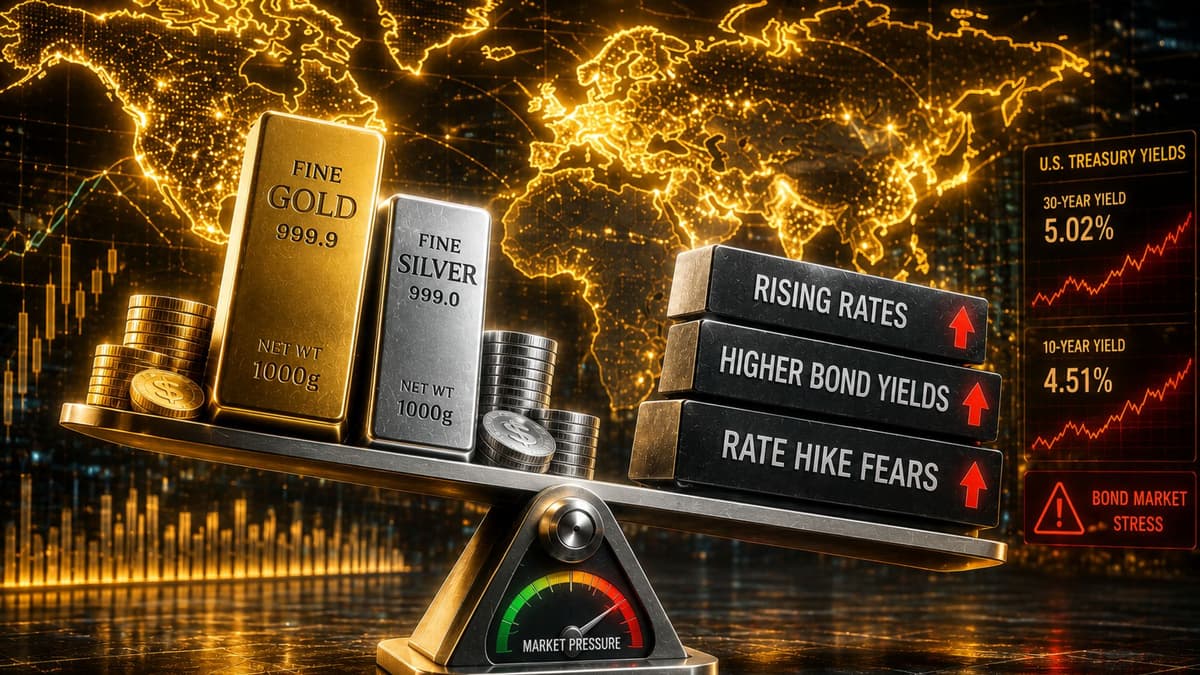
Gold has struggled because rising oil prices and changing rate expectations pushed bond yields higher and strengthened the U.S. dollar. Those two forces created short-term headwinds for XAUUSD even though the longer-term case for gold remains constructive.
According to the report, the war in Iran has created significant supply-chain issues in the global energy market, sending oil prices significantly higher. Higher energy prices have lifted inflation expectations, and markets have concluded that the Federal Reserve may need to keep a neutral monetary policy stance for longer.
That repricing hurt gold because elevated interest rates increase the opportunity cost of holding gold. At the same time, rising bond yields and renewed strength in the U.S. dollar made it harder for bullion to attract momentum buyers.
Commerzbank’s argument is that these pressures have weighed on gold in the short run, but they should not define the medium-term trend if the inflation shock cools and rate cuts return in the second half.
Why has gold not behaved like a classic safe-haven asset during this crisis?
Gold has not drawn the usual safe-haven flows because investors are focused more on inflation risk than on economic collapse. In this type of crisis, markets tend to fear higher rates, which can limit immediate upside in bullion.
Nguyen said investors need to distinguish between different kinds of crises. She noted that gold typically rises strongly when economic risks are the main concern, such as during the Great Financial Crisis or the COVID-19 pandemic.
In those episodes, markets usually expect central banks to respond with expansionary monetary policy, including interest rate cuts. That setup is highly supportive for gold.
In the current crisis, however, Nguyen said most investors are focused on the inflation shock and therefore expect interest rate hikes or at least a longer period of restrictive policy. That shift in expectations helps explain why gold’s safe-haven bid has looked muted.
She added that this does not reduce gold’s importance as a monetary asset in global financial markets. In other words, gold’s role remains intact, but the market’s reaction function has changed because the dominant fear is inflation rather than recession.
Nguyen also pointed to another market signal: the Swiss franc, which is also usually considered a safe haven, has recently been among the underperformers in the G10 currency universe. That underperformance supports her view that the nature of this crisis has distorted traditional defensive flows.
What is Commerzbank’s silver price forecast?
Commerzbank is also bullish on silver and expects it to outperform as tight fundamentals support higher prices. The bank sees silver reaching $90 by year-end and $95 by the end of 2027.
Silver has struggled alongside gold in the recent correction, but Commerzbank believes the fundamental backdrop remains constructive. Nguyen said tight market conditions continue to support a rising silver price.
That matters for investors in India because silver often attracts strong retail and industrial interest, especially when volatility rises across the broader precious metals complex. If global silver prices move toward Commerzbank’s targets, Indian silver rates could react sharply depending on the rupee’s direction and import costs.
What does this gold outlook mean for Indian investors?
For Indian investors, Commerzbank’s forecast suggests that global weakness in gold may prove temporary if Fed cuts return in H2. The key variables to track are U.S. real interest rates, oil prices, the U.S. dollar, and USD/INR.
If gold moves toward $5,000 per ounce, domestic bullion prices could remain firm or rise further, especially if the rupee weakens. Even if international prices rally, however, a stronger rupee could partly cushion the move in local terms.
Investors should also watch whether gold can continue building on last week’s technical improvement after holding its 200-day moving average and ending its three-week losing streak. If the Federal Reserve signals that cuts are likely at the end of this year, that could become the next major catalyst for both global bullion and Indian gold prices.
For now, the market’s main watchpoint is simple: whether easing inflation fears and a shift toward 75 basis points of Fed cuts by the middle of next year can overpower the drag from high oil prices and a firm dollar. If that happens, Commerzbank’s upgraded gold and silver forecasts will stay firmly in focus.