Spot gold edged higher and spot silver surged on Monday as traders weighed rising oil prices, firmer U.S. Treasury yields and the April U.S. inflation data due this week. For Indian investors, the move matters because higher global bullion prices, a stronger U.S. dollar and elevated crude can all feed into domestic gold rates in rupee terms.
Why did gold price firm and silver surge on Monday?
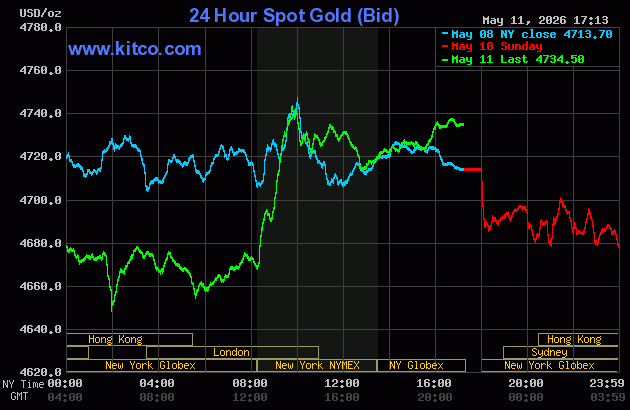
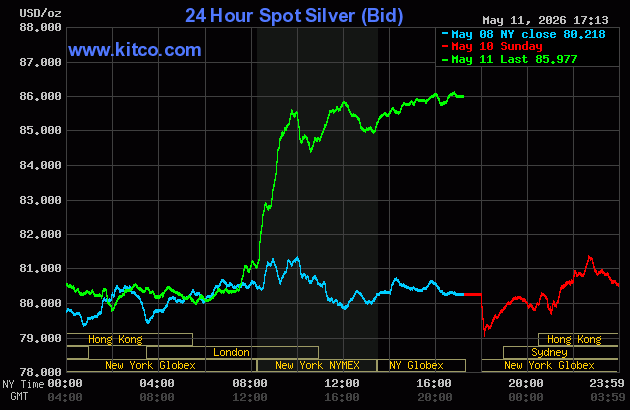
Gold price firmed because geopolitical stress and defensive demand supported bullion, while silver outperformed sharply on tighter physical and industrial narratives. At the time of writing, spot gold traded near $4,736.60 per troy ounce, up 0.49% on the session, while spot silver traded near $85.990, up 7.20%.Silver led the precious metals complex even as gold held gains. The market balanced last week’s U.S. labor-market data against higher oil prices, firmer Treasury yields and the April CPI release due on Tuesday.
For Indian investors tracking XAUUSD, the combination is important. A rise in spot gold usually supports higher domestic bullion prices, but a firmer U.S. dollar can also amplify landed costs for Indian buyers if the rupee weakens.
What role did US-Iran tensions and the Strait of Hormuz play?
US-Iran tensions kept the oil-risk premium elevated, which supported safe-haven demand but also increased inflation concerns that can limit gold’s upside. On Monday, the U.S.-Iran track deteriorated again after President Donald Trump rejected Tehran’s latest ceasefire proposal and said the truce was on “life support.”That left the Strait of Hormuz still closed and kept the oil-risk premium embedded in metals and rates. For gold, the signal was mixed: stress around Hormuz supports defensive buying, but the oil-price channel also keeps inflation and real-rate risk in focus.
That distinction matters for India because the country imports most of its crude oil needs. If Hormuz disruptions keep oil elevated, India could face higher imported inflation, which may affect the rupee, bond yields and local gold demand.
How did housing data and US equities shape the gold market?
The latest U.S. housing data was weaker than expected, but it was not weak enough to disrupt the broader macro setup driving metals. April existing-home sales rose 0.2% to a 4.02 million annual rate, below expectations, while the median existing-home price reached $417,700.U.S. equities still climbed to fresh records as earnings support offset oil-driven inflation worries. The S&P 500 rose 0.2%, the Dow gained 0.2% and the Nasdaq added 0.1%.
For precious metals, that meant no new domestic U.S. data shock emerged that was large enough to dislodge silver’s relative outperformance. Gold held firm, but silver remained the stronger trade.
Why is the April CPI report the next big trigger for gold and silver?
The April CPI report is the next major catalyst because inflation data will shape expectations for real yields, Federal Reserve policy and near-term bullion demand. The market’s next test is Tuesday’s April CPI report at 8:30 a.m. ET, followed by April PPI at 8:30 a.m. ET Wednesday and import-export prices at 8:30 a.m. ET Thursday.A hotter inflation sequence would likely keep real-rate pressure in the trade. That would be a headwind for non-yielding gold because higher real yields raise the opportunity cost of holding bullion.
A softer inflation sequence would shift attention back toward gold’s defensive bid and silver’s industrial-demand premium. That outcome could give both precious metals more room to extend gains, especially if geopolitical stress remains elevated.
For Indian investors, these U.S. releases can move both international gold price and the USD/INR exchange rate. That means domestic gold prices may react not only to bullion moves but also to currency volatility.
How did oil, the US dollar and Treasury yields affect bullion?
Higher crude oil, a firmer U.S. dollar and stronger Treasury yields created a tougher backdrop for gold than for silver. WTI crude settled near $98.07 a barrel and Brent near $104.21 after U.S.-Iran talks failed to produce a peace agreement and the Strait of Hormuz remained largely closed.Higher crude kept inflation risk front and center. That limited some of the safe-haven benefit gold might otherwise have received from geopolitical stress.
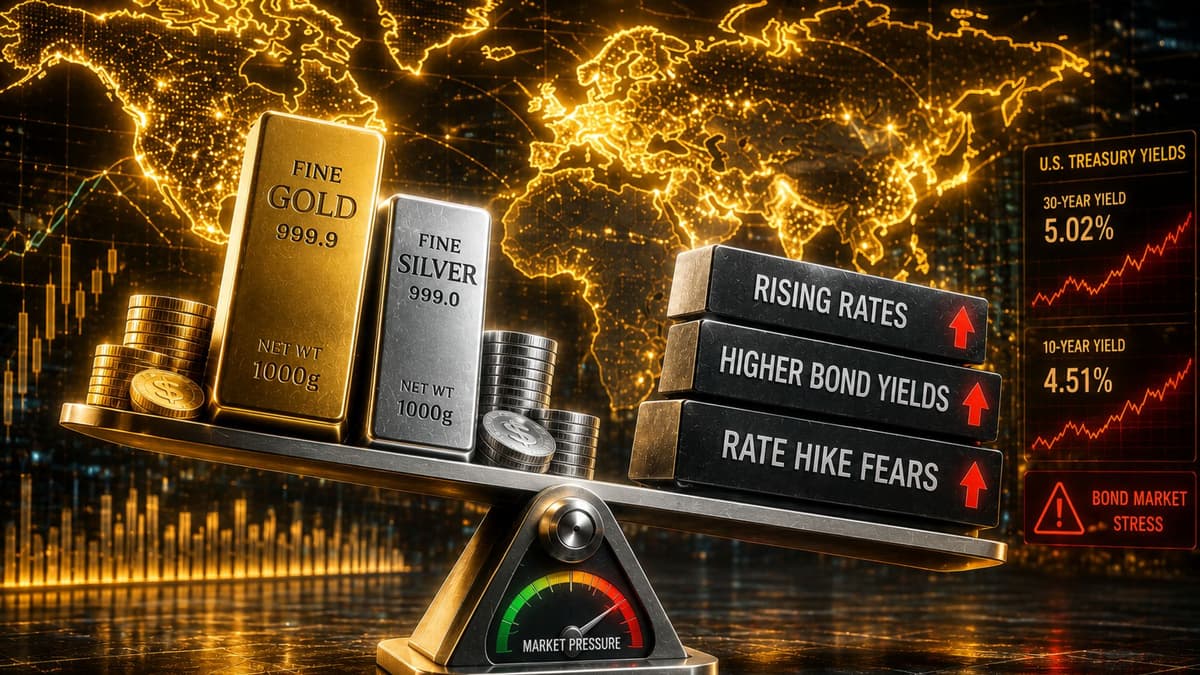
The key outside markets showed crude oil sharply higher, the U.S. dollar firmer and the benchmark 10-year U.S. Treasury yield near the 4.4% area. This mix is less favorable for gold because higher yields and a stronger dollar tend to cap demand for non-yielding bullion.
Silver, by contrast, continued to draw support from tight physical and industrial narratives. That is one reason spot silver’s momentum remained much stronger than spot gold’s on the session.

What are the key technical levels for gold price now?
Gold bulls need to reclaim the 50-day moving average to strengthen the upside structure. Technically, spot gold bulls’ next upside price objective is a move back above the 50-day moving average at $4,769.00.If gold clears that level and sustains the move, the next resistance zone comes in at $4,860.00 to $4,880.00. That would be the next key area traders would watch on the upside.
On the downside, bears’ next near-term objective is a break below the $4,660.00 to $4,680.00 support zone. First resistance stands at $4,769.00 and then $4,860.00, while first support is seen at $4,680.00 and then $4,660.00.
For Indian traders in MCX gold and global XAUUSD, these levels are important because a break above resistance could reinforce bullish momentum, while a move below support could trigger a deeper correction.
What are the key technical levels for silver price now?
Silver bulls remain in control, but they still need a decisive breakout above a major resistance band. Spot silver bulls’ next upside objective is to push prices back above the $85.00 to $86.00 resistance area.If silver breaks above that zone, the next upside targets are $95.00 to $96.00 and then the psychologically important $100.00 level. That places silver in a stronger technical position than gold in the near term.
For the bears, the next downside objective is a break below $78.00, with deeper downside targets at $71.00. First resistance is seen at $86.00 and then $95.00, while support is seen at $79.00 and then $78.00.
For Indian investors, silver’s sharp move is especially relevant because domestic silver prices can show bigger percentage swings than gold when global momentum accelerates. The immediate watchpoint is whether U.S. CPI confirms inflation pressure, because that will likely decide whether gold can clear $4,769.00 and whether silver can decisively break through $86.00.