# Gold Price Falls Ahead of Fed Call as Yields Pressure Bullion
Gold prices weakened in early U.S. trading on Wednesday as investors waited for the Federal Reserve’s policy decision and press conference from Fed Chair Jerome Powell. Higher U.S. bond yields, renewed inflation worries, and softer near-term chart signals reduced buying interest in bullion and silver.
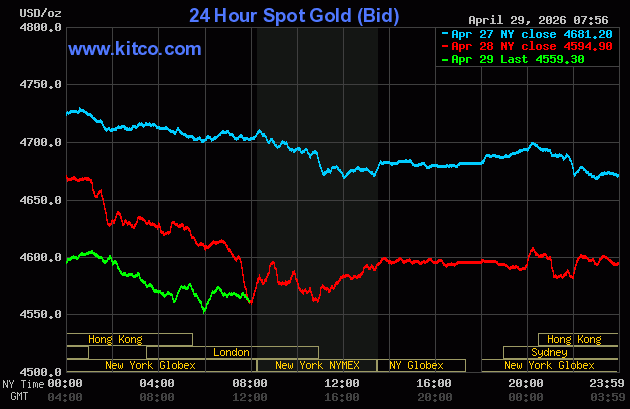
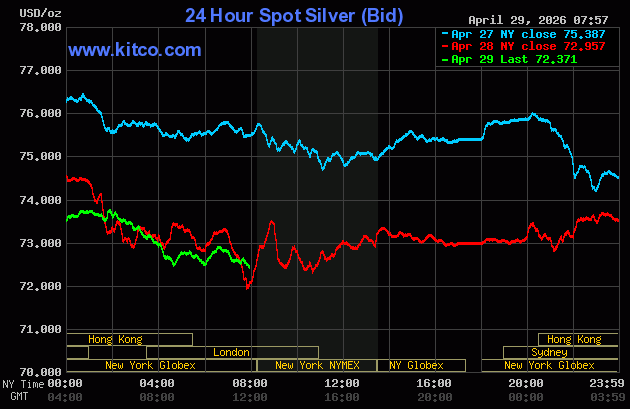
June gold futures were last down $29.10 at $4,579.00. May silver futures fell $0.669 to $72.56.
For Indian investors, the move matters because changes in U.S. Treasury yields, crude oil prices, and the U.S. dollar often feed directly into imported gold costs in rupee terms. If the dollar index stays firm and oil remains elevated, domestic gold prices in India can stay supported even when international XAUUSD prices pull back.
Why is gold price weaker ahead of the FOMC meeting?
Gold is weaker because traders are reducing exposure before the Federal Reserve’s FOMC statement, while rising bond yields and inflation concerns are making non-yielding assets like gold less attractive in the short term.
The Federal Reserve’s Open Market Committee meeting began on Tuesday morning and ends Wednesday afternoon with a policy statement and a press conference from Jerome Powell. Markets widely expect no change in U.S. monetary policy at this meeting.
The Federal Reserve is expected to keep the federal funds rate unchanged at 3.5%–3.75% for a third consecutive meeting. According to TradingEconomics.com, the outlook for the rest of the year remains uncertain because oil prices keep rising and inflation is picking up again due to the energy shock, even as the labor market and broader economy remain resilient.
That combination is important for gold. Higher inflation would normally support safe-haven demand for precious metals, but rising yields increase the opportunity cost of holding bullion, which pays no yield or dividend. That tension has limited fresh buying in gold and silver.
Why are traders focused on Jerome Powell?
Traders are focused on Jerome Powell because his guidance could shape expectations for U.S. interest rates, inflation, and the dollar over the coming months.
This FOMC meeting is expected to be the last one for Powell as head of the U.S. central bank. Any change in tone on inflation, growth, or energy-driven price pressure could quickly move XAUUSD, U.S. Treasury yields, and the dollar index.
For Indian gold buyers, a hawkish Federal Reserve tone could keep the U.S. dollar stronger. That can raise landed gold costs for India even if global bullion prices stay under pressure.
What outside markets are moving gold today?
Gold is facing pressure from a firmer U.S. dollar, higher crude oil prices, and elevated Treasury yields.
The U.S. dollar index was firmer on the day. At the same time, Nymex WTI crude oil was solidly higher and trading around $103.50 a barrel, while the benchmark 10-year U.S. Treasury yield stood at 4.36%.
Those moves matter because higher yields tend to hurt gold in the short run, while stronger oil prices can intensify inflation worries. The result is a mixed macro backdrop in which gold’s safe-haven appeal is competing against the drag from higher real and nominal yields.
How is the Middle East conflict affecting bullion markets?
The Middle East conflict is lifting energy-market anxiety, which is feeding inflation concerns and bond-market volatility that indirectly affect gold prices.
The latest developments listed by Kitco included:
- The U.S. signaled no letup of the naval blockade as it aims to squeeze Iran.
- Donald Trump posted on social media on Wednesday: “Iran can’t get their act together.”
- Nymex WTI crude oil futures moved back above $100 a barrel.
- Trump said on Tuesday that Iran wants Hormuz open amid efforts to end the war.
- The U.S. warned of sanctions risks for Chinese refiners of Iranian oil.
- California jet fuel woes deepened as Asia flows hit a decade low.
- Bond traders increased hedges for 5% 10-year U.S. Treasury yields as oil surged.
- Japan confirmed Hormuz transit as Iran talks continued, according to the prime minister.
- European airports warned of a tough outlook as the war disrupted flights.
How does the UAE leaving OPEC affect gold and inflation expectations?
The UAE’s decision to leave OPEC could weaken the cartel’s pricing power and add fresh uncertainty to the oil market, which in turn affects inflation expectations and gold.
Bloomberg reported that the United Arab Emirates’ decision to quit OPEC blindsided its partners and will dilute the cartel’s ability to manage oil prices through supply adjustments. The report said the UAE may become a wild-card player in global energy markets, with officials signaling their intention to boost production once oil starts flowing again.
According to Bloomberg, the departure of one of OPEC’s most influential members raises broader questions about the group’s credibility and market power, which has already weakened in recent years.
For gold, the implication is twofold. If oil-market instability drives energy prices higher, inflation fears can support bullion demand. But if that also lifts bond yields and the dollar, the near-term reaction in gold can remain choppy.
Why are central banks still buying gold despite weaker prices?
Central banks are still buying gold because the recent price correction created an opportunity to add reserves at lower levels.
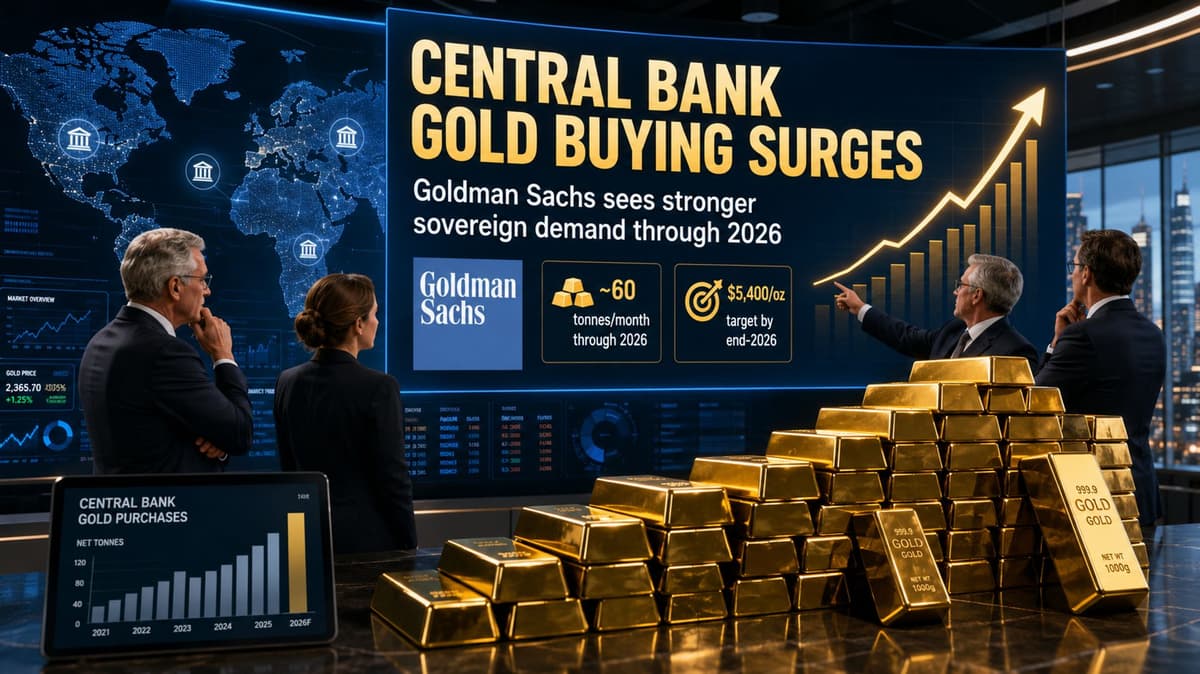
The World Gold Council reported that central banks added gold to their reserves at the fastest pace in more than a year during the first quarter. Net official-sector purchases totaled 244 tons, up from 208 tons in the previous quarter.
The largest reported buyers were Poland, Uzbekistan, and China, although the WGC said some purchases were undeclared. The buying wave more than offset sales by a handful of institutions.
What did John Reade of the World Gold Council say?
John Reade said central banks used the dip in gold prices to step in and buy.
According to John Reade, chief strategist at the London-based World Gold Council, “It’s the first time in a while that we’ve seen a decent correction in gold.” He added that the pullback allowed central banks that had been waiting on the sidelines to “come in and scoop up a load.”
That is a constructive medium-term signal for bullion. For Indian investors, steady official-sector accumulation supports the long-term case for holding some allocation to gold, especially during periods of macro and currency uncertainty.
What are the key technical levels for gold price and silver price?
Gold and silver both show weakening near-term technical postures, with traders watching clear resistance and support zones in futures markets.
Gold futures technical levels
For June gold futures, bulls’ next upside objective is a close above solid resistance at the April high of $4,917.70. Bears’ next downside objective is to push prices below solid technical support at $4,300.00.
The first resistance level stands at the overnight high of $4,624.30, followed by $4,700.00. First support is seen at $4,550.00 and then at $4,500.00.

Wyckoff's Market Rating: 5.0.
Silver futures technical levels
For May silver futures, the next upside objective for bulls is a close above strong technical resistance at the April high of $83.245. The next downside objective for bears is a close below solid support at $70.00.
First resistance is seen at $75.00 and then at this week’s high of $76.555. Next support is seen at this week’s low of $71.925 and then at $70.00.
Wyckoff's Market Rating: 5.0.
Why do these levels matter for Indian investors?
These levels matter because futures-market price action often shapes global bullion sentiment, which then filters into Indian spot gold prices after adjusting for the rupee-dollar exchange rate, import duty, and local premiums.
If gold breaks below $4,500.00 and especially $4,300.00, Indian buyers may see a global dip-buying window. If gold climbs through $4,624.30 and then $4,700.00, momentum could turn stronger again and lift domestic rates quickly.
What is the difference between spot gold and gold futures?
Spot gold is the price for immediate purchase and delivery, while gold futures are contracts priced today for delivery at a later date.
The source note explains that the gold market operates through two main pricing mechanisms: the spot market and the futures market. The spot market reflects on-the-spot transactions and immediate delivery, while the futures market sets prices for future delivery dates.
Because of year-end positioning market liquidity, the December gold futures contract is currently the most actively traded on the CME. That detail is important because the most active contract often becomes the market’s main reference point for technical trading and price discovery.
As traders move toward the Federal Reserve decision, Indian investors should watch three immediate signals: Jerome Powell’s tone, the direction of the 10-year U.S. Treasury yield at 4.36%, and whether WTI crude oil near $103.50 keeps pushing inflation expectations higher. Those factors will likely decide whether gold extends its pullback or regains safe-haven momentum in the next leg.