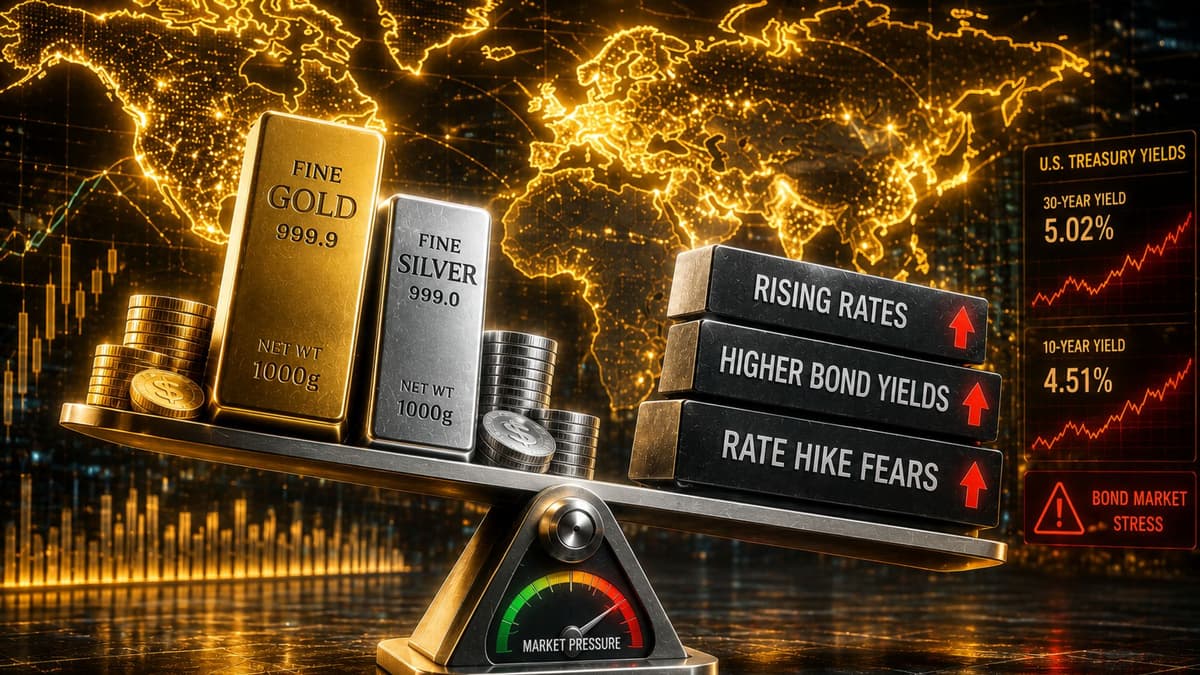
# Gold Price Faces Fresh Pressure as NY Empire Survey Jumps
Gold prices remained under pressure after the New York Federal Reserve’s Empire State Manufacturing Survey surged in May, strengthening the case for higher U.S. interest rates and adding another headwind for bullion. For Indian investors, the signal is clear: stronger U.S. economic data can weigh on global gold price momentum, even when inflation fears remain elevated.
Why Did Gold Price Come Under Pressure After the Empire State Survey?
Gold price weakened because the New York Fed reported much stronger-than-expected manufacturing activity, which can support higher interest rates and reduce the appeal of non-yielding assets such as bullion. Stronger economic data also tends to support the U.S. dollar and Treasury yields, both of which often pressure XAUUSD.
The New York Federal Reserve said on Wednesday that its Empire State Manufacturing Survey rose to 19.5 in May, up from 11 in April. Economists had expected the index to fall to 7.3, so the release came in far above consensus.
That jump marked the highest reading since November 2024, showing that business activity in the region accelerated sharply. A stronger manufacturing backdrop adds to concerns that the Federal Reserve may need to keep monetary policy tight for longer.
What Did the New York Fed Say About Manufacturing and Inflation?
The New York Fed said manufacturing expanded at its fastest pace in more than four years, but inflation pressures also intensified. That combination matters for gold because persistent price pressures can keep the Federal Reserve cautious on rate cuts and even revive expectations for rate hikes.
What did Richard Deitz say?
According to Richard Deitz, Economic Research Advisor at the New York Fed, "New York State manufacturing activity grew at its fastest pace in over four years in May. New orders and shipments rose strongly, and employment continued to increase. However, the pace of price increases surged while delivery times and supply availability worsened."
His comments show that the report was not only strong on growth, but also hot on prices. For bullion traders, that is a difficult mix because rising inflation within a resilient economy can push bond yields higher and hurt safe-haven gold in the near term.
How Did Gold React in the Market?
Gold did not post a dramatic immediate selloff on the data release, but it stayed weak and held near the session lows. That muted reaction suggests traders had already been worried about inflation and rates, but the data still reinforced a bearish short-term backdrop.
Spot gold was last traded at $4,546.60 per ounce, down more than 2% on the day. Prices also remained below near-term support levels, an important technical signal that the market could face further downside if macro pressure continues.
For traders tracking XAUUSD, staying below support after a strong U.S. data surprise often points to cautious sentiment. In the short run, bullion may struggle to regain momentum unless yields ease or the U.S. dollar softens.
Could the Federal Reserve Raise Interest Rates by Year-End?
Yes, some analysts believe the latest manufacturing report strengthens expectations that the Federal Reserve could be forced to raise interest rates by the end of the year. That prospect is negative for gold because higher rates increase the opportunity cost of holding a non-yielding asset like bullion.
The source article notes that some analysts said gold could continue to struggle because the latest report reinforces growing expectations of a Federal Reserve rate hike by the end of the year. Even if the Fed does not move immediately, stronger data and rising prices make that scenario more credible in the market.
Higher U.S. rates typically support the dollar and raise Treasury yields. Both trends can cap upside in precious metals, including gold and silver, especially when traders rotate toward interest-bearing assets.
What Does This Mean for Indian Gold Investors?
For Indian investors, weaker global gold prices can offer a buying opportunity, but the rupee-dollar exchange rate will decide how much relief shows up in domestic bullion rates. Even if international gold falls, a weaker Indian rupee can limit the drop in local gold prices.
When spot gold trades near $4,546.60 a troy ounce and loses more than 2% in a day, Indian buyers should watch both COMEX and XAUUSD moves alongside USD/INR. Domestic prices for gold jewellery, coins, bars, and MCX gold futures often reflect the combined effect of global bullion trends, import costs, and currency movements.
Inflation fears also matter in India. If U.S. inflation pressures keep global rates elevated, that can create volatility in precious metals. But if inflation remains sticky worldwide, strategic Indian investors may still view gold as a long-term portfolio hedge despite short-term price weakness.
The next key watchpoint is whether upcoming U.S. data continue to show strong growth and rising prices. If that pattern holds, expectations for a Federal Reserve rate hike by year-end could keep gold price rallies capped and leave bullion vulnerable to further near-term headwinds.