# Gold Price Drops Below $5,000 as Hot U.S. PPI Sparks Selling
Gold prices fell sharply after stronger-than-expected U.S. producer inflation added fresh pressure to an already weak bullion market. Spot gold was last at $4,883.20 per troy ounce, down more than 2% on the day, after losing the key $5,000 an ounce level.
For Indian investors, the decline in global gold price matters because international moves in XAUUSD, the U.S. dollar, and inflation expectations often feed directly into domestic bullion rates. If the rupee stays weak against the dollar, any fall in global gold may be partly cushioned in the Indian market, but the global price break below $5,000 still signals rising near-term volatility.
Why did gold price fall below $5,000 today?
Gold price fell below $5,000 because the market was already under selling pressure and then faced another blow from hotter-than-expected U.S. Producer Price Index data. The inflation surprise reduced hopes for near-term Federal Reserve rate cuts and pushed traders to reassess the outlook for non-yielding assets such as gold.
Before the data release, gold had already seen steady overnight selling. After the inflation report, that weakness intensified, pulling spot gold down to $4,883.20 an ounce.
A break below a major round-number level like $5,000 often matters psychologically as well as technically. In bullion markets, such breaks can trigger fresh liquidation, momentum selling, and a more cautious short-term tone.
What did the latest U.S. PPI report show?
The latest U.S. PPI report showed that wholesale inflation rose much faster than expected in February. According to the U.S. Labor Department, headline Producer Price Index (PPI) increased 0.7% in February, following January's 0.3% rise.
That reading came in well above economists' expectations for another 0.3% increase. The stronger print signaled that inflation pressures at the producer level remain sticky.
On a 12-month basis, headline wholesale inflation rose 3.4%. The report said this was the largest 12-month increase since February 2025, when prices also rose 3.4%.
How strong was core producer inflation?
Core PPI was also stronger than expected. Excluding volatile food and energy costs, core PPI rose 0.5% in February, after increasing 0.8% in January.
Economists had expected core PPI to rise 0.3%, so the actual figure again beat consensus forecasts. Over the past 12 months, core PPI increased 3.5%, while economists had expected 3.7%.
Even though the annual core reading was below expectations, the monthly rise still reinforced concerns that inflation is not cooling fast enough. That matters for gold because persistent inflation can keep interest rates higher for longer.
How does hotter U.S. inflation pressure gold prices?
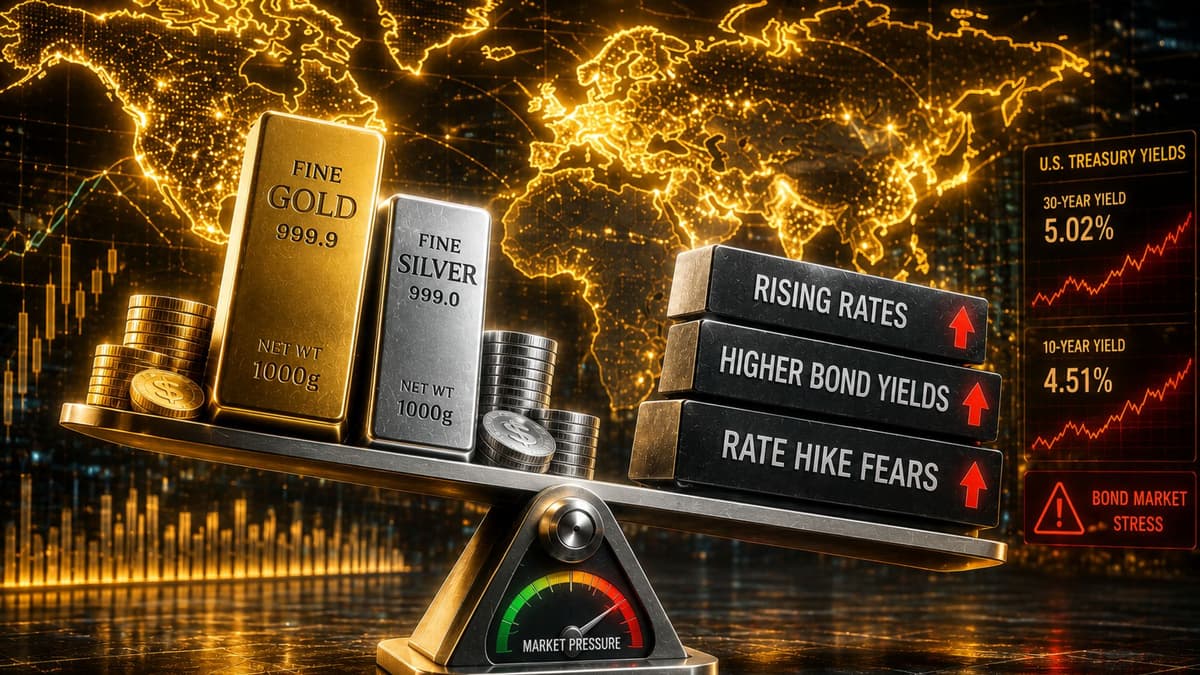
Hotter U.S. inflation pressures gold because it can delay Federal Reserve interest-rate cuts and keep real yields elevated. Gold does not pay interest, so higher rates and firmer bond yields can reduce the appeal of holding bullion in the short term.
PPI is widely viewed as a leading inflation indicator because producers often pass higher input costs on to consumers. When producer prices rise faster than expected, markets may assume broader inflation risks will remain elevated.
That creates a difficult backdrop for precious metals. Gold can benefit from inflation as a long-term hedge, but in the near term it often struggles when inflation pushes the Federal Reserve toward a more cautious policy stance.
What does this mean for the Federal Reserve meeting?
The inflation report complicates the Federal Reserve's policy outlook because it arrived just as the central bank was wrapping up its two-day monetary policy meeting. Economists were not expecting the Federal Reserve to ease interest rates before the summer, and the latest data may now strengthen the case for keeping policy unchanged for longer.
The source article notes that the Federal Reserve could be forced to maintain its neutral stance longer than expected. For gold investors, that is important because a delayed easing cycle usually supports the U.S. dollar and interest-rate expectations, both of which can weigh on XAUUSD.
For Indian investors, the Fed path also influences foreign flows, the dollar-rupee exchange rate, and imported gold costs. A hawkish or cautious Fed can keep global financial conditions tight, which often raises volatility across bullion and broader commodity markets.
Why are oil prices and the Iran war also important for gold?
Oil prices and the war involving the U.S., Israel, and Iran are important because they can add a new layer of inflation and supply-chain risk to the global economy. Economists noted that the sharp rise in February PPI was recorded before the U.S. and Israel started a war with Iran.
That timing matters. It suggests inflation was already heating up even before geopolitical tensions pushed oil prices sharply higher.
The article says the conflict has created a significant global supply-chain bottleneck in the Middle East. Higher oil prices can raise transport, production, and input costs across the economy, which may feed into future inflation readings.
Can geopolitical risk still support safe-haven demand for gold?
Yes, geopolitical risk can still support safe-haven demand for gold, but that support is not always immediate when inflation and rate expectations dominate trading. In this case, the market focused first on stronger U.S. inflation and the implications for Federal Reserve policy.
Over time, if Middle East tensions deepen, supply disruptions worsen, or energy prices keep rising, safe-haven flows could return to bullion. That is why investors should watch both inflation data and geopolitical developments together rather than in isolation.
What should Indian gold investors watch next?
Indian gold investors should watch three things next: the Federal Reserve's policy signal, upcoming U.S. inflation data, and the direction of oil prices after the Iran conflict escalation. These factors will shape global gold price trends, dollar strength, and imported bullion costs in India.
A weaker global gold price can create buying opportunities for long-term Indian investors, especially around dips in international spot rates. However, any weakness in the Indian rupee against the U.S. dollar could limit the drop in domestic gold prices even if spot gold remains under pressure internationally.
The key watchpoint now is whether gold can stabilize after falling below $5,000 per troy ounce or whether hotter inflation and a longer Federal Reserve pause trigger another leg lower. For traders and investors in India, the next move in bullion will likely depend on whether inflation fears or safe-haven demand become the stronger market force.