# Gold Price Could Hit $17,250 on US Debt Crisis: Pierre Lassonde
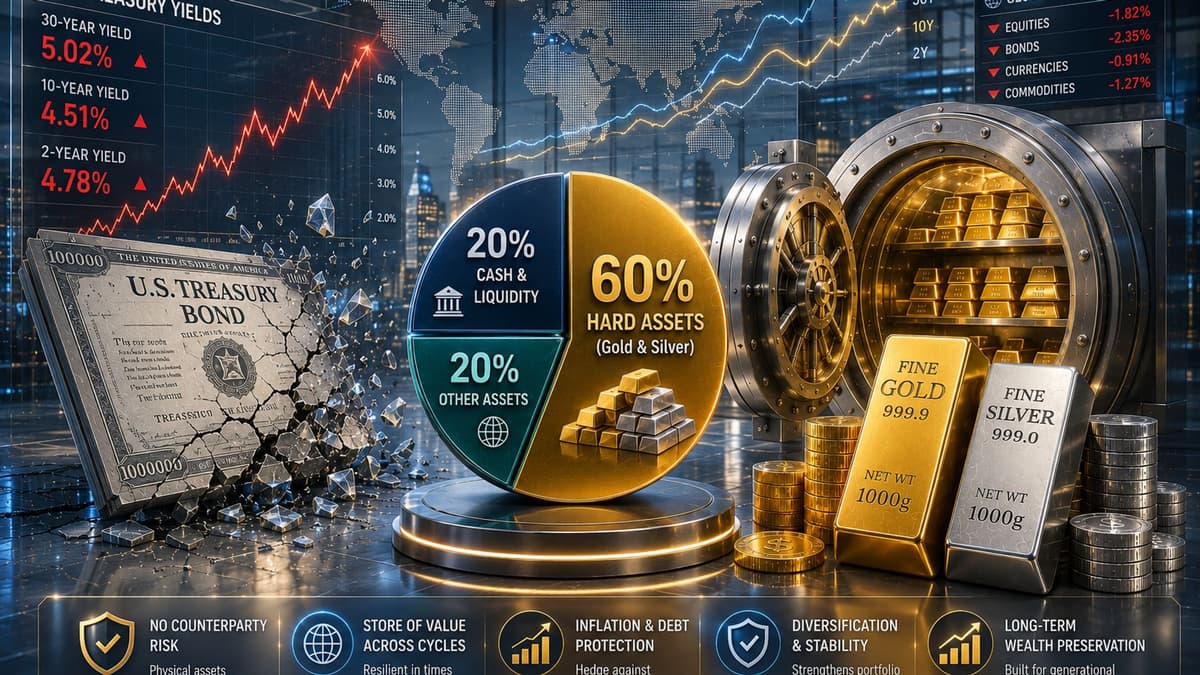
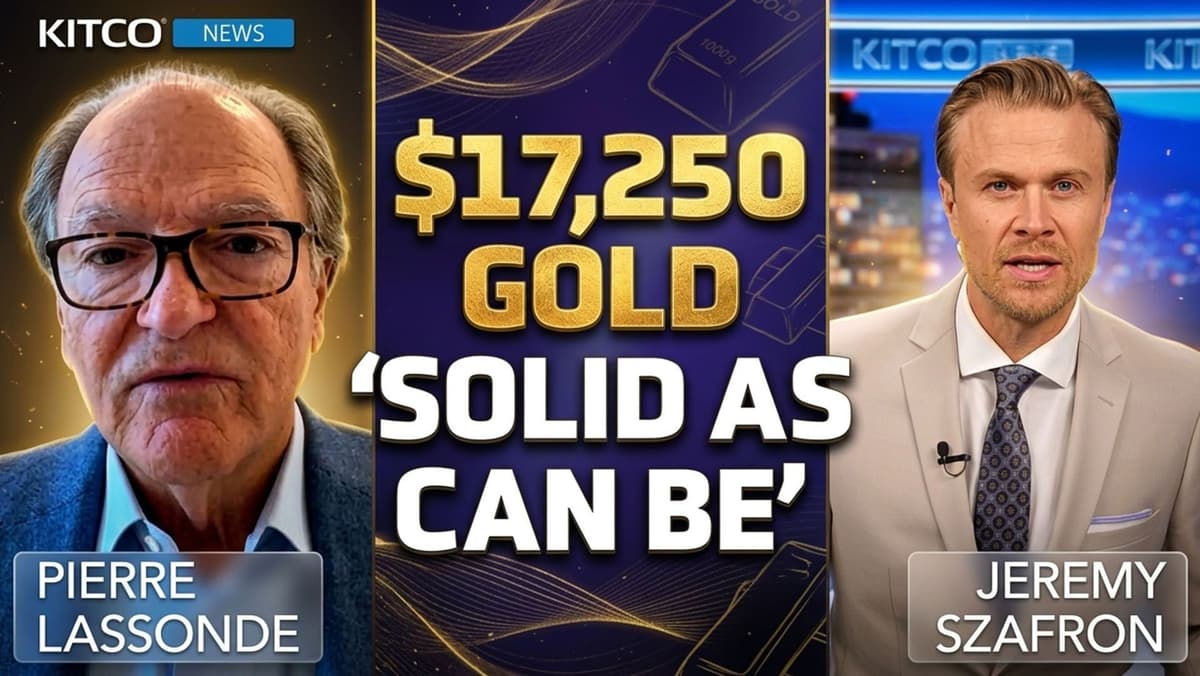
Gold could reach $17,250 per troy ounce within three years, according to mining veteran Pierre Lassonde, who argues that a nearly $40 trillion U.S. debt burden, persistent deficit spending, and a global shift away from the U.S. dollar are reshaping the long-term bullion market.
In an interview with Kitco News, the co-founder of Franco-Nevada and former president of Newmont Mining said the current macro backdrop resembles the stagflationary 1970s, but with far higher leverage. For Indian investors, that matters because any structural rally in XAUUSD could feed directly into higher domestic gold prices in INR, especially if the rupee weakens against the U.S. dollar.
Why does Pierre Lassonde think gold can reach $17,250?
Lassonde’s core argument is that gold is moving from a standard commodity role toward a reserve-currency role as confidence in the U.S. fiscal system weakens.
He said his $17,250 gold price target is "as solid as can be" and added that he is convinced the market could reach that level in the next three years. His thesis rests on three pillars: extreme U.S. debt growth, persistent monetary expansion, and rising central bank demand for bullion.
Lassonde compared the current cycle with the late 1970s, when gold surged roughly tenfold as inflation and interest rates rose together. But he stressed that today’s environment is more dangerous because debt levels are far larger than they were in the early 1980s.
How is today different from the 1970s?
The biggest difference is leverage. Lassonde noted that total U.S. debt was about $1 trillion in 1981, when Ronald Reagan first took office. Today, he said, that same amount is roughly what the United States pays in annual interest because total debt is now approaching $40 trillion.
That assessment broadly matches current public data. As of early May 2026, total U.S. gross national debt stood near $39 trillion. The Congressional Budget Office has projected that net interest will account for nearly 14% of all federal outlays in the current fiscal year.
How does the $40 trillion U.S. debt crisis support gold prices?
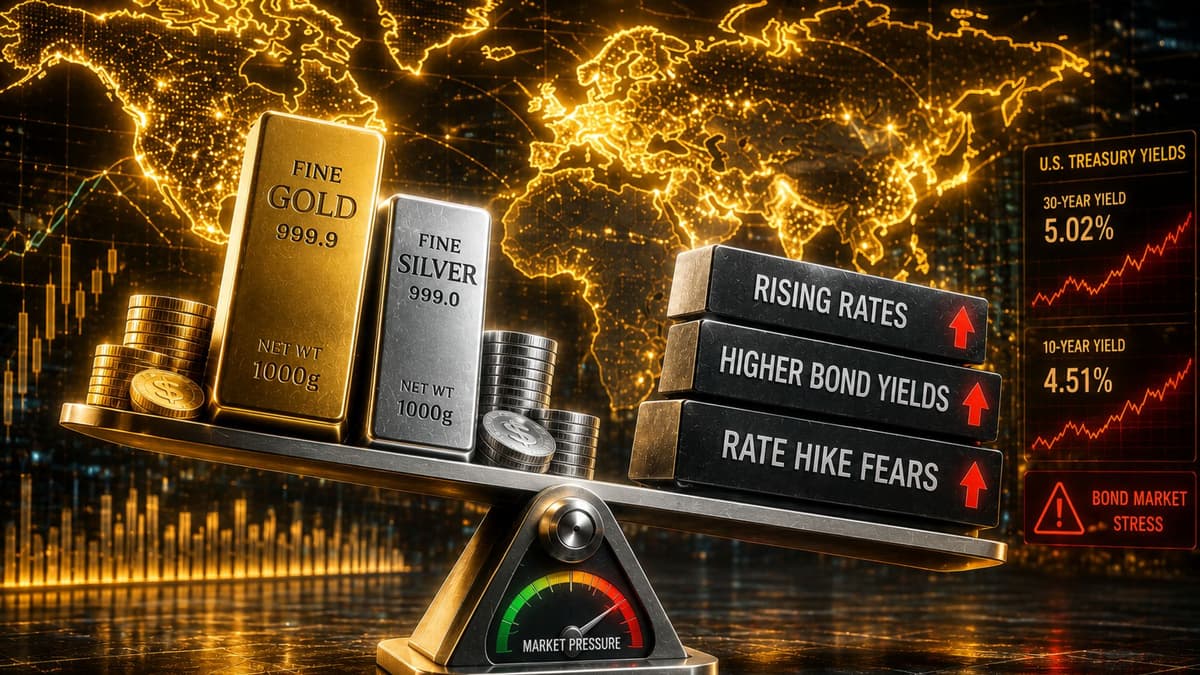
Lassonde argues that rising debt service costs leave the Federal Reserve and the broader U.S. policy system with little room to normalize without damaging growth or destabilizing markets. In that setup, gold benefits as a long-term store of value and safe-haven asset.
He said the U.S. budget deficit is projected to exceed 7.9% of GDP, and argued that the Federal Reserve is effectively "monetizing the debt and printing dollars." In his view, that creates a durable tailwind for bullion prices.
For Indian investors, this matters because a debt-driven decline in confidence in the U.S. dollar can create two-way effects. A weaker dollar can support global commodity demand, but if gold rises sharply in dollar terms, Indian buyers may still face higher local prices even if the rupee remains stable. If the rupee weakens at the same time, domestic gold rates can rise even faster.
Why does fiscal stress matter for bullion?
Fiscal stress matters because gold tends to respond not only to inflation, but also to doubts about sovereign balance sheets, real interest rates, and currency credibility.
When markets believe governments will finance deficits through more borrowing, lower real rates, or monetary expansion, investors often increase exposure to bullion, precious metals, and other hard assets. Lassonde’s argument is that the U.S. has entered exactly that phase.
Why does Lassonde call gold the "currency of last reserve"?
Lassonde says gold becomes critical when the U.S. dollar fails to function as the world’s unquestioned backstop for trade and reserves. In that environment, central banks and trading nations turn to bullion as a neutral reserve asset.
He said, "Gold, 90% of the time is a commodity, but 10% of the time it’s the currency of last resort." He added that when the dollar does not perform its role as the world’s reserve anchor, gold takes its place — and he believes that process is already underway.
How is the global payment system changing?
Lassonde pointed to China as a major driver of this shift. He said China has built a parallel payment infrastructure that can bypass U.S. economic sanctions, and he claimed that system is growing by "50, 100%... every six months."
That shift, if sustained, could reduce global dependence on the greenback in trade settlement. For gold, the implication is straightforward: as countries seek politically neutral reserve assets, demand for physical bullion can rise.
What are central banks doing with their gold reserves?
According to Lassonde, central banks are now the dominant force in the gold market. He said they have been diversifying away from the U.S. dollar and increasing gold allocations from less than 10% to more than 20% of total reserves.
Recent official data supports the broader accumulation trend. The People’s Bank of China reported that its official gold reserves rose to 74.64 million troy ounces at the end of April 2026, marking an 18th consecutive month of declared gold purchases.
Even after that buying streak, gold still makes up less than 10% of China’s total foreign exchange reserves. That suggests, in Lassonde’s framework, that there is still meaningful room for further accumulation.
Is price discovery moving from the West to China?
Lassonde said price discovery is increasingly shifting toward the Shanghai Gold Exchange. He argued that strong retail participation and what he described as "casino-type" volatility are starting to influence the physical gold price more directly.
If that trend continues, Indian investors should watch Asian trading hours more closely. Changes in pricing power from Western paper markets to Asian physical markets could affect how quickly global gold price moves pass through to Indian bullion dealers and jewellers.
Why does Pierre Lassonde say mining stocks are still undervalued?
Lassonde believes gold mining equities have not yet priced in the sector’s operating leverage, even with gold and silver near record highs. His argument is that miners’ margins can expand dramatically if gold keeps rising.
He said many miners now have total costs of around $1,500 to $1,600 per ounce. Recent industry data broadly confirms that trend, with average all-in sustaining costs (AISC) at roughly $1,450 per ounce.
At a gold price of $4,600 per ounce, Lassonde said that implies about $3,000 per ounce in margin. He then argued that if gold rises to $17,000, miners’ margins could expand by a factor of five, and that upside is not reflected in current share prices.
What if gold rises only to $7,000?
Lassonde said miners would still see a major profit boost even in a less aggressive scenario. He argued that if gold reaches $7,000 per ounce, operating margins would still more than double.
That matters for investors tracking gold equities, royalty companies, and mining ETFs. While Indian retail investors typically focus more on physical gold, sovereign gold bonds, and gold ETFs, any broad rerating in global mining shares can still influence sentiment across the precious-metals complex.
What does Lassonde think about mining management discipline?
Lassonde praised the current generation of mining CEOs for being "incredibly disciplined" with capital allocation. He said companies are no longer chasing growth at any cost or pursuing overpriced acquisitions, which he described as the historic "bane of all gold stocks."
Instead, he said miners are focusing on self-funded internal growth, dividends, and capital returns. He added that this is the first time in his 50-year career that he has seen meaningful buybacks in the gold space.
Recent results from major producers support that view. Several large mining companies have posted stronger-than-expected earnings and launched large share buyback programmes, helped by higher production and stabilizing costs.
What did Lassonde say about Barrick Gold?
Lassonde was skeptical about some restructuring moves among major producers, especially Barrick Gold’s plan for a North American gold IPO.
He said he does not fully understand the logic of floating 20% of an already-owned asset, arguing that such structures often do little for existing shareholders and can create market orphans.
What is his bottom line for miners at current prices?
Lassonde’s standard is blunt: miners should already be generating strong returns at current gold prices.
He said, "If you're not making money at $4,600 gold and you're not returning money to your shareholders, you should not be in this business." That statement underscores how strongly he views the current margin environment.
Why did Lassonde criticize Canadian pension funds?
Lassonde said Canadian institutional investors have failed to support domestic equities, especially the mining sector. He reserved some of his strongest criticism for large pension funds.
He called them "derelict in their function" for allocating only a small share of capital to Canadian markets. He specifically said he found it egregious that the Canada Pension Plan had only 2% of its money invested in Canadian equities, with practically none of that in mining.
Why does that matter to the gold sector?
It matters because institutional ownership can influence valuations, liquidity, and long-term capital access for miners. If domestic pension funds avoid the sector even during a strong gold cycle, mining shares may remain undervalued for longer than fundamentals suggest.
For Indian investors, the takeaway is broader: gold’s long-term case is no longer just about inflation hedging. It is increasingly tied to sovereign debt risk, reserve diversification, and global capital flows.
The next key watchpoints are whether U.S. debt continues climbing toward and beyond $40 trillion, whether central banks keep buying bullion at the current pace, and whether Asian markets such as the Shanghai Gold Exchange gain even more influence over global price discovery. If those trends persist, Indian gold buyers may need to prepare for structurally higher gold prices in rupees, not just short-term volatility in XAUUSD.