# Gold Price Breakdown Signals More Downside, Saxo Bank Warns
Gold prices may have more room to fall after a key technical breakdown combined with worsening macro headwinds, according to Ole Hansen, Head of Commodity Strategy at Saxo Bank. Spot gold fell to a six-week low of $4,888 per ounce, down more than 2% on the day, after breaking below its 50-day moving average just under $5,000 an ounce at the start of Wednesday's European trading session.
The decline matters for Indian investors because global bullion weakness does not always translate into equally sharp domestic price drops. When U.S. inflation expectations rise and the dollar strengthens, the rupee can face pressure, which may cushion any fall in local gold rates even if XAUUSD weakens.
Why did gold prices fall to a six-week low?
Gold prices fell because technical support broke at the same time that fundamental conditions turned less supportive. Hansen said gold's 50-day moving average just below $5,000 an ounce was a critical line in the sand, and once that level gave way, selling accelerated.
Spot gold last traded at $4,888 an ounce, down more than 2% on the day. That move pushed bullion to its lowest level in six weeks.
Hansen said many gold investors are frustrated because gold has failed to attract a sustained safe-haven bid even as the U.S. and Israel continue to wage war against Iran. The conflict has created a global supply-chain bottleneck, but that geopolitical stress has not been enough to offset the selling pressure in gold.
What technical level triggered the selloff?
The immediate trigger was the break below the 50-day moving average just under $5,000 an ounce. In technical trading, a break of a widely watched support level often activates momentum selling and forces fast-money traders to cut positions.
Hansen said that is exactly what the market is now facing. Once support failed, bearish momentum deepened and pushed XAUUSD sharply lower.
What fundamental headwinds are hurting gold right now?
The biggest fundamental headwind is the rise in inflation expectations caused by higher energy prices. Hansen said the war's impact on energy markets has lifted inflation expectations at a time when central banks were already cautious about easing monetary policy.
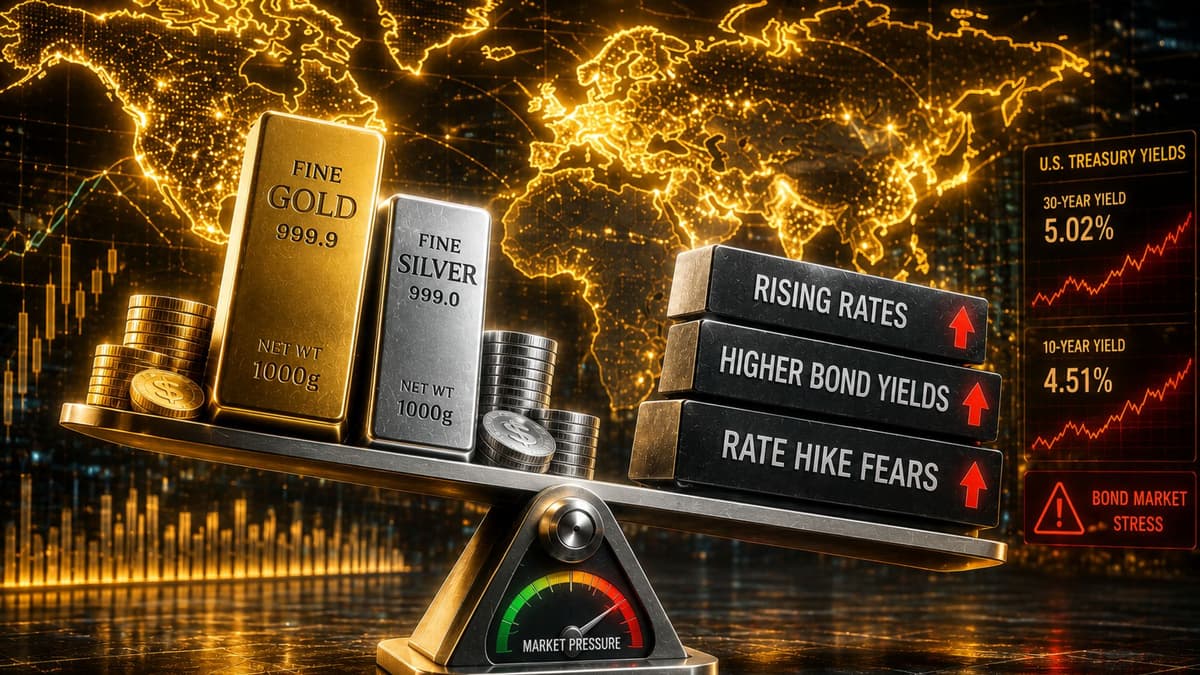
He said the surge in oil and refined product prices, especially diesel, has reduced the likelihood of near-term rate cuts. In some cases, markets have shifted toward a higher-for-longer interest-rate outlook.
That matters because higher real yields are a direct headwind for non-yielding assets such as gold. When investors can earn more from yield-bearing assets, bullion becomes less attractive on a relative basis.
Why do oil and diesel prices matter for gold?
Oil and diesel matter because they feed inflation across the global economy. Higher fuel and transport costs can keep consumer prices elevated, which makes central banks less willing to cut rates.
Hansen said that dynamic is now working against precious metals. Instead of boosting gold through safe-haven demand, the conflict is lifting inflation and supporting real yields.
How is the U.S. dollar competing with gold as a safe haven?
The U.S. dollar is drawing capital away from gold. Hansen said geopolitical uncertainty is pushing more money into dollar-denominated assets, creating a competing safe-haven trade.
That is important for Indian investors because a stronger dollar often puts pressure on emerging-market currencies, including the rupee. Even if international gold prices fall in dollar terms, INR-denominated gold can remain relatively firm if the rupee weakens.
What is the Federal Reserve's role in the latest gold price outlook?
The Federal Reserve is central to the near-term gold outlook because markets now expect rates to stay unchanged for longer. As the Federal Reserve wraps up its latest monetary policy meeting, investors expect no rate change, but they also fear the Fed could reinforce a neutral stance and signal that rates may remain unchanged longer than expected.
According to the CME FedWatch Tool, markets have nearly completely priced out potential rate cuts through the summer. That shift weakens one of the key bullish arguments for gold.
Hansen said the war with Iran is primarily a supply-driven inflation shock. That means central banks have limited tools to manage the risks because tighter policy can hurt growth, while easier policy can worsen inflation pressures.
Why is a supply-driven inflation shock bad for gold in the short term?
A supply-driven inflation shock is bad for gold in the short term because it keeps inflation sticky without guaranteeing easier monetary policy. Hansen said that combination of sticky inflation and a constrained policy response creates an uncertain backdrop for gold.
In other words, gold is not getting the usual benefit that comes when markets expect aggressive rate cuts. Instead, traders face persistent inflation, firm yields, and a strong dollar.
Why is gold not rising despite war in the Middle East?
Gold is not rising because safe-haven demand is being overwhelmed by higher yields, dollar strength, and liquidation pressure. Hansen said investors expected growing chaos in the Middle East to support bullion, but the market is reacting differently.
Gold has been one of the most profitable and crowded trades over the past couple of years. Hansen said that bullish positioning was built on central bank buying, geopolitical hedging, and debasement concerns.
Now that key chart levels have broken, those crowded positions are becoming a source of downside. Momentum-driven selling has intensified, and the broader risk-off tone has pushed investors to reduce profitable exposures to raise liquidity.
What does a crowded trade mean for gold investors?
A crowded trade means too many investors are positioned the same way, which can worsen corrections. When prices fall, traders who were sitting on profits often rush to exit at the same time.
Hansen said that is now adding to gold's volatility. For Indian investors, this means short-term swings in global bullion prices could remain sharp even if the long-term structural case for gold stays intact.
How far could gold prices fall from here?
Hansen sees initial support in gold around $4,840 an ounce, with the next major downside level at $4,660 an ounce. Those are the key price markers traders are watching after the break below $5,000.
The $4,840 level could act as the first test for dip buyers. If that fails, the market may target $4,660 an ounce next.
For investors in India, those global support levels matter because they often influence MCX gold sentiment and jewellery demand trends. But local pricing will also depend on the rupee, import costs, and whether domestic buyers step in on declines.
Why is silver also under pressure?
Silver is weakening for many of the same reasons as gold, but its industrial exposure is making the drop worse. Hansen said silver faces further downside risk after falling below $78 an ounce.
Spot silver last traded at $77.13 an ounce, down 2.5% on the day and sitting at a four-week low. That underperformance reflects both precious-metals weakness and fears about global growth.
How does industrial demand affect silver prices?
Silver is more sensitive to growth expectations because it has heavy industrial use. Hansen noted that copper was also trading sharply lower on the day, showing that markets are increasingly worried higher energy costs will weigh on global activity.
He added that silver's higher volatility and leverage to speculative positioning amplify the downside during corrections. That makes silver more vulnerable than gold when risk sentiment deteriorates quickly.
For Indian investors, the near-term watchpoint is clear: if the Federal Reserve keeps a firm higher-for-longer tone and energy-driven inflation continues to support the dollar and real yields, gold and silver may remain under pressure, with $4,840 and then $4,660 in gold likely to be the next major levels to watch.