# Gold ETF Inflows Rebound as Prices Stall Below $4,700
Global gold-backed exchange-traded funds drew fresh investor money in April even as the gold price began the new trading week below $4,700 per troy ounce. The rebound in bullion ETF demand suggests that investment appetite remains firm, even as inflation risks, higher oil prices, and shifting rate-cut expectations keep XAUUSD in a holding pattern.
For Indian investors, the message is clear: global ETF inflows remain a key signal for the broader gold price trend. If international investment demand stays resilient while geopolitical risks and central bank buying continue, gold could regain momentum in the second half of the year, although volatility may remain high in the near term.
What happened to global gold ETF flows in April?
Global gold ETF inflows rebounded sharply in April. According to the World Gold Council (WGC) monthly report published last Thursday, investors added 45 tonnes of gold worth $6.575 billion to global gold-backed ETFs last month.
That marked a clear turnaround from March’s outflows of 84.3 tonnes. The April recovery shows that institutional and retail investment demand for bullion remains healthy despite a pause in spot gold’s rally.
How high are global ETF holdings now?
Global gold ETF holdings rose to 4,137 tonnes in April. The WGC said that was the third-highest level ever recorded.
That total sits just below the all-time high of 4,176 tonnes, which was set in February. The data indicates that investors have not abandoned gold, even with prices consolidating below recent highs.
Why are gold prices still stuck below $4,700?
Gold prices remain under pressure because markets are balancing strong safe-haven demand against rising inflation risks and a less supportive interest-rate outlook. At the start of the new trading week, gold traded below $4,700 an ounce, with analysts describing the market as stuck in neutral.
The WGC said the near-term environment is not especially supportive for bullion. Analysts warned that rate-cut expectations have moved out, gold is technically vulnerable, and financial markets are currently treating the geopolitical shock as temporary rather than structural.
What did the World Gold Council say about the near-term outlook?
The WGC’s view is that gold faces short-term downside risks, but the longer-term uptrend remains intact. In its report, the analysts said: “The near-term setup is not especially friendly. Gold is technically vulnerable, rate-cut expectations have moved out, and markets are treating the shock as temporary. Absent a fresh catalyst, this could remain a weak period for gold.”
Even so, the WGC added that gold’s broader bullish trend has not broken. Analysts said the market is effectively waiting for a new catalyst to trigger the next rally in precious metals.
What drove European gold ETF inflows higher?
European-listed gold ETFs led April’s inflows. Investors in Europe bought nearly 27 tonnes of gold during the month, valued at US$3.7 billion, making the region the largest contributor to global ETF demand.
According to the WGC, the UK led the surge, while Switzerland and Germany also made meaningful contributions. The report linked those inflows to growing geopolitical and geoeconomic risks.
Why did European investors buy more gold?
European investors increased gold exposure because they were assessing the inflationary impact of a prolonged Iran conflict and the resulting pressure on energy prices. The WGC said those risks helped drive demand for safe-haven assets, including bullion.
The analysts said in the report: “The UK led the surge, while Switzerland and Germany also contributed meaningfully. Positive flows in the region appeared linked to heightened geopolitical and geoeconomic risks, as investors assessed the inflationary implications of a more protracted Iran conflict and the associated pressure on energy prices.”
How did North American and Asian gold ETFs perform?
North American and Asian gold ETFs also posted inflows in April, although Europe led by a wide margin. North American funds recorded inflows of 6.1 tonnes, valued at $1 billion.
That steady demand shows Western investors are still participating in the gold market, even as higher inflation could complicate the outlook for the Federal Reserve and other major central banks.
Why does Asia remain crucial for gold demand?
Asia remains a major source of support for gold because investors in the region have continued buying for eight straight months. The WGC said Asian-listed gold ETFs saw inflows of more than 11 tonnes, valued at $1.8 billion in April.
This was the eighth consecutive month of positive flows for the region. The WGC said Asia is now important to watch because year-to-date flows are on pace to challenge last year’s record total.
What is happening in China and Hong Kong?
China led Asian gold ETF demand in April. The WGC said funds in Hong Kong SAR added US$732 million, marking a record month, helped by new product listings.
At the same time, Mainland China gold ETFs continued to attract inflows amid elevated geopolitical tensions, falling yields, and continued official-sector gold-buying announcements. Those factors reinforced investment demand for bullion across the region.
How does the Iran conflict affect gold prices and inflation?
The war involving Iran has increased both support and risk for gold. On one hand, geopolitical instability normally strengthens safe-haven demand for precious metals. On the other hand, the same conflict has created what the article describes as a historic global energy supply shock, pushing oil prices higher and intensifying inflation fears.
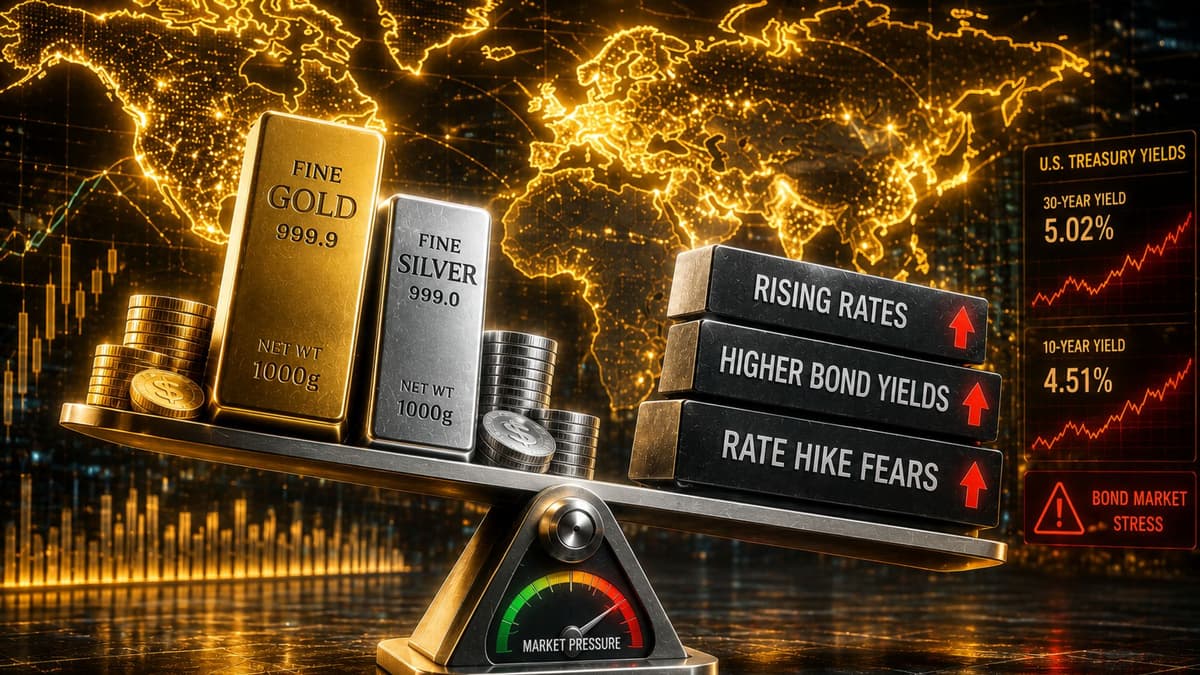
Higher energy prices can feed into broader consumer inflation, which may force central banks to keep monetary policy tighter for longer. That matters for gold because higher interest rates raise the opportunity cost of holding non-yielding assets such as bullion.
Why can inflation hurt gold in the short term?
Inflation can hurt gold in the short term if it leads central banks to become more hawkish. The WGC said rising inflation risks could force policymakers to hold rates higher or delay expected rate cuts, which tends to pressure gold prices.
That dynamic helps explain why gold has not broken higher even as geopolitical tensions remain elevated. Investors are weighing safe-haven demand against the risk of tighter policy from major central banks.
What does this mean for Indian gold investors?
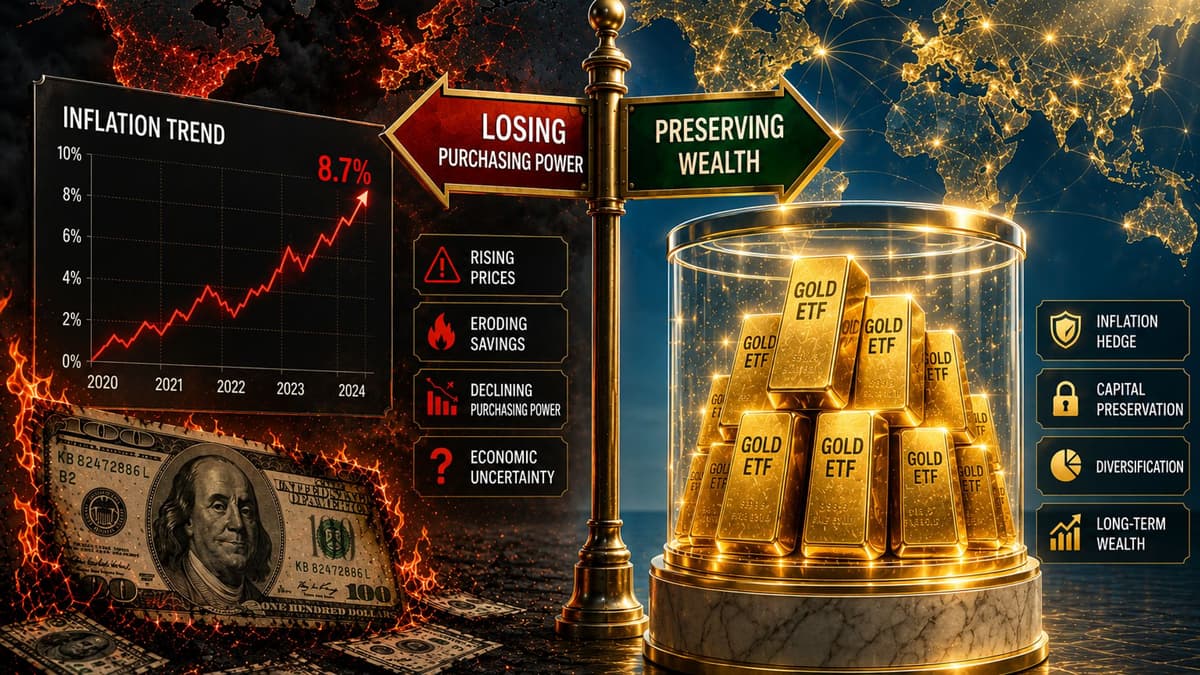
For Indian investors, the rebound in global gold ETF inflows is a supportive signal for the medium-term gold price outlook. Strong international demand, especially from Europe and Asia, suggests that investors still see value in gold as a hedge against geopolitical shocks, inflation, and financial-market uncertainty.
However, Indian buyers should also watch how global prices below $4,700 per ounce, oil-driven inflation, and central bank policy affect domestic rates and the rupee. If crude oil stays high and inflation pressures build, imported gold costs in India could remain elevated, especially if INR weakens against the U.S. dollar.
India’s gold market often responds to a mix of international bullion prices, USD/INR moves, and local physical demand. That means any sustained pickup in global ETF buying could eventually feed into firmer domestic gold rates, even if near-term volatility persists.
The next key watchpoint for gold investors is whether a fresh catalyst emerges in the second half of the year. If geopolitical risks deepen, Asian inflows stay strong, and global ETF holdings push back toward the February record of 4,176 tonnes, gold could regain upside momentum; if inflation keeps rate cuts delayed, XAUUSD may remain range-bound for longer.