
# Bitcoin Price Alert: Sideways Grind Signals Bearish Pressure
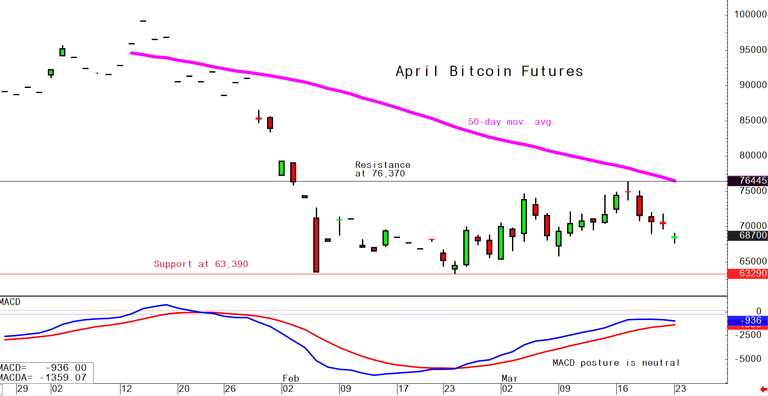
April bitcoin futures edged higher in early U.S. trading on Monday, March 23, but the broader technical picture remained weak. The latest daily chart setup showed that bitcoin bulls had faded, a prior uptrend had been negated, and bears held the overall near-term technical advantage.
For Indian investors tracking global risk assets alongside gold, the setup matters because weakness in bitcoin can shift short-term sentiment across safe-haven and speculative markets. While bitcoin and gold do not always move together, changes in risk appetite often influence flows into bullion, precious metals, and other defensive assets.
What happened to bitcoin prices on March 23?
April bitcoin futures rose slightly in early U.S. trading on Monday, March 23. Even with that modest gain, prices stayed trapped in what the chart analysis described as a sideways grind at lower levels.
That means bitcoin did not stage a convincing recovery. Instead, the market continued to move sideways after losing upward momentum, which kept traders focused on technical damage rather than on the small intraday bounce.
Why does the daily chart still favor bears?
The daily chart still favored bears because the earlier price uptrend was negated. Once that uptrend failed, bitcoin bulls lost control of the short-term trend and sellers regained the near-term technical advantage.
The source analysis said bears had the overall near-term technical advantage at present. In practical terms, that signals that rallies may face resistance unless bitcoin can reclaim stronger upside momentum and break key resistance levels.
What does a "sideways grind at lower levels" mean?
A sideways grind at lower levels means bitcoin is moving in a narrow range, but near recently weakened price zones rather than near highs. This kind of pattern usually reflects hesitant buying interest and continued selling pressure.
For traders, such action often signals consolidation within a weak structure rather than a fresh bullish breakout. Until price action improves, the pattern keeps the market vulnerable to further downside pressure.
What is Wyckoff's Market Rating for bitcoin now?
Wyckoff's Market Rating for bitcoin stood at 3.5 out of 10.0 on March 23. On this scale, 1.0 is the most bearish and 10.0 is the most bullish, so a 3.5 reading points to a clearly weak technical backdrop.
That rating reinforces the view that bears remain in control in the near term. It also suggests that bullish conviction has faded materially compared with a stronger uptrend environment.
Why does a 3.5 rating matter to traders?
A 3.5 rating matters because it gives a quick technical snapshot of market strength. With bitcoin sitting well below the midpoint of 5.0, the rating indicates bearish conditions rather than a balanced or bullish market.
For active investors, this kind of reading can shape decisions on entry points, risk management, and whether to wait for stronger confirmation before adding exposure. Indian traders watching global digital assets in rupee terms should also remember that INR moves can amplify volatility when converted from U.S. dollar pricing.

Which support and resistance levels should traders watch?
Traders should watch the important technical support and resistance lines on the daily chart, because those levels will likely determine whether bitcoin breaks lower or stabilizes. The source article did not publish the exact price marks, but it emphasized that these chart lines are the key signals to monitor next.
Support shows where buying may emerge, while resistance marks zones where selling could return. In a weak technical structure, a failure at resistance can confirm continued bearish control, while a decisive move above resistance can begin to repair sentiment.
How does this matter for Indian investors?
For Indian investors, bitcoin's weak chart structure matters as part of the broader risk landscape. When speculative assets such as bitcoin show fading momentum, some investors reassess allocations across gold price exposure, bullion, and other safe-haven assets.
A softer bitcoin trend does not automatically lift gold, but it can influence cross-market sentiment. Investors in India should track both XAUUSD and cryptocurrency volatility, especially when rupee moves affect imported gold costs and the local gold price.
What should investors watch next in bitcoin?
Investors should watch whether bitcoin can break out of the current sideways grind at lower levels or whether bears extend control. The immediate chart question is whether the market can overcome resistance and rebuild an uptrend after the prior bullish structure was negated.
If bitcoin fails to do that, the near-term bearish bias remains intact. For Indian market participants, the next watchpoint is whether global risk sentiment weakens further and drives greater interest in safe-haven assets such as gold and other precious metals, or whether bitcoin stabilizes enough to improve confidence again.