Why did the Bank of Canada hold interest rates at 2.25%?
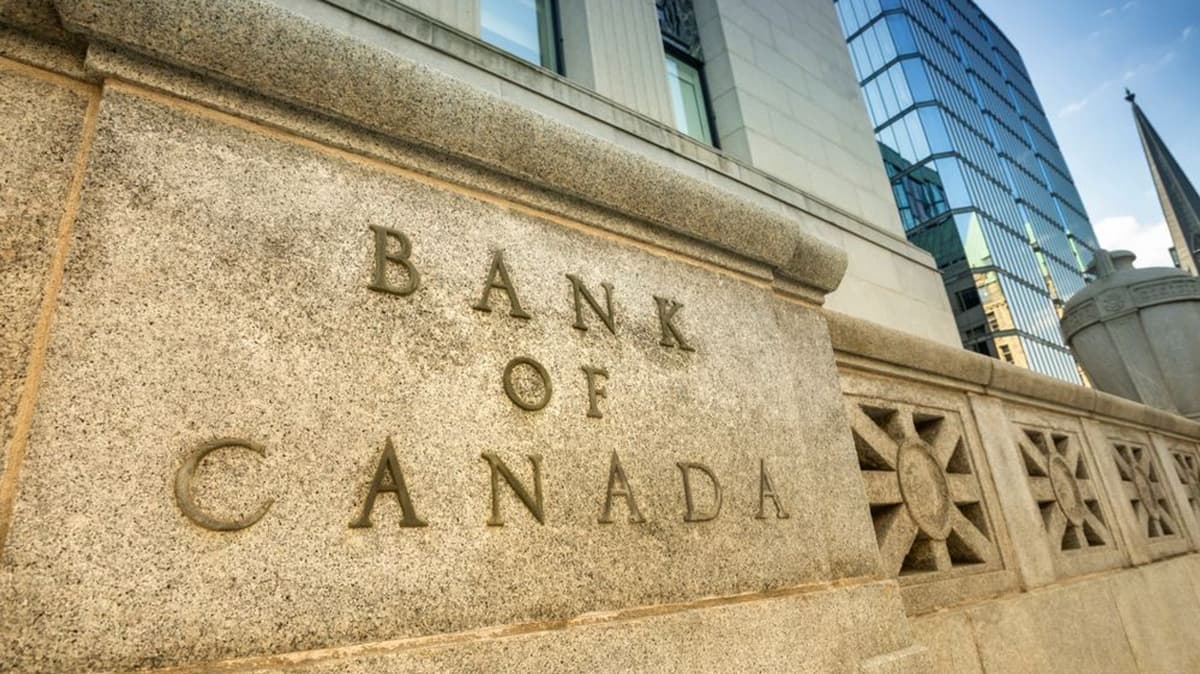
The Bank of Canada held its key overnight rate at 2.25% on Wednesday because inflation is near target, but the economic outlook has become more uncertain. The central bank said risks to growth are now tilted to the downside as the Iran war adds fresh global economic pressure.The Bank of Canada also kept its bank rate at 2.50% and its deposit rate at 2.20%. The decision matched market expectations, but the tone of the statement was cautious and clearly more worried about geopolitical risk.
The central bank said the breadth and duration of the Middle East conflict, and its effect on the economy, remain highly uncertain. That warning matters for bullion, gold price forecasts, and broader precious metals sentiment because investors often turn to safe-haven assets when war risks rise, but higher inflation and tighter financial conditions can also pressure markets.
What did the Bank of Canada say about global growth?
The Bank of Canada said the global economy had been on track to grow at around 3% before the war, in line with its January Monetary Policy Report. That suggests policymakers had seen a stable global backdrop before the latest geopolitical shock.The bank said U.S. economic growth has moderated but remains solid, supported by consumption and strong AI-related investment. It added that U.S. inflation remains above target and has evolved largely as expected.
In the euro area, the Bank of Canada said domestic demand is supporting growth while exports have contracted. In China, it said exports remain strong, but domestic demand is still weak.
How is the Iran war affecting inflation and commodity markets?
The Bank of Canada said the Iran war has sharply lifted oil and natural gas prices, which will push global inflation higher in the near term. That is one of the most important takeaways for gold investors because energy-driven inflation can reshape central bank policy expectations and move XAUUSD and local bullion prices.The central bank warned that energy supply disruptions are not the only risk. It said transportation bottlenecks caused by the effective closure of the Strait of Hormuz could also disrupt supplies of other commodities, including fertilizer.
That matters for Indian investors because India imports a large share of its crude oil needs. If oil prices stay high, India could face imported inflation, pressure on the rupee, and potentially firmer domestic gold prices in INR terms even when international gold prices in U.S. dollar or Canadian dollar terms are volatile.
Why do oil prices matter for gold?
Oil prices matter for gold because higher energy costs can lift inflation expectations and increase demand for safe-haven assets such as gold. At the same time, if central banks stay hawkish to contain inflation, higher bond yields can cap gains in bullion.This creates a two-way pull for the gold price. Investors must watch whether inflation fears or rising yields become the stronger market driver.
What happened to gold prices and the Canadian dollar after the BoC decision?
Gold fell in Canadian dollar terms around the Bank of Canada announcement, while the Canadian dollar initially weakened and then recovered slightly. The price action shows that traders were balancing lower growth expectations against sticky inflation risks.Before the announcement, gold dropped to a session low of $6,631.46 per ounce in Canadian dollar terms. After the decision, gold continued to trade near those lows, with XAU/CAD last at $6,689.19 per ounce, down 2.39% on the daily chart.
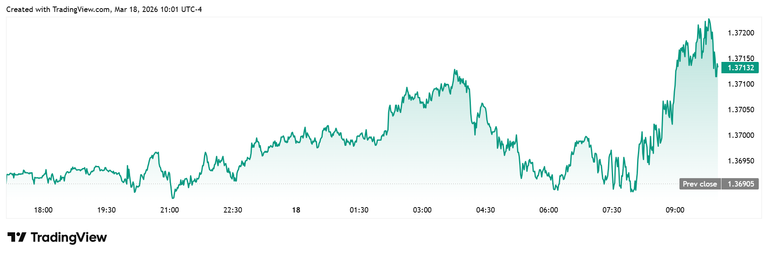
The Canadian dollar fell to session lows in the minutes before the release, then rose slightly after the announcement. USD/CAD was last trading at 1.3711 per U.S. dollar, up 0.15% on the session.
What do tighter financial conditions mean for bullion?
The Bank of Canada said financial conditions have tightened from accommodative levels. It also noted that global bond yields have risen, equities have declined, and credit spreads have widened.These conditions can be mixed for gold. Safe-haven demand can support bullion when equities fall and geopolitical risks rise, but rising bond yields can reduce the appeal of non-yielding assets measured per troy ounce.
For Indian gold buyers, that means global volatility may continue to feed through to domestic prices. If the rupee weakens against the U.S. dollar while global safe-haven demand stays firm, local gold rates could remain elevated even if international moves are uneven.
What does the Bank of Canada expect for the Canadian economy next?
The Bank of Canada said it still expects the Canadian economy to grow modestly as it adjusts to U.S. tariffs and trade policy uncertainty. However, it now believes near-term growth will be weaker than it had anticipated in January.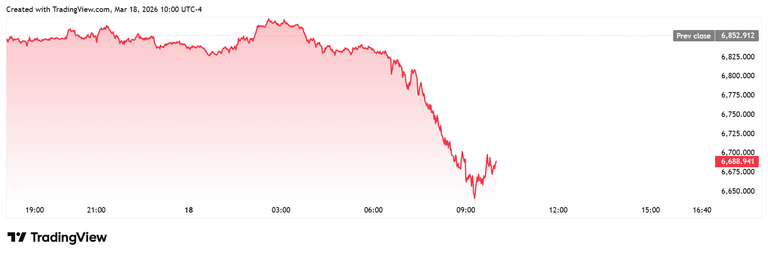
The bank said inflation has continued to moderate. But it warned that the sharp rise in global energy prices has already pushed gasoline prices higher, and that will lift total inflation in the coming months.
This combination is important because it points to slower growth and rising price pressure at the same time. For precious metals markets, that kind of backdrop often increases attention on inflation hedges, recession risks, and central bank reaction functions.
How did the BoC describe the balance of risks?
The Bank of Canada said risks to growth look tilted to the downside. At the same time, it said inflation risks have risen because of higher energy prices.The central bank added that it will keep assessing the impact of U.S. tariffs, trade policy uncertainty, and how the Canadian economy is adjusting. It also said it is closely monitoring the unfolding Middle East conflict and its effects on growth and inflation.
Why did Governor Tiff Macklem warn about stagflation risk?
Bank of Canada Governor Tiff Macklem warned about stagflation risk because policymakers now face a difficult trade-off between weaker growth and rising inflation. That dilemma matters for gold because stagflationary conditions have historically strengthened the case for holding safe-haven assets.In his opening statement at the press conference, Macklem said, "Economic weakness combined with rising inflation is a dilemma for central banks." He added that raising interest rates to slow inflation could weaken the economy further, while easing interest rates to support growth could push inflation well above target.
Macklem also said Canada's outlook is complicated by structural changes, including shifting trade relationships, the adoption of AI, and changes in demographics. Those long-term forces make monetary policy more complex and can increase market sensitivity across currencies, bonds, and precious metals.
Will the Bank of Canada look through the inflation shock?
Governor Tiff Macklem said the Bank of Canada will look through the war's immediate impact on inflation, but only up to a point. He said that with inflation close to target and the economy in excess supply, the risk that higher energy prices quickly spread across other goods and services currently looks contained.However, he also warned that the longer the conflict lasts and the wider it becomes, the greater the risks. Macklem said the Governing Council will not allow high energy prices to broaden into persistent inflation if those pressures continue.
That is a critical watchpoint for Indian investors following gold price trends. If geopolitical conflict keeps oil elevated and central banks remain cautious, bullion markets could stay volatile, with XAUUSD, currency moves, and domestic INR pricing all reacting quickly to incoming inflation and growth data.
For now, the key signal is clear: the Bank of Canada kept rates unchanged at 2.25%, but its warning on downside growth risks, higher energy prices, and possible stagflation has raised the stakes for gold, currencies, and global commodity markets in the weeks ahead.