Why did Swiss gold exports fall in February 2026?
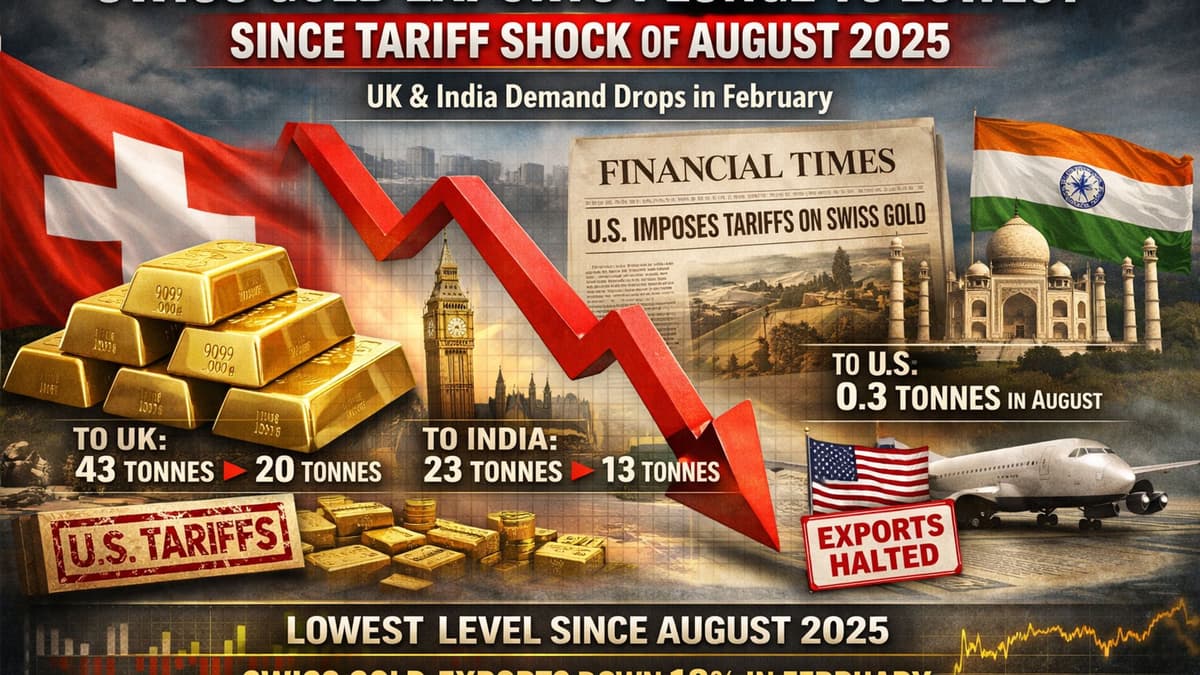
Swiss gold exports fell because shipments to both the UK and India slowed sharply in February 2026. Swiss customs data released on Thursday showed total gold exports dropped 18% from the previous month, reaching their lowest level since the tariff shock of August 2025.That matters because Switzerland is the world's largest bullion refining and transit hub. Its export flows often give the clearest early signal of changes in global physical gold demand, bullion trade routes, and precious metals liquidity.
The latest decline points to softer near-term demand from two major markets. The UK remains the world's largest over-the-counter gold trading hub, while India is the world's second-largest bullion consumer after China.
How much did shipments to the UK fall?
Shipments from Switzerland to the UK fell to 20 tonnes in February from 43 tonnes in January. That steep drop was a major reason overall Swiss gold exports weakened during the month.The UK plays a central role in global gold price formation because London dominates over-the-counter bullion trading. When Swiss exports to Britain fall this sharply, traders often read it as a sign of reduced short-term bullion demand or changing inventory flows in the wider XAUUSD market.
How much did shipments to India fall?
Swiss gold exports to India dropped to 13 tonnes in February from 23 tonnes in the prior month. The decline came as gold traded at a discount in the Indian market and consumer demand stayed subdued.For Indian investors, that discount is important. It suggests local bullion demand was not strong enough to absorb imports at prevailing global gold price levels, even though India remains one of the world's biggest physical gold markets.
Why did Swiss gold exports to India decline?
Swiss gold exports to India declined because local gold was trading at a discount and consumer demand remained weak. That combination reduced import appetite in one of the world's most important physical bullion markets.When gold trades at a discount in India, it usually signals soft jewellery buying, cautious retail demand, or limited festival and wedding-related purchases at current price levels. Importers and dealers often slow orders when domestic buyers resist higher prices.
What does this mean for Indian gold buyers?
For Indian buyers, weaker imports can mean the local market is waiting for either lower prices or stronger seasonal demand. If international gold prices remain elevated and the rupee weakens, domestic gold rates in INR can stay firm even when physical demand softens.Indian investors should also watch whether discounts persist. Sustained discounts can indicate that bullion dealers are struggling to pass on high global troy ounce prices to local buyers, especially in a price-sensitive market like India.
Why does Swiss export data matter for India?
Swiss export data matters for India because Switzerland is a major refining and transit point for bullion shipped into key consuming markets. A drop from 23 tonnes to 13 tonnes in one month gives a direct read on changes in India's physical gold import demand.For IndiaGoldPrice readers, this is a useful indicator alongside rupee moves, import duty policy, festive demand, and international safe-haven flows. Physical import trends often shape local premiums, discounts, and short-term market sentiment.
How did the August 2025 tariff shock disrupt the gold market?
The August 2025 tariff shock disrupted the global gold market because a U.S. customs ruling appeared to impose tariffs on Swiss gold bar exports. That decision upended Switzerland's massive bullion sector and forced traders to reassess global supply routes.Swiss bullion exports have been watched especially closely over the last six months because of that disruption. The episode changed trade patterns and temporarily froze normal shipments into the United States.
What triggered the tariff panic?
The panic began after the Financial Times published an article on August 6, 2025, revealing that the United States had imposed import tariffs on gold bars from Switzerland. According to a letter from U.S. Customs and Border Protection dated July 31, one-kilogram and 100-ounce gold bars would be classified under a customs code that subjected them to costly tariffs.Switzerland's tariff rate was listed at 39%, among the highest tariff rates imposed by the Trump administration. Because one-kilogram and 100-ounce bars are standard products in the bullion market, the ruling immediately threatened normal gold flows.
How badly did exports to the U.S. fall?
Gold exports from Switzerland to the United States nearly stopped during August 2025. Swiss customs data showed shipments dropped more than 99% to only 0.3 tonnes in August 2025 compared with July's figures.That collapse sent a shock through the global gold market. Traders had to reroute bullion, manage delivery uncertainty, and reassess supply chains across major refining and trading centres.
When was the tariff issue resolved?
The White House responded on August 7, 2025, saying it would "clarify misinformation" regarding the gold tariffs. Early the following week, President Donald Trump said on social media that "Gold will not be Tariffed!"However, the tariff exemption for gold bars was only formalized in early September 2025. That delay meant gold shipments to the United States did not normalize until then.
What happened to Swiss gold exports to the U.S., China and India after the tariff shock?
After the tariff shock, Swiss gold exports to the U.S. collapsed in August 2025, while shipments to China and India rose. That showed how quickly bullion flows can shift when trade policy disrupts a major destination market.Before the disruption, Switzerland had exported a record $36 billion in gold to the United States in Q1 2025. Those bullion exports accounted for more than two-thirds of Switzerland's quarterly trade surplus with the U.S.
How important was the U.S. market to Swiss gold trade?
The U.S. market was extremely important. Swiss gold exports to the United States reached a record $36 billion in Q1 2025, underscoring how central American demand had become for Swiss refiners and transit firms.The wider trade impact was also visible. Total Swiss exports to the U.S., adjusted for seasonal swings, were 22% lower in August than the previous month, the data showed.
Where did the gold go instead?
Some of the bullion appears to have been redirected to Asia. Swiss gold shipments to China more than tripled in August 2025, reaching their highest level since May 2024, while exports to India also rose.That shift highlighted the resilience of Asian physical demand when U.S. trade flows break down. For Indian investors, it also showed that India can quickly become a larger destination for bullion when global trade routes change.
What should Indian investors watch next in the gold market?
Indian investors should watch whether Swiss exports to India recover from February's drop to 13 tonnes, and whether local discounts narrow as consumer demand improves. Those signals will help show if physical buying is returning or if high prices are still limiting demand.Investors should also monitor UK import flows, U.S. trade policy, and any renewed disruption to Swiss bullion exports. Because Switzerland sits at the center of the global precious metals supply chain, changes in its export data can quickly ripple into gold price expectations, local INR bullion rates, and broader safe-haven sentiment.
If global gold prices stay elevated and Indian demand remains subdued, local discounts could persist. But if festival buying strengthens or the rupee moves sharply, India's physical market could tighten again even without a major shift in international XAUUSD prices.