India’s decision to raise the gold import tariff to 15% is expected to curb near-term bullion demand, support the rupee, and narrow the trade deficit, but analysts say it may also strengthen the long-term case for owning gold in the world’s second-largest precious metals market.
The new tariff regime took effect on May 13, 2026, reversing the 2024 duty cuts. For Indian investors, the move matters not just for domestic jewellery and bar demand, but also for local gold prices, import flows, and the rupee’s direction against the U.S. dollar.
Why did India raise gold and silver import tariffs to 15%?
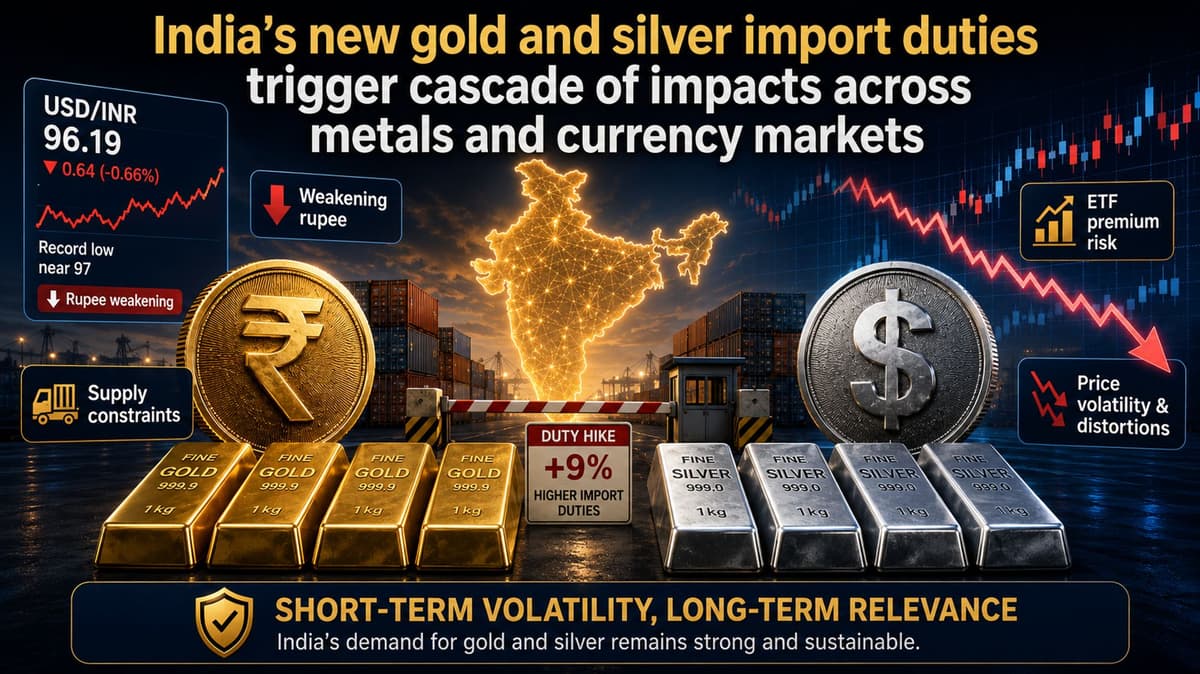
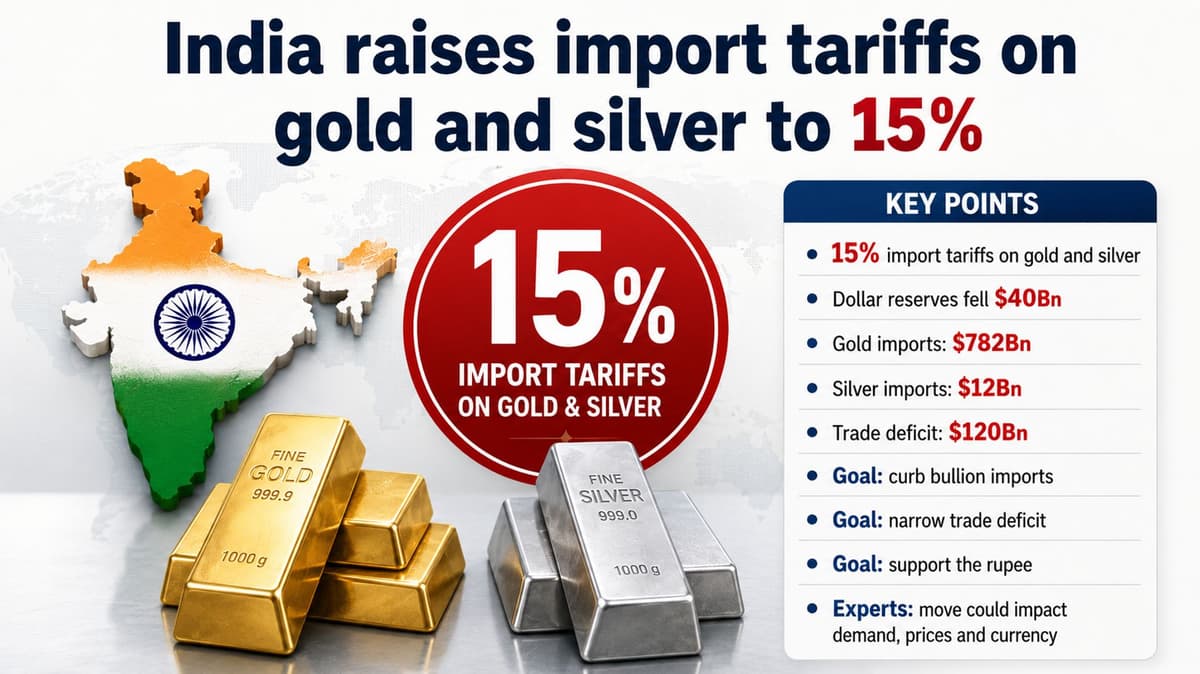
India raised import tariffs because the government wants to curb bullion imports, reduce the trade deficit, and support the rupee amid rising external pressure.The Modi government announced that gold and silver import tariffs were raised to 15% as of May 13, 2026. The move reverses earlier duty cuts and comes as policymakers respond to a widening imbalance in India’s external accounts.
According to Robert Savage, Global Head of Markets Strategy and Insights at BNY, the policy change includes a rise in the basic customs duty on gold and silver imports to 10% from 5%, plus an additional 5% Agriculture Infrastructure and Development Cess.
Savage said the move is aimed at curbing bullion imports, narrowing the trade deficit and supporting the rupee in the face of external pressures. He added that customs duties on related precious metals categories were also revised.
What other customs duties changed?
India also revised tariffs on precious metal findings and recyclable waste.According to Robert Savage, gold and silver findings now face a 5% duty, platinum faces 5.4%, and spent catalysts face 4.35%. These changes broaden the government’s attempt to control import-related pressure beyond just finished bullion.
What data shows why India is worried about bullion imports?
India’s reserve losses, import bill, and trade deficit explain why policymakers acted.Rhona O’Connell, Head of Market Analysis for EMEA and Asia at StoneX, said India’s central bank dollar reserves fell $40 billion in the first month after the start of the Gulf war. She also noted that India’s gold imports were $782 billion in fiscal 2026, while silver imports were $12 billion and the trade deficit stood at $120 billion.
Those figures show why gold matters to India’s macro picture. O’Connell emphasized that gold is the second-largest Indian import bill after oil, making bullion demand a major factor for India’s foreign exchange reserves and current account pressures.
Why is Indian gold demand so important globally?
India matters because it is one of the world’s key consuming nations for gold jewellery, bars, and coins.O’Connell said that from 2010 to 2025, Indian demand across those categories averaged 795 tonnes per year. She added that high gold prices in the early part of last year limited buying for a time, but demand later rebounded strongly.
After a successful monsoon and harvest, buying accelerated again, according to O’Connell. For scale, she noted that global gold mine production is about 3,700 tonnes per annum, which shows how significant Indian physical demand is for the global bullion market.
How much could the 15% tariff hit gold demand in India?
The tariff increase could reduce demand by about 10%, although cultural and religious buying may limit the decline.O’Connell wrote that on May 10, Prime Minister Narendra Modi asked the public to suspend gold purchases for at least a year in order to conserve foreign exchange reserves. She said the trade balance has become a pressing issue for the government.
Still, she questioned how fully Indian consumers would comply because of gold’s deep cultural role in savings, weddings, festivals, and wealth preservation. One leading jeweller, cited by O’Connell, said publicly after Modi’s appeal: “A temporary short-term slowdown may happen if the government decides to do something but we don't expect a man to get destroyed in India.”
O’Connell then pointed to the government’s concrete response: raising the import duty to 15% from 6%. She added that the national Secretary of the India Bullion and Jewelers Association believes demand could be hit by 10%.
Will higher tariffs stop Indians from buying gold?
Probably not completely. Higher tariffs may slow official purchases, but they are unlikely to eliminate demand.India’s gold market is driven by more than price alone. Jewellery demand, festival buying, rural savings demand, and bar-and-coin accumulation often remain resilient even when official policy turns restrictive.
That means local premiums, unofficial channels, and shifts in timing of purchases could become more important for Indian investors and bullion dealers in the months ahead.
Why do analysts say the tariff hike is both bearish and bullish for gold?
Analysts say the policy is short-term bearish for demand but long-term supportive for gold’s safe-haven appeal.Ross Norman, CEO at Metals Daily, described the move as “bullish and bearish at the same time.” He said the tariff hike reflects the second-order consequences of the Iran war, with India especially vulnerable because of its exposure to Middle East energy costs.
Norman said India has many motivations for owning gold: weddings, festivals, reliable savings, culture, fashion, and conspicuous displays of wealth. But he argued that the deeper reason is security.
In his words, “gold is an asset of last resort — and Indians know that.” He said that when the government effectively restricts gold buying, it signals stress in the financial and macroeconomic system rather than confidence.
Why could the move strengthen the case for owning gold?
The tariff hike may reinforce gold’s role as a financial hedge because it signals deeper economic strain.Norman said the government’s actions suggest conditions are severe enough that the Prime Minister first asked people not to buy gold and then imposed punitive taxes. In his view, that reinforces the fundamental reason for owning gold as a safe-haven asset.
He said the likely result is a dramatic reduction in purchases in the short term from the world’s number-two gold and silver consuming nation, but he also argued that the move underlines why investors continue to hold physical bullion when confidence weakens.
Could higher gold tariffs increase smuggling and distort the market?
Yes, analysts think tighter import rules could increase smuggling if official channels become too expensive.Ross Norman said that “closing the door on gold is unlikely to be fully effective — it will be smuggled in through the window.” That warning matters because India has historically seen unofficial bullion flows rise when import duties become punitive.
For Indian investors, that could mean higher domestic price distortions, stronger local premiums over international XAUUSD benchmarks, and greater volatility in the physical market for jewellery and bars.
What does this mean for Indian gold prices in rupees?
Higher tariffs can raise the landed cost of imported bullion in India, which can keep gold prices in INR elevated even if international prices in U.S. dollars per troy ounce remain steady.If the rupee stays weak or external pressures intensify, domestic gold prices could remain firm. If the rupee stabilizes because lower bullion imports reduce pressure on foreign exchange reserves, some of that effect could offset the tariff impact over time.
For now, Indian investors should watch three variables closely: official import demand, rupee movement, and local premiums relative to global bullion prices.
Norman’s final read was clear: the policy is “probably mildly bearish in the short term but well supported by buyers beneath the market.” Over the longer term, he said, the move reinforces the argument for owning gold. For Indian investors, that makes upcoming data on imports, rupee stability, festival demand, and any rise in unofficial supply the key watchpoints after May 13, 2026.