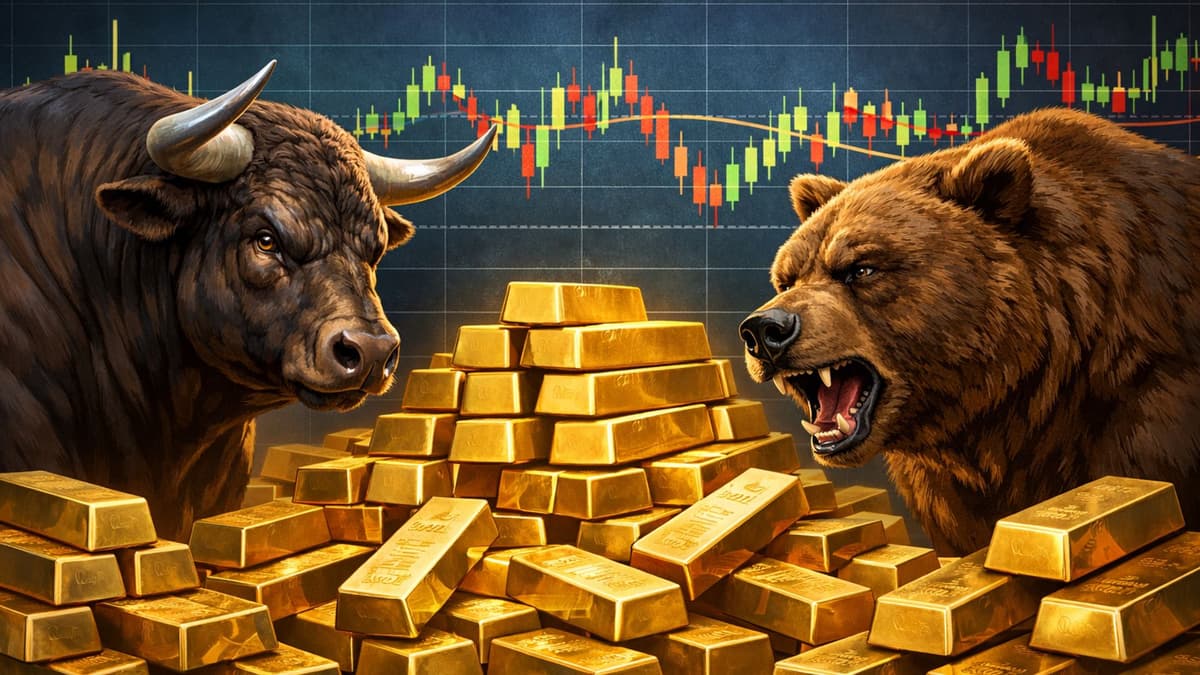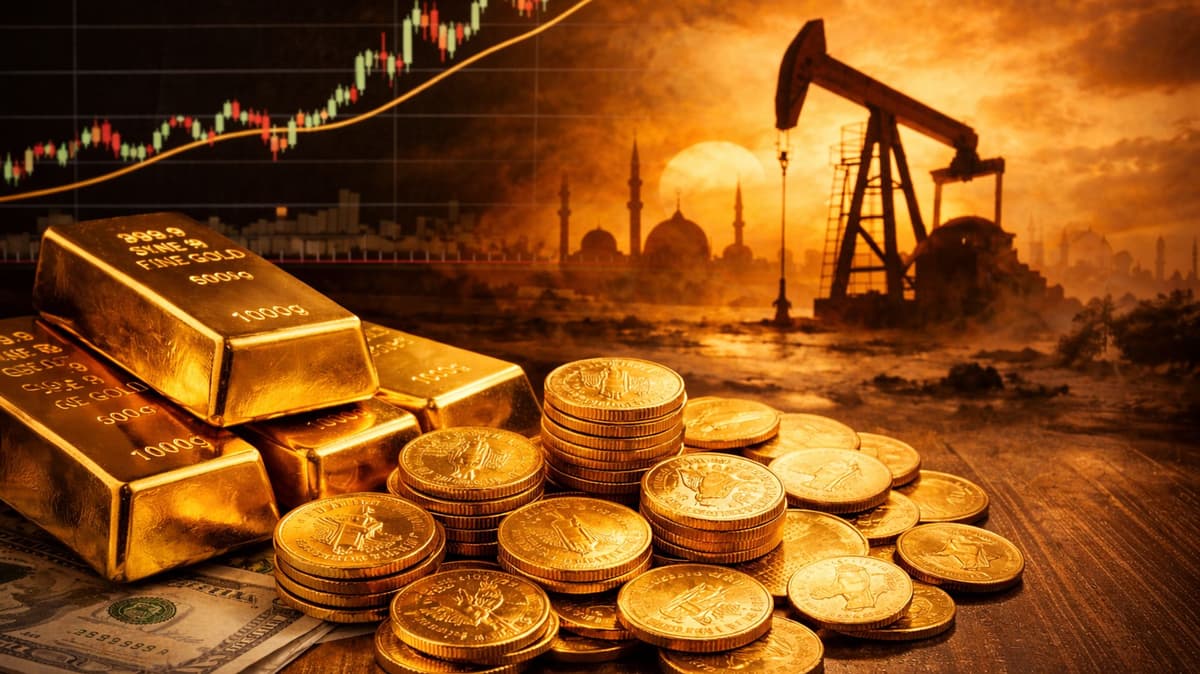
Gold prices swung violently after U.S. President Donald Trump shifted his stance on Iran, triggering a sharp overnight selloff and then a powerful rebound. For Indian investors, the move shows how quickly global geopolitics, the U.S. dollar, inflation expectations, and bullion pricing can reshape the gold price outlook.
Spot gold was last trading at $4,462 an ounce, down less than 1% on the day, after recovering almost all of an overnight slump of nearly 9%. The reversal came after Trump said the U.S. was postponing a threat to strike Iran's main power plant while talks were supposedly under way, even as Iran denied that any discussions had taken place.
Why did gold prices swing so sharply today?
Gold prices whipsawed because traders reacted first to an escalation threat around Iran and then to a sudden de-escalation signal from Donald Trump. That rapid shift hit safe-haven positioning, the U.S. dollar, and speculative trading in bullion all at once.
According to the source report, Trump warned on Saturday that Iran had 48 hours to reopen the Strait of Hormuz or the U.S. would begin targeting the country's power infrastructure. That threat sparked an overnight fall of nearly 9% in gold prices.
Before Monday's North American market open, gold then rebounded strongly after Trump said in an all-caps social media post that he was delaying his threat to destroy Iran's main power plant because the U.S. was having productive conversations with Iran aimed at ending the war.
The market then faced another twist. In its only social media post, the Iranian government said no such conversations had taken place.
That contradiction fueled another burst of volatility. Gold rose 5% from Trump's morning post and nearly erased its overnight losses.
For Indian investors, this kind of XAUUSD volatility can feed directly into domestic bullion pricing. If international gold prices jump while the rupee weakens against the U.S. dollar, local gold rates in INR can stay elevated even when global spot prices cool later in the session.
What is driving gold now: safe-haven demand or the U.S. dollar?
The gold market remains heavily tied to the U.S. dollar, not just to classic safe-haven buying. Analysts say the war with Iran is strengthening emergency liquidity demand for the dollar, and that is creating headwinds for gold.
The source article says analysts view the ongoing war with Iran as a significant emergency-liquidity trade for the U.S. dollar. In practical terms, any fresh rise in uncertainty could push investors into the dollar first, which can pressure gold price performance even during geopolitical stress.
That matters because gold and the dollar often move inversely. When the dollar strengthens, gold priced in dollars becomes more expensive for non-U.S. buyers, which can dampen demand.
For Indian buyers, the dollar channel is especially important. A stronger dollar can weaken the rupee, and a weaker rupee often lifts landed gold costs in India, even when global bullion prices are under pressure. That means Indian jewellery buyers and investors should track both XAUUSD and USD/INR, not just one market in isolation.
What did analysts say about the gold price collapse and rebound?
Analysts said gold remains extremely volatile, with short-term trading turning bullish intraday but the broader backdrop still looking fragile. They also warned that the latest rebound does not yet guarantee a durable trend reversal.
What did Fawad Razaqzada say?
Fawad Razaqzada, Market Analyst at FOREX.com, said the earlier selling pressure wiped out gold's historic gains from December and January. He added, however, that the latest Trump TACO trade may have marked a bottom.
Razaqzada said: "Before it managed to bounce back today, gold had declined in eight of the past nine sessions, with the only exception being a flat performance last Tuesday when prices were still holding above the $5000 level. Let's see if today marks the turning point now."
He added: "Short-term momentum is clearly bullish on the intraday basis, while the higher time frame bias is bearish. For that reason, the preference is to take it from one level to the next, until the charts signal a decisive bullish reversal."
That view suggests traders should not assume one sharp recovery means the correction is over. For Indian investors buying on dips, the message is to remain selective and avoid chasing every rebound in bullion.
What did Alex Kuptsikevich say?
Alex Kuptsikevich, Chief Market Analyst at FxPro, said gold could suffer more if the war with Iran drags on. His argument is that a prolonged conflict may support a much stronger U.S. dollar, which would weigh on precious metals.
He pointed to the market response after Russia invaded Ukraine in February 2022. According to Kuptsikevich, investors first believed that conflict would be short-lived, but sentiment changed and the U.S. dollar rose 15% over the next three months.
By comparison, he said that since the start of the current war, the U.S. dollar index has risen only 2%, leaving "huge" room for further gains in the U.S. currency.
Kuptsikevich said: "Gold is considered a safe-haven and a hedge against inflation, but recent geopolitics has increased inflation risks, pushing up the likelihood of rate hikes, not cuts, as before March. From another angle, Gold simply failed to pass the safe-haven test, falling victim to speculative trading. The rapid rise in the precious metal's price in 2025 and early 2026 led to an overcrowded market, and now the conflict has burst the inflated bubble."
That is a critical point for investors in India. When positioning gets overcrowded, gold can sell off sharply even when the broader long-term case remains intact.
How does the Iran war affect inflation, interest rates, and bullion?
The Iran war is pushing energy prices higher through global supply-chain disruption, and that is adding to inflation risk. Higher inflation can keep central banks cautious and support higher interest rates, which usually hurts non-yielding assets such as gold.
The source report says global supply-chain disruptions linked to the war continue to lift energy prices. That creates a fresh inflation threat just as markets were looking for easier monetary policy.
As a result, global central banks may need to rethink potential easing plans and instead keep a more neutral, wait-and-see stance. If rate cuts are delayed, or if policymakers even consider renewed hikes, gold's opportunity cost rises because bullion does not pay interest.
For Indian investors, this global rate picture also matters through bond yields, currency moves, and imported inflation. Higher crude prices can worsen India's inflation outlook and trade balance, while higher global yields can drive capital toward interest-bearing assets rather than gold in the short term.
Could higher rates still end up helping gold later?
Yes, gold could still benefit longer term if central banks tighten too much and tip the global economy into recession. Several analysts said rising sovereign debt and fragile growth could eventually restore support for safe-haven gold.
The article notes that many analysts remain constructive on the long-term trend for gold, even after the latest selloff. Their reasoning is that inflation pressures are still rising, but global sovereign debt levels limit how far central banks can go without damaging growth.
Some analysts also argue that if central banks raise interest rates to contain inflation, they may worsen an already fragile global economy. In that scenario, recession fears could revive demand for gold as a hedge.
Michael Brown, Senior Market Analyst at Pepperstone, told Kitco News: "Hawkish policies would be a negative for gold, as a non-yielding asset, we typically see bullion face headwinds in a rising yield environment. If we are on the verge of a CB mistake, though, then gold could perform relatively well longer term if participants seek to hedge downside growth risks."
That means the near-term gold price outlook may stay difficult, but the longer-term case for precious metals has not disappeared. Indian investors should watch whether higher inflation leads to more hawkish central bank policy, or whether policy mistakes start reviving recession hedging demand.
What should Indian gold investors watch next?
Indian gold investors should watch three things closely: U.S. dollar strength, headlines on Iran and the Strait of Hormuz, and signals from major central banks on rates. These factors are likely to drive the next major move in gold price, bullion demand, and INR-based gold costs.
If the conflict escalates again, the first reaction may still favor the U.S. dollar over gold. If energy prices rise further and inflation expectations firm, rate-cut hopes could fade, which would pressure XAUUSD.
But if central banks look at higher inflation and weaker growth together and begin to fear a policy mistake, gold could regain momentum as a strategic hedge. For India, that would be even more significant if the rupee remains under pressure, because global bullion gains would then transmit faster into domestic prices.
The immediate watchpoint is whether gold can turn this rebound into a decisive bullish reversal, or whether the recent bounce proves to be just another volatile pause in a broader correction.