Why did gold price jump after the U.S.-Iran ceasefire news?
Gold price jumped because investors quickly repriced inflation, oil, and interest-rate expectations after U.S. President Donald Trump announced a potential two-week ceasefire with Iran. The shift pushed bullion through a key technical level and lifted broader risk assets at the same time.In a social media post, Trump said his administration had agreed to a two-week ceasefire while it reviews a peace plan proposed by Iran. He added that the United States had received a 10-point proposal from Iran and believed it was a workable basis for negotiations.
Trump said, "We received a 10-point proposal from Iran, and believe it is a workable basis on which to negotiate. Almost all of the various points of past contention have been agreed to between the United States and Iran, but a two-week period will allow the Agreement to be finalized and consummated."
The immediate market response was broad and sharp. Analysts said the announcement pushed both gold and equities higher, while crude oil prices fell.
What happened to gold, silver, stocks, and oil after the announcement?
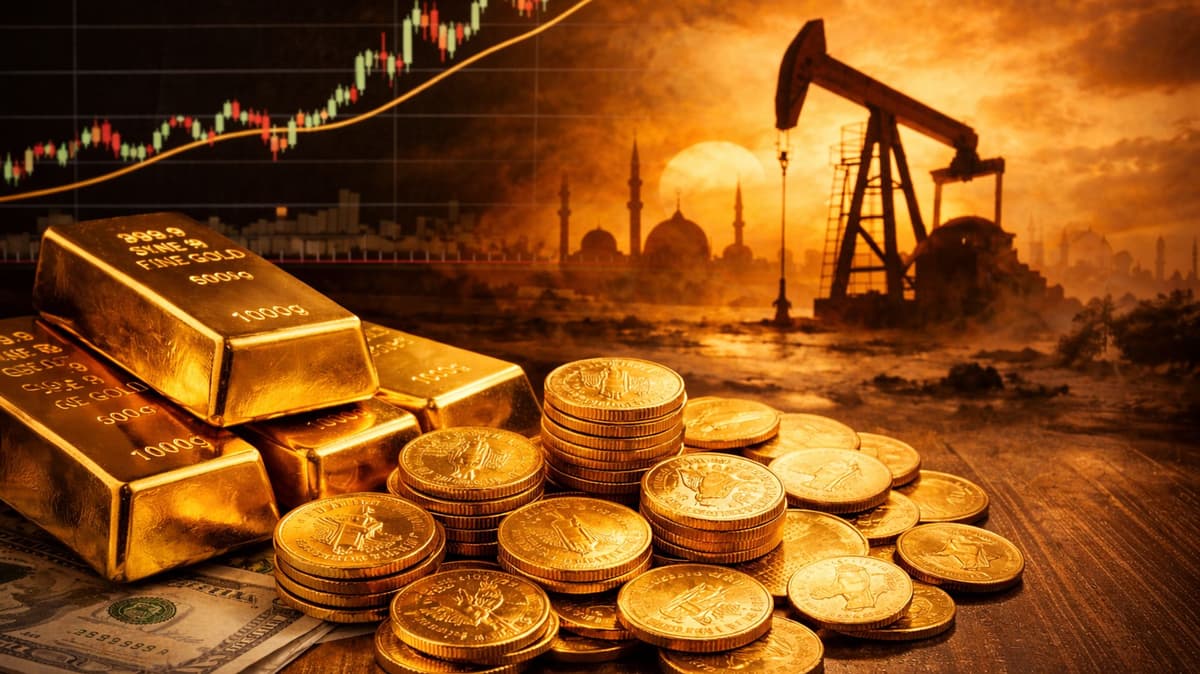
Markets moved decisively after the ceasefire headline, with gold and silver rallying, equities gaining, and crude oil plunging. That combination signaled relief that the Middle East conflict may cool and that energy-driven inflation pressures may ease.Spot gold last traded at $4,809.20 per troy ounce, up more than 2% on the session. Analysts had said gold needed to break initial resistance at $4,800 an ounce to attract fresh bullish attention, while the bigger line in the sand remains $5,000 an ounce.
Silver also surged. Silver prices pushed through $76 an ounce, up more than 4% on the session.
Risk assets joined the rally. In overnight activity, S&P 500 futures rose more than 2% on the session.
Oil moved the other way. West Texas Intermediate crude oil futures fell 18%, reflecting expectations that a ceasefire could reduce supply disruption risks and calm energy markets.
For Indian investors, this mix matters because international gold price moves in XAUUSD often feed into domestic bullion and jewellery prices after rupee conversion. If global gold holds above $4,800 and the Indian rupee does not strengthen enough to offset it, local gold rates could stay firm even as oil eases.
Why are analysts focused on $4,800 and $5,000 in gold?
Analysts are focused on $4,800 because it was the first key resistance level that gold needed to clear to revive bullish momentum. They are focused on $5,000 because it remains the bigger psychological and technical barrier for the next leg higher.The overnight move matters because gold did not just rise on geopolitical headlines; it rose enough to trade through a level that analysts had identified in advance. That improves the technical picture for bullion in the near term.
Still, the rally does not automatically guarantee a run to $5,000. Gold must hold above $4,800 and keep attracting new buyers rather than short-covering alone.
For Indian market participants, these global levels can influence MCX gold sentiment, import pricing, and jewellers' hedging decisions. A sustained break in international bullion usually gets reflected quickly in domestic trading strategies.
Why had gold struggled even during the Iran conflict?
Gold had struggled because investors and central banks sold the precious metal to meet liquidity needs, even as geopolitical risks rose. At the same time, higher inflation fears lifted rate expectations and increased the opportunity cost of holding non-yielding gold.Despite heightened geopolitical risks tied to the war with Iran, gold failed to attract a sustained safe-haven bid. Last month, gold prices dropped more than 11%, marking the worst monthly loss since the early 1980s.
Analysts said those losses came as investors and central banks were forced to sell gold to raise cash. That liquidity squeeze overpowered gold's usual safe-haven appeal.
Gold also faced a second headwind. Rising inflation fears pushed interest-rate expectations higher, which made non-yielding assets like gold less attractive relative to interest-bearing alternatives.
This backdrop is important for Indian investors because it shows that gold price does not rise on geopolitics alone. Liquidity stress, central-bank expectations, U.S. rates, and the dollar can all dominate short-term price action in precious metals.
How does lower oil change the outlook for the Federal Reserve and gold?
Lower oil improves the outlook for gold because it can reduce inflation pressure and give the Federal Reserve more room to cut interest rates by the end of the year. Analysts said that if energy prices normalize, central banks may look through near-term inflation spikes instead of tightening policy.Earlier in the conflict, rising oil prices created major global supply-chain issues. The source article said oil prices had moved above $100, and those higher energy costs threatened to push inflation higher and force many central banks to halt their easing cycles.
That dynamic hurt gold because higher inflation expectations pushed bond yields and policy expectations upward. A higher-rate environment increases gold's opportunity cost.
Now, some analysts believe an end to the conflict could reverse part of that pressure. They said gold could benefit if calmer energy markets allow the Federal Reserve to consider cutting rates by year-end.
For India, the oil channel is especially important. Lower crude prices can ease imported inflation and reduce pressure on the rupee, while lower U.S. rate expectations can support global bullion demand. That combination can reshape the outlook for both physical gold buyers and Indian investors tracking international precious metals markets.
What did Michael Brown say about the economic fallout and market risks?
Michael Brown said the market focus will now shift from the ceasefire headline itself to the economic damage already caused by the conflict and the surge in energy prices. He argued that if oil prices normalize, central banks are likely to treat the coming rise in headline inflation as temporary, which reduces the chances of near-term policy tightening.According to Michael Brown, Senior Market Analyst at Pepperstone, investors must now assess not only inflation damage but also the growth hit from a negative demand shock. He said the conflict and higher energy prices had created growth headwinds across the global economy.
Brown said, "Focus will also now fall heavily on the economic damage that the conflict, as well as the surge in energy prices, has wrought on the global economy, not only from an inflationary perspective, but also growth headwinds which will stem from the subsequent negative demand shock. Providing that energy prices do indeed now begin to normalise, central banks are likely to 'look through' the upcoming rise in headline inflation as being temporary in nature, significantly reducing the chances of any policy tightening in the near-term - which, I'd always said was a sign of markets getting ahead of themselves."
That view matters for bullion because gold tends to respond strongly when markets begin pricing easier monetary policy. If traders conclude the Federal Reserve and other central banks will not tighten further, that can support XAUUSD.
What is the biggest risk to this gold rally now?
The biggest risk is that the ceasefire fails and the conflict escalates again. Brown warned that a breakdown would likely send crude higher, reinforce the U.S. dollar as the only safe haven that works, and put pressure on stocks, bonds, and metals.Brown said, "Of course, the significant risk here is that the ceasefire doesn't hold, that we then see a re-escalation in the conflict, and are essentially back to 'square one' all over again. Were that to happen, which we of course hope doesn't come to pass, we at least know the playbook only too well from the last few weeks - higher crude, the dollar as the only safe haven that 'works', and everything else from stocks to bonds to metals coming under considerable pressure."
That warning keeps the outlook two-sided. Gold has regained momentum above $4,800 per troy ounce, but the next move will depend on whether the two-week ceasefire turns into a durable peace deal, whether crude continues to cool, and whether the Federal Reserve regains room to cut rates by the end of the year.
For Indian investors, the key watchpoints are clear: monitor XAUUSD above $4,800, watch whether gold can challenge $5,000, track oil after the 18% drop in WTI, and follow how the rupee reacts as global risk sentiment shifts.