# Gold Price Outlook: Gulf Tensions Could Trigger Bigger Moves
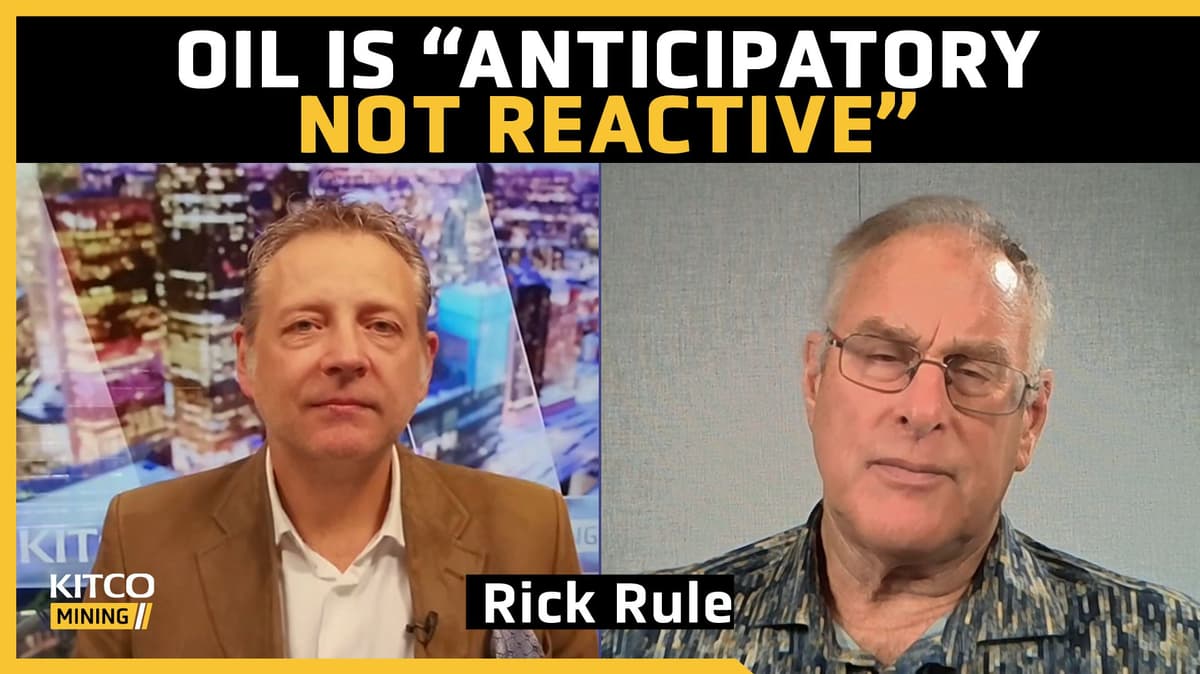
Oil and liquefied natural gas markets are moving on expectations, not on confirmed shortages, and that matters for gold price trends too. Rick Rule, President and CEO of Rule Investment Media, said on April 22, 2026, that energy markets are currently pricing in possible disruption from rising Persian Gulf tensions rather than actual physical supply tightness.
For Indian investors, that setup is important because sustained energy inflation can feed global risk aversion, pressure currencies, and eventually support safe-haven demand for gold and bullion. If crude oil climbs further and the Indian rupee weakens against the U.S. dollar, domestic gold prices in INR could rise even if international XAUUSD moves are initially mixed.
What did Rick Rule say about Gulf tensions and market pricing?
Rick Rule said energy markets are acting in anticipation of disruption rather than reacting to a real supply shock. Speaking with Kitco Mining’s Digging Deep on April 22, 2026, he said recent price gains reflect forward-looking positioning by traders, not immediate shortages in physical oil or liquefied natural gas.
Rule said floating inventory and strategic reserves are acting as buffers. Those buffers have delayed a more severe pricing response, which means markets have not yet fully priced a true supply disruption.
He summed it up directly: price moves are “anticipatory rather than reactive.” That distinction suggests current oil and LNG prices may only represent the first stage of repricing if the Persian Gulf conflict intensifies.
How much have crude oil prices already moved?
Crude oil has already rallied sharply, but Rule said the move still does not reflect a full supply shock. He noted that crude rebounded from roughly $65 per barrel to as high as $105 per barrel before stabilizing in the $90 to $95 range.
That is a significant move, but Rule argued the market has yet to reflect a true disruption in supply. In his view, the current range still prices risk expectations more than actual physical scarcity.
Why could prices move even higher?
Rule said timing is critical. He warned that if the conflict continues for another two or three weeks, pricing could move to a very different level.
His message was clear: “If this conflict continues for another two or three weeks, you will see a very different level of pricing. The price impact is going to be very different than the price impact that we've seen.”
For India, a deeper oil spike would matter immediately. India imports most of its crude needs, so a sustained rise in energy prices can widen the trade deficit, lift imported inflation, and create additional upward pressure on local gold prices through the INR channel.
Why do supply disruptions matter so much for gold price and Indian investors?
Supply disruptions matter because energy shocks can quickly spill into inflation, currency volatility, and safe-haven flows into gold. Even though Rule’s comments focused on oil and LNG, the broader macro effect can reshape bullion demand.
Higher oil prices tend to raise inflation expectations globally. If that happens while geopolitical tensions remain elevated, investors often reassess exposure to precious metals such as gold and silver.
How could this affect gold in India?
For Indian investors, the gold price does not depend only on spot XAUUSD per troy ounce. It also depends on the rupee-dollar exchange rate, import costs, and local premiums.
If Gulf tensions push crude higher, the Indian rupee could face pressure because India is a major energy importer. A weaker INR can lift domestic gold prices even when global bullion prices are steady, which makes geopolitical energy shocks highly relevant for Indian households, traders, and long-term gold buyers.
What is the safe-haven link?
The safe-haven link is straightforward: when geopolitical risk rises and markets fear supply dislocation, investors often turn to gold. Gold may not react instantly if the U.S. dollar also strengthens, but prolonged conflict, higher inflation risk, and broad market uncertainty often support bullion over time.
That is why Indian investors tracking gold price today should also watch oil, LNG, the rupee, and broader geopolitical headlines from the Persian Gulf.
Why does Rick Rule see nuclear power and uranium as beneficiaries?
Rule said nuclear power could become the “real unsung beneficiary” of the conflict because countries may seek more secure and storable energy sources. He argued that limited short-term substitution between fuels increases the risk of outsized price reactions if oil or LNG supply is disrupted.
That limited substitution is especially important for countries dependent on imported energy. When alternatives are hard to scale quickly, supply shocks can produce sharper price swings.
Why is nuclear power attractive in this environment?
Rule said nuclear fuel has two strategic advantages: high energy density and the ability to be stockpiled. Those qualities make it attractive for countries trying to reduce reliance on imported hydrocarbons.
By extension, he said uranium companies could benefit as governments and utilities revisit energy security strategies. While this is not a direct gold call, Indian investors should note that major geopolitical shocks often create cross-asset opportunities across commodities, mining equities, and precious metals.
How are geopolitical tensions affecting mining and resource nationalism?
Rule said geopolitical tensions are strengthening the trend toward resource nationalism. Governments, in his view, are seeking greater control over strategic assets as fiscal pressures and political priorities shift.
He warned that jurisdictional risk for mining projects could increase, particularly in regions where host governments face budget stress or changing political agendas. His comment was blunt: “The desire to steal on the part of host governments and the need to steal on the part of host governments are both likely to increase.”
Why does this matter for precious metals investors?
It matters because higher jurisdictional risk can affect supply, project economics, and valuations across mining companies. Gold miners, silver producers, and critical minerals developers all face greater uncertainty when host-country policies become less predictable.
For investors in gold-related equities, this means asset quality alone is not enough. Country risk, permitting stability, taxation, and state intervention increasingly shape returns.
What does the G Mining Ventures-G2 Goldfields deal signal for the gold sector?
The deal signals that scale and district-level development remain highly valuable in the gold sector. Rule highlighted G Mining Ventures’ April 9 agreement to acquire G2 Goldfields in a transaction valued at about C$3.0 billion.
He said the acquisition is accretive on a per-share basis and emphasized that the synergies are strong enough to justify the premium. In his words, “The acquisition is accretive on a per share basis, the synergies are so extraordinary that the acquisition is accretive.”
Why is consolidation important in gold mining?
Consolidation matters because larger district-scale assets can improve operating efficiency, reduce duplication, and support premium valuations. In a world of rising geopolitical and financing risk, miners with scale may be better positioned to absorb shocks.
For Indian investors looking beyond physical bullion into gold mining exposure, this trend suggests that quality, synergy, and jurisdiction are becoming more important than ever.
What did Rick Rule say about government-backed capital in critical minerals?
Rule said government-backed capital is becoming more important in project financing, especially in rare earth supply chains linked to national security. He pointed to critical minerals as an area where state support is increasingly shaping investment decisions.
His assessment was sharply skeptical. “There’s no money in the world as dumb as governments,” he said.
Can government funding help or hurt markets?
Rule said state participation can reduce the cost of capital, which can help projects move forward. But he also warned that it can distort investment decisions by pushing capital into projects for strategic or political reasons rather than pure economics.
That matters for commodity investors because distorted capital allocation can affect long-term supply, price signals, and corporate valuations across mining and strategic materials.
What should Indian gold investors watch next?
Indian gold investors should watch whether Persian Gulf tensions persist for another two or three weeks, because Rule said that is the window in which energy pricing could shift materially. Oil staying near $90 to $95 per barrel after touching $105, rather than retreating sharply, would signal that geopolitical risk remains embedded.
They should also monitor the rupee, inflation expectations, and any change in safe-haven flows into gold and other precious metals. If energy markets move from anticipatory pricing to pricing real shortages, the impact could extend well beyond oil and LNG into bullion, mining stocks, and India’s domestic gold market.
Rule’s broader warning is that markets may still not fully reflect the risks tied to geopolitical disruption and limited supply flexibility. For gold buyers in India, that makes the next phase of Gulf headlines, oil volatility, and currency moves especially important.
Watch the full video on the Kitco Mining YouTube channel.