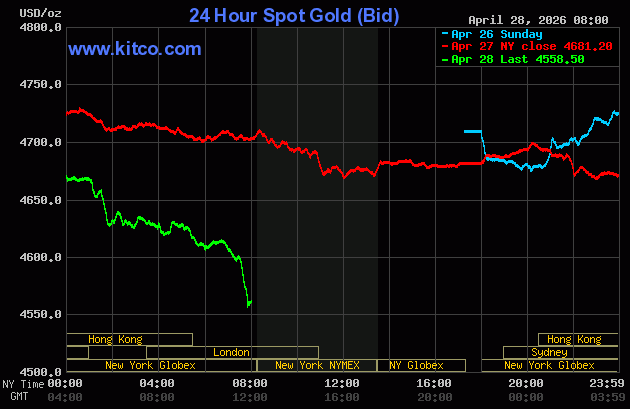
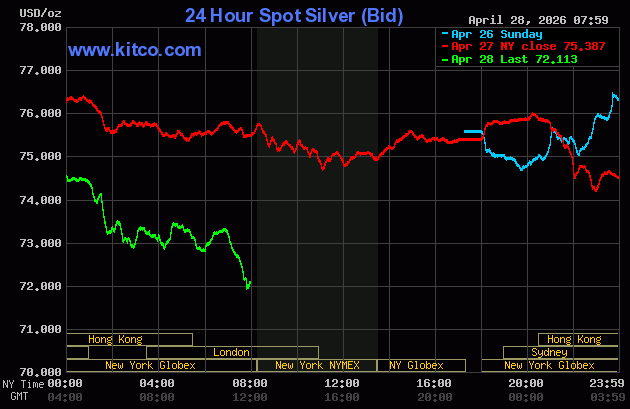
Gold prices fell sharply in early U.S. trading on Tuesday as higher U.S. Treasury yields and a firmer technical setup for bears triggered fresh selling in bullion. June gold futures were last down $106.00 at $4,585.00 per troy ounce, while May silver futures dropped $2.91 to $72.13, as traders also tracked Middle East war developments and the start of the Federal Reserve’s FOMC meeting.
For Indian investors, a weaker international gold price can cushion domestic rates if the rupee remains stable. But any INR weakness against the U.S. dollar can offset part of that decline in local bullion prices.
Why did gold prices fall sharply today?
Gold prices dropped because traders faced pressure from rising U.S. bond yields and a stronger technical case for short-term selling. Those forces reduced immediate safe-haven demand for bullion and drew chart-based traders to the short side of the futures market.June gold futures were last down $106.00 at $4,585.00 in early U.S. trading on Tuesday. May silver futures were down $2.91 at $72.13.
The original market trigger cited was a higher U.S. dollar index and an uptick in U.S. Treasury yields. However, in the broader outside markets snapshot later in the session, the U.S. dollar index was lower, showing that traders were weighing shifting cross-market signals while still selling precious metals.
A deteriorating near-term technical posture in both gold and silver added to the pressure. That weakness invited short-term, chart-based speculators to sell futures, accelerating the move lower in XAUUSD-linked sentiment and broader precious metals trading.
How are U.S. bond yields and the dollar affecting gold?
Higher U.S. Treasury yields hurt gold because bullion does not pay interest, making bonds relatively more attractive when yields rise. A stronger dollar also tends to pressure gold price action by making dollar-priced bullion more expensive for non-U.S. buyers.The benchmark 10-year U.S. Treasury yield was at 4.32%. That move in yields reinforced the bearish tone for gold and silver during Tuesday’s session.
The article initially described the U.S. dollar index as higher, one of the main reasons for the early selloff in precious metals. Later, the outside market snapshot said the U.S. dollar index was lower, suggesting intraday volatility rather than a clean one-way move.
For Indian gold buyers, both variables matter. If U.S. yields remain elevated and the dollar stays firm against emerging-market currencies, global bullion may remain under pressure, but rupee depreciation could keep domestic gold prices relatively supported.
What is happening in the Middle East and why does it matter for bullion?
The Middle East conflict remains a major driver for safe-haven sentiment, but on Tuesday it did not stop gold from falling. Traders focused on diplomacy, shipping risk and U.S.-Iran tensions, yet macro and technical selling outweighed geopolitical support.President Donald Trump convened his national security team to discuss Iran’s proposal to end a war now entering its third month. White House Press Secretary Karoline Leavitt told reporters on Monday that Trump would address the matter “very soon.”
Leavitt said Trump’s red lines on Iran had been made “very, very clear,” including preventing Tehran from building a nuclear weapon. Reports also said Trump told advisers he was not satisfied with Iran’s latest suggestions.
What were the latest war-related developments?
The latest developments included three specific flashpoints:- Trump not happy with Iran’s latest peace proposals
- Iranian oil tankers are clustering just shy of the U.S. blockade line
- The first LNG shipment since the war began appears to exit Hormuz
For Indian investors, the Strait of Hormuz matters directly because it is vital for energy flows. Any disruption can lift crude oil prices, worsen India’s import bill, pressure the rupee and eventually influence local gold demand as investors seek a safe-haven asset.
What should investors watch from the Federal Reserve this week?
Investors should watch the Federal Reserve’s policy statement and Fed Chair Jerome Powell’s press conference for signals on rates, inflation and growth. Even if rates stay unchanged, the tone of the Fed can move gold, silver, the U.S. dollar and Treasury yields.The Federal Open Market Committee (FOMC) meeting begins Tuesday morning and ends Wednesday afternoon. The meeting concludes with a statement and a press conference from Fed Chair Jerome Powell.
The article said this meeting will likely be the last for Powell as head of the U.S. central bank. It also noted that monetary policymakers in the United States and across the Group of Seven will probably keep rates steady this week.
Specifically, Canada, the U.K., Germany and Japan are widely expected to leave interest rates unchanged. If that outlook holds, traders may focus less on the rate decision itself and more on forward guidance.
For gold, a more hawkish Federal Reserve usually raises pressure through higher real yields and a stronger dollar. A softer policy tone, by contrast, can revive support for bullion and other precious metals.
What are the key oil and cross-market signals today?
Crude oil was higher, adding another layer of macro tension to the market. Rising oil can feed inflation expectations, which sometimes supports gold, but Tuesday’s dominant forces were still yields and technical selling.Nymex WTI crude oil was up and trading around $95.50 a barrel. That level keeps energy markets in focus, especially with Middle East shipping routes under scrutiny.
The mix of lower precious metals, elevated oil and a volatile dollar backdrop shows that investors are balancing inflation risk against tighter financial conditions. That tension can keep gold price volatility high in the near term.
How do the gold and silver futures markets work?
Gold trades through both the spot market and the futures market. The spot market reflects immediate purchase and delivery, while the futures market sets prices for delivery at a later date.The article noted that the gold market operates through two primary pricing mechanisms:
1. Spot market — quotes prices for on-the-spot purchase and immediate delivery
2. Futures market — sets prices for delivery at a future date

Because of year-end positioning market liquidity, the December gold futures contract is currently the most actively traded on the CME. That matters for traders because liquidity often affects price discovery, spreads and short-term volatility.
What are the important gold price technical levels now?
Gold’s next major upside target is a close above the April high, while the key downside target is a break below $4,300. Traders are now watching whether support near $4,600 and $4,550 can hold after the latest selloff.June gold futures key levels
- Last price: $4,585.00
- Bulls’ next upside objective: close above solid resistance at the April high of $4,917.70
- Bears’ next downside objective: push futures below solid technical support at $4,300.00
- First resistance: $4,700.00
- Next resistance: this week’s high of $4,745.80
- First support: $4,600.00
- Next support: $4,550.00
- Wyckoff's Market Rating: 5.0
For Indian traders in MCX gold and global XAUUSD markets, these levels are useful reference points. If international gold breaks below $4,300.00, downside pressure could intensify globally, though INR moves may alter the exact domestic impact.
What are the key silver technical levels to watch?
Silver’s chart has also weakened, with bulls needing a recovery above the April high and bears targeting a drop below $70.00. The metal is now testing an area where a break could trigger more selling pressure.May silver futures key levels
- Last price: $72.13
- Bulls’ next upside objective: close above solid technical resistance at the April high of $83.245
- Bears’ next downside objective: close below solid support at $70.00
- First resistance: $75.00
- Next resistance: this week’s high of $76.555
- Next support: $72.00
- Further support: $70.00
- Wyckoff's Market Rating: 5.0
Gold and silver now sit at an important crossroads. If the Federal Reserve stays firm and Treasury yields remain elevated, bullion may struggle to rebound. But any sharp shift in Middle East tensions, the U.S. dollar or Fed guidance could quickly change sentiment, making the next move around $4,600 in gold and $72 in silver critical for traders and Indian investors alike.