Abaxx Technologies has officially launched trading in its Silver Singapore (SSP) futures contract, a move that aims to make Singapore a bigger global centre for silver price discovery, bullion trading, and physical hedging for Asian industrial users. For Indian investors and precious metals market participants, the launch matters because it reflects how Asia is gaining influence over global silver pricing as demand from solar, electronics, and advanced manufacturing keeps rising.
What is Abaxx’s Silver Singapore futures contract?
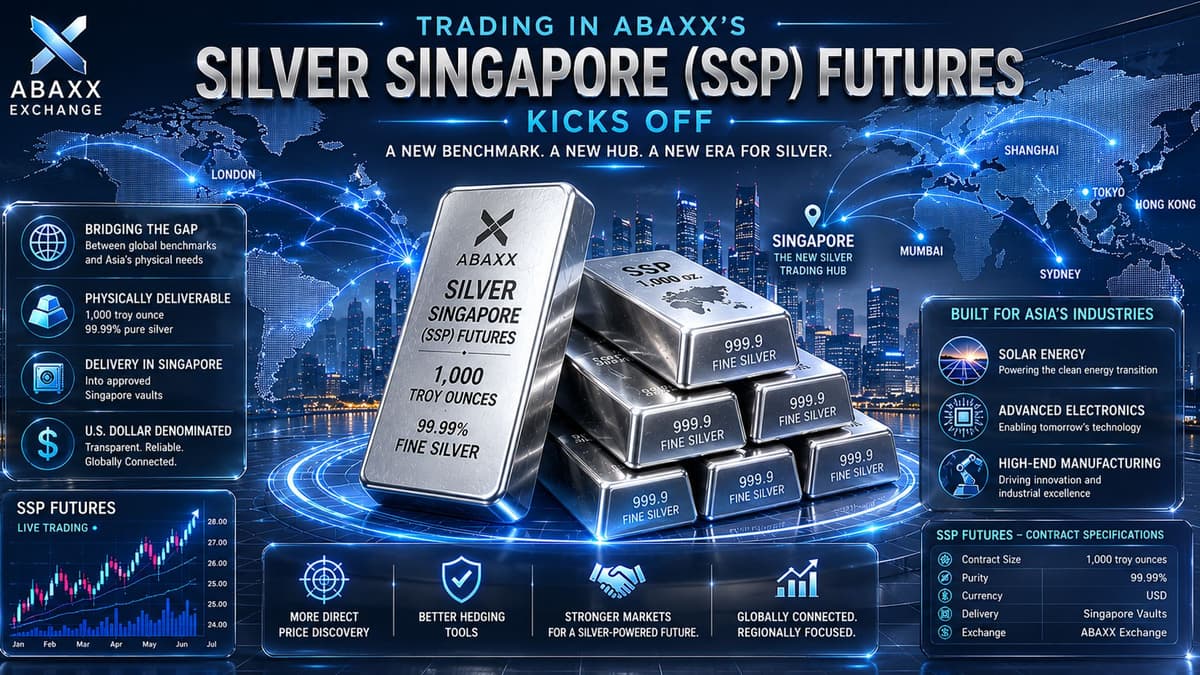
Abaxx’s new product is a U.S. dollar-denominated, 1,000-troy-ounce, physically deliverable silver futures contract designed for the Asian market. It requires 99.99% purity silver and allows delivery into approved Singapore vaults.
That structure sets it apart from older benchmark systems that Abaxx says no longer fully reflect the physical needs of industrial users across Asia. The company launched the contract to create a more direct link between futures pricing and the type of high-purity silver that manufacturers increasingly need.
What are the key contract specifications?
The Silver Singapore (SSP) contract includes several notable features:
- U.S. dollar-denominated pricing
- 1,000 troy ounces per contract
- Physically deliverable settlement
- 99.99% purity silver specification
- Delivery into approved Singapore vaults
Why did Abaxx launch Silver Singapore futures now?
Abaxx launched the SSP contract now because the global silver market is facing tight supply conditions, elevated volatility, and stronger industrial demand, especially from Asia. The company argues that traditional silver benchmarks centred in North America and London are becoming less aligned with the way silver is actually sourced, consumed, and priced in modern industrial supply chains.
Earlier this year, silver prices surged to record highs above $120 an ounce. That rally was driven by ongoing supply deficits, geopolitical disruptions, and strong industrial consumption.
Abaxx sees that backdrop as an opportunity to build a contract that better serves users in Asia, where demand growth is increasingly concentrated.
What gap is Abaxx trying to fill?
Abaxx says the silver market faces a growing disconnect between traditional global silver benchmarks and the evolving physical requirements of industrial users across Asia. In particular, the exchange believes commercial participants need better tools to hedge exposure to the specific grades and delivery points they use in real business operations.
The company has repeatedly stressed that higher-purity “four-nines” silver is becoming more important for advanced manufacturing. That trend is especially visible in Asia’s technology and clean-energy supply chains.
How is Asia driving the global silver market?
Asia is increasingly central to global silver demand because the region is expanding its footprint in solar manufacturing, advanced electronics, and high-end manufacturing. Those sectors use large amounts of high-purity silver, making the region more influential in both physical demand and long-term pricing trends.
Abaxx said the SSP contract is specifically intended to support industries linked to solar energy, advanced electronics, and high-end manufacturing. These segments continue to push global silver demand higher.
Analysts have also identified Asia as the main driver of long-term silver demand growth. The article specifically points to China’s expanding solar manufacturing capacity and electronics production as major demand catalysts.
Why does high-purity silver matter more now?
High-purity silver matters more because modern industrial applications often require tighter quality standards. Abaxx has argued that 99.99% purity, or “four-nines” silver, is increasingly important for advanced manufacturing applications, especially in Asia’s technology supply chain.
That matters for price discovery because a benchmark that reflects the wrong purity standard or delivery ecosystem may not fully serve users who need silver for specialised industrial processes.
What are market participants saying about the new silver contract?
Industry figures say the launch is an important development because it acknowledges Asia’s growing role in silver consumption and industrial demand. They also see the contract as a practical step toward improving hedging and price discovery for the physical silver market.
Michael DiRienzo, President and CEO of the Silver Institute, said: “The launch of Abaxx Silver Singapore futures marks a meaningful step forward for the global silver market.” He added that “Asia is increasingly central to silver demand, driven by the extraordinary growth in solar energy and advanced electronics — two sectors where high-purity silver is indispensable.”
Russell Robertson, Chief Business Development Officer of Abaxx Exchange, said in the company’s initial announcement on Monday: “Silver is no longer only a precious metals story. It is increasingly tied to the industrial inputs behind solar, electronics, and advanced manufacturing.”
He added: “As those supply chains grow, commercial participants need pricing and risk management tools that connect more directly to the physical silver they source and use. The Abaxx Silver Singapore futures contract is designed to close that gap with a physically deliverable contract built around higher-purity silver and delivery in Singapore.”
Why does Silver Singapore futures matter for Indian investors?
The new silver futures contract matters for Indian investors because it highlights a broader shift in precious metals price discovery toward Asia, which could eventually influence how bullion is traded, hedged, and valued across the region. India is one of the world’s most important precious metals markets, so any rise in Asian benchmark relevance can affect traders, refiners, importers, and sophisticated investors.
Because the SSP contract is U.S. dollar-denominated, Indian market participants will also need to watch the USD/INR exchange rate when assessing any price signal from Singapore. If Asian silver benchmarks gain liquidity and credibility, Indian bullion dealers and industrial buyers may increasingly use them alongside established global references.
What could this mean for India’s bullion and industrial market?
For India, the biggest implication may be in the industrial and wholesale market rather than retail jewellery demand alone. As solar manufacturing, electronics assembly, and advanced manufacturing expand across Asia, Indian businesses exposed to silver input costs may benefit from more regionally relevant hedging tools.
Indian investors tracking silver price, bullion, and XAGUSD/XAUUSD-linked precious metals sentiment should also note that stronger Asian influence in silver can spill over into broader precious metals trading patterns. Silver often moves with gold, but its industrial role can make it more volatile when supply-demand conditions tighten.
Abaxx’s launch also comes when the global silver market remains under pressure from tight supply, which means regional physical delivery hubs such as Singapore may become more important in periods of volatility. For Indian investors, the key watchpoint now is whether SSP attracts enough commercial volume to emerge as a credible Asian benchmark for high-purity physical silver.