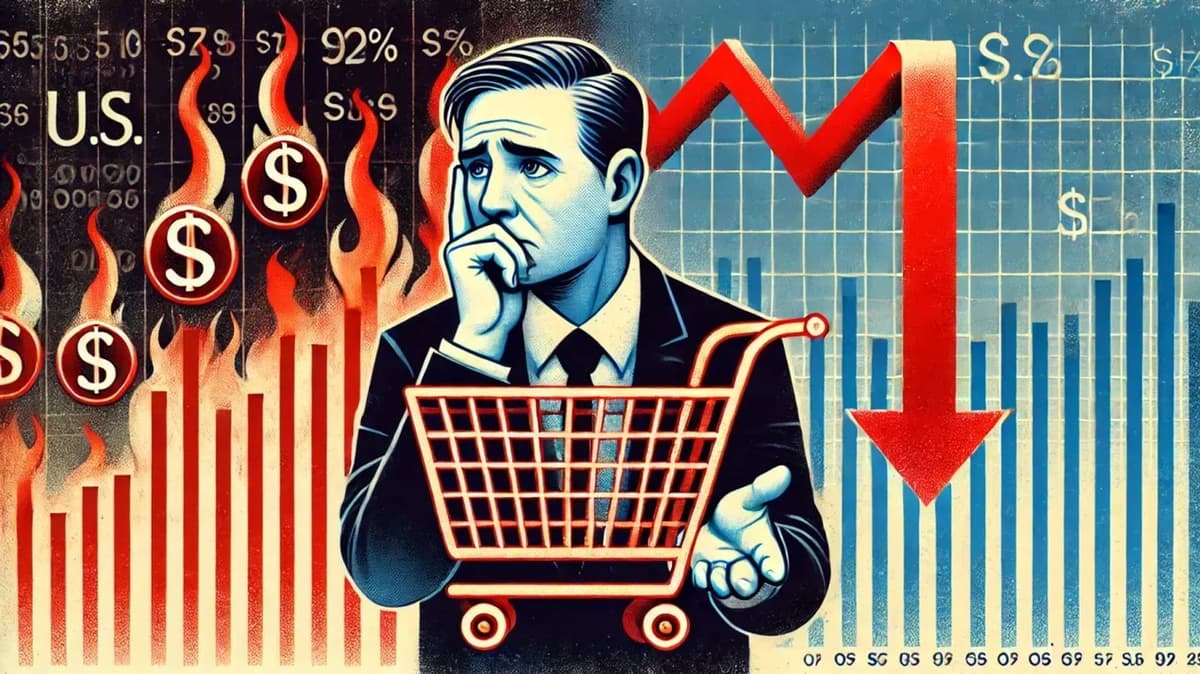
Spot gold eased on Tuesday as hotter-than-expected U.S. inflation pushed Treasury yields and the U.S. dollar higher, while silver held firmer as traders continued to back its industrial and monetary appeal. For Indian investors, the move matters because global bullion prices, the dollar trend and crude oil all feed into domestic gold rates in rupees.
Why did gold price slip while silver firmed on Tuesday?
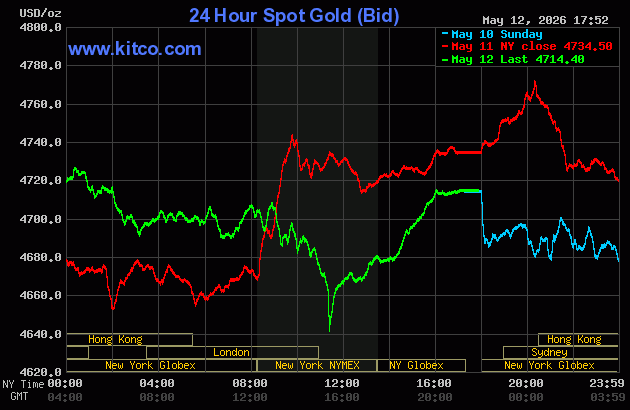
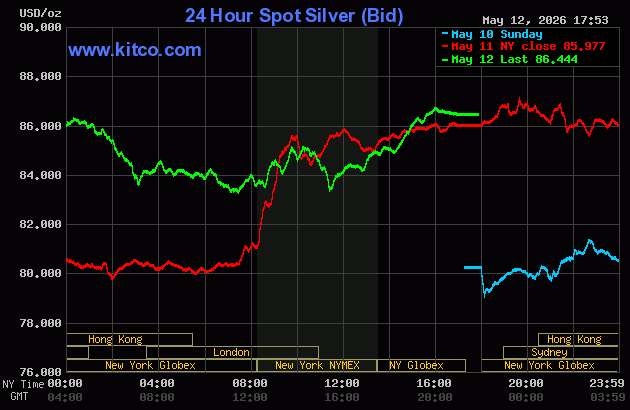
Gold price slipped because stronger U.S. inflation data lifted bond yields and the dollar, reducing immediate support for non-yielding bullion. At the same time, silver outperformed as the market kept pricing in both its precious-metals role and its industrial demand profile.Spot gold was trading near $4,714.40 per ounce at the time of writing, down 0.42% on the session. Spot silver was at $86.440, up 0.54%.
Gold traded in a session range of $4,637.90 to $4,774.20, staying above the $4,700 area but retreating from the day’s high. Silver traded in a wider range of $82.940 to $87.320, preserving the gold-silver split that followed Monday’s silver-led move.
For bullion traders, that divergence shows gold faced macro pressure from rates and the dollar, while silver still attracted buyers willing to pay for a metal that behaves as both a safe-haven asset and an industrial input.
What did the April CPI report show, and why did it matter for bullion?
The April CPI report kept pressure on gold because it reinforced the view that inflation remains sticky, which can keep interest rates higher for longer. Higher rates and higher real yields typically weigh on XAUUSD because gold does not pay interest.U.S. CPI rose 0.6% month over month in April after a 0.9% rise in March. The annual CPI rate accelerated to 3.8% from 3.3%.
Core CPI rose 0.4% on the month and 2.8% year over year. Within the report, energy rose 3.8% in April and gasoline rose 5.4%.
That inflation mix created competing signals for precious metals. Sticky inflation supported the long-term hard-asset case for gold and silver, but the immediate market reaction favored the U.S. dollar and Treasury yields, which limited gold’s upside response.
For Indian investors, sticky U.S. inflation can influence the rupee-gold equation in two ways. If it keeps the dollar firm and crude oil elevated, it can raise imported inflation pressure and support domestic gold prices in INR even when international gold pauses.
How are Treasury yields, the U.S. dollar and oil shaping gold price action?
Treasury yields, the dollar and oil are now the main short-term drivers for gold. Higher yields and a firmer dollar capped bullion gains, while elevated oil prices kept inflation concerns alive.The U.S. dollar index was firmer on the day. The yield on the benchmark 10-year U.S. Treasury note was trading near the 4.5% area.
In energy markets, Nymex WTI crude oil was trading around $102.12 a barrel, while Brent crude was near $107.49. High crude prices matter because they can feed inflation expectations and producer costs, keeping markets alert to further pricing pressure.
For gold, that creates a difficult balance. Rising oil prices can strengthen the case for hard assets such as bullion, but if they also push yields and the dollar up, the near-term reaction in XAUUSD can remain choppy rather than decisively bullish.
What does Kevin Warsh’s Fed Board confirmation mean for gold markets?
Kevin Warsh’s confirmation adds a policy-independence risk premium to gold, but markets may not fully price that risk unless they start to see a faster path to a Fed chair transition and lower real rates. In the short run, the impact appears limited compared with the immediate effect of inflation data and bond yields.The U.S. Senate confirmed Kevin Warsh to the Federal Reserve Board by a 51-45 vote. The move raises investor focus on Federal Reserve credibility, the U.S. dollar and long-end Treasury yields.
If markets begin to believe a Warsh path to Federal Reserve chair could bring stronger rate-cut expectations, equities could benefit at the margin. Gold would likely benefit more if investors conclude the shift weakens confidence in the Federal Reserve’s inflation-fighting independence.
That matters for Indian investors because any loss of confidence in U.S. monetary credibility can revive safe-haven demand for gold globally. If that happens alongside rupee weakness, domestic gold prices could gain faster than international spot prices alone would suggest.
What U.S. data should traders watch next for gold and silver?
The next major catalysts are U.S. producer-price and trade-price data, which will show whether April’s energy shock is spreading further through the economy. Those releases could alter rate expectations and trigger the next move in bullion.The next U.S. data risk is April PPI on Wednesday at 8:30 a.m. ET. After that, traders will watch import and export prices on Thursday at 8:30 a.m. ET.
These reports will give rates traders a second read on whether April’s rise in energy costs is feeding through producer margins and tradable goods prices. If producer inflation also runs hot, yields could stay elevated and keep pressure on gold. If the pass-through looks softer, bullion may get room to recover.
What are the key technical levels for gold price now?
Gold remains above $4,700, but bulls need a stronger push to regain momentum. The immediate chart battle now sits between support at $4,660-$4,680 and resistance near the 50-day moving average.Gold resistance levels
Spot gold bulls’ next upside objective is to push prices back above the $4,700 level on a sustained basis. A stronger move would target the 50-day moving average near $4,757, followed by the $4,860 to $4,880 resistance zone.First resistance is seen at $4,700 and then at $4,757.

Gold support levels
Gold bears’ next near-term downside objective is a break below the $4,660 to $4,680 support zone. If that level fails, deeper downside targets come in at $4,530 to $4,550, followed by the 200-day moving average near $4,329.First support is seen at $4,660 to $4,680 and then at $4,530 to $4,550.
For Indian investors tracking international gold price moves, these levels are important because any sharp break in XAUUSD often translates into volatility in local bullion prices after adjusting for USD/INR.
What are the key technical levels for silver price now?
Silver still looks technically firmer than gold, but bulls need to clear resistance in the mid-$80s to extend the rally. A break higher could open the way to another powerful advance.Silver resistance levels
Spot silver bulls’ next upside objective is to drive prices back above the $85.00 to $86.00 resistance zone. If silver clears that band decisively, the next upside target is $95.00 to $96.00.First resistance is seen at $85.00 to $86.00 and then at $95.00 to $96.00.
Silver support levels
The next downside objective for silver bears is a break below $83.00. If that level gives way, deeper downside targets stand at $78.00 to $79.00.Next support is seen at $83.00 and then at $78.00 to $79.00.
The near-term watchpoint for both gold and silver is straightforward: if U.S. producer inflation and trade-price data keep yields and the dollar elevated, bullion may stay range-bound. If inflation pass-through looks softer and Fed credibility questions persist, gold could quickly retest $4,757 and silver could challenge the $85.00 to $86.00 zone again.