# Gold Price Slides as Iran Talks Fail, Inflation Fears Roil Markets
Gold prices fell sharply near midday on Monday as failed U.S.-Iran peace talks revived inflation concerns and pushed investors to reassess demand for bullion and other precious metals. Silver also dropped hard, while crude oil climbed, the U.S. dollar firmed, and U.S. Treasury yields stayed elevated.
For Indian investors, the move matters because global gold price weakness can be partly offset by rupee movement if the U.S. dollar remains strong. That means domestic gold rates may not fall as much as international XAUUSD prices when imported inflation and currency pressure remain in play.
Why did gold prices fall today?
Gold prices fell because the failed weekend peace talks between the United States and Iran reignited worries that inflation could remain problematic. Higher inflation fears can keep energy prices elevated and complicate the outlook for financial markets, reducing appetite for gold and silver in the short term.
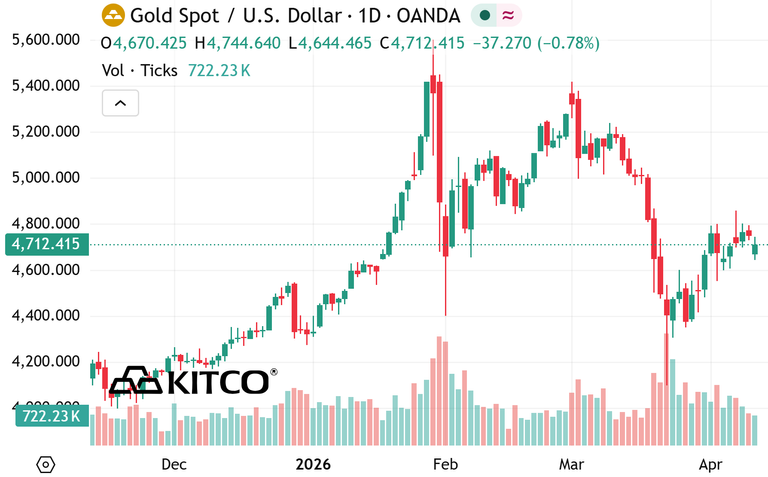
By midday Monday, June gold was down $56.00 at $4,731.70 per troy ounce. At the same time, May silver dropped $2.46 to $74.03.
The decline came as traders reacted to renewed geopolitical strain in the Middle East. The breakdown in U.S.-Iran talks fed concerns that oil supply risks could intensify, which in turn could keep inflation pressures elevated globally.
How are crude oil, the U.S. dollar and Treasury yields affecting gold?
Gold faced pressure from a mix of higher crude oil prices, a stronger U.S. dollar, and elevated U.S. bond yields. These outside markets often shape short-term bullion direction because they affect inflation expectations, opportunity cost, and currency-adjusted demand.
What happened in oil markets?
Nymex WTI crude oil was solidly higher and traded around $101.50 a barrel. Rising oil prices matter for gold because they can worsen inflation expectations and increase volatility across commodities.
What is the U.S. dollar doing?
The U.S. dollar index was slightly higher. A firmer dollar often pressures gold price action because gold is priced in dollars, making bullion more expensive for non-U.S. buyers.
For Indian investors, a stronger dollar can weaken the rupee and cushion domestic gold price declines. That is why Indian bullion prices do not always mirror international spot or futures losses one-for-one.
What about U.S. Treasury yields?
The yield on the benchmark 10-year U.S. Treasury note was 4.35%. Higher Treasury yields can reduce the appeal of non-yielding assets such as gold, especially for short-term traders comparing returns across asset classes.
What are the key technical levels for June gold futures?
June gold futures remain in a broader technical uptrend, but the sell-off has pushed the market closer to important support levels. Traders are now watching whether gold can hold above the first support zone and rebuild momentum.
The bulls’ next upside price objective is a close above solid resistance at $5,000.00. The bears’ next near-term downside price objective is to push futures below solid technical support at $4,500.00.
What resistance levels should traders watch in gold?
The first resistance level for June gold is $4,800.00. After that, traders will watch last week’s high of $4,888.00.
A sustained move back above those levels would suggest that buyers are regaining control. Until then, momentum remains vulnerable after Monday’s drop.
What support levels matter for gold now?
The first support level stands at $4,700.00. The next support comes in at the overnight low of $4,626.00.
If gold breaks below those zones, traders may start focusing more aggressively on the larger downside objective at $4,500.00. That would be an important signal for near-term XAUUSD and bullion sentiment.
What is the current technical rating for gold?
According to Wyckoff analysis, June gold futures have a Market Rating of 6.0. That suggests bulls still retain a modest near-term technical advantage, even though prices pulled back sharply.
What are the key technical levels for May silver futures?
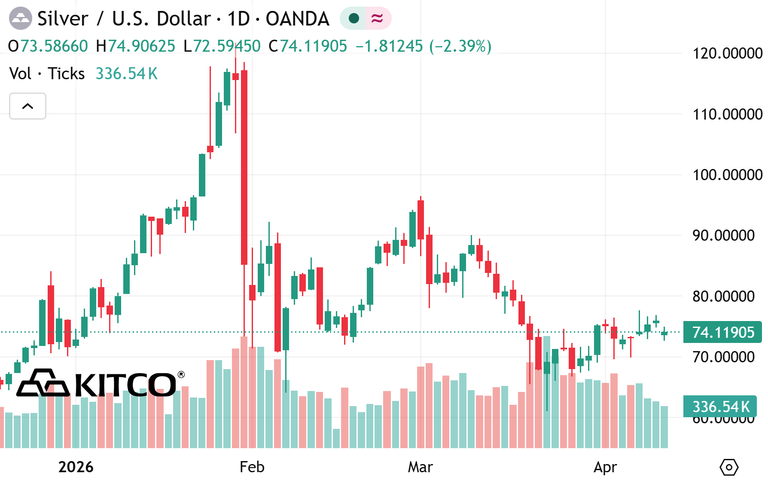
May silver futures also sold off, and the chart now shows a more balanced tug-of-war between bulls and bears than gold. Silver remains more volatile than gold and can react more sharply to inflation, industrial demand, and risk sentiment.
The bulls’ next upside price objective is a close above solid technical resistance at $80.00. The bears’ next downside objective is a close below solid support at the March low of $61.21.
What resistance levels should traders watch in silver?
The first resistance level for May silver is $75.00. The next resistance is last week’s high of $77.80.
A rebound through those levels would improve short-term sentiment. Until that happens, silver may remain under pressure alongside broader precious metals weakness.
What support levels matter for silver now?
The next support level is seen at $72.50. After that, traders are watching last week’s low of $69.78.
If silver falls through those support zones, the market could begin testing whether the broader down move extends toward $61.21. That would mark a significant deterioration in the near-term technical picture.
What is silver’s current technical rating?
According to Wyckoff analysis, May silver futures have a Market Rating of 5.5. That indicates a more neutral-to-slightly bullish setup than a strong uptrend.
What does this mean for Indian gold investors?
Indian gold investors should watch both international bullion prices and the rupee-dollar exchange rate. Even when gold falls in dollar terms, domestic prices in India can remain resilient if the rupee weakens against the U.S. dollar.
The jump in WTI crude to around $101.50 a barrel also matters for India because higher oil prices can worsen imported inflation and affect the macro outlook. If global inflation fears stay elevated, volatility in gold and silver could persist despite their long-term safe-haven appeal.
For now, the key watchpoint is whether June gold holds $4,700 support or slips toward $4,626 and potentially $4,500, while traders also track oil, the dollar index, and the 4.35% U.S. 10-year Treasury yield for the next directional cue.