# Gold Price Rises as US Consumer Sentiment Crashes to 47.6
Gold prices moved near session highs on Friday after fresh U.S. data showed a sharp drop in consumer confidence and a jump in inflation expectations. For Indian investors, the mix of weaker U.S. sentiment and hotter inflation expectations matters because it can support global bullion prices, although rupee moves will also shape domestic gold rates.
Why did gold price rise after the US consumer sentiment data?
Gold price rose because the latest University of Michigan survey signaled weaker U.S. economic confidence and rising inflation expectations, a combination that typically supports safe-haven demand for bullion. Traders reacted by keeping spot gold close to session highs after the data release.
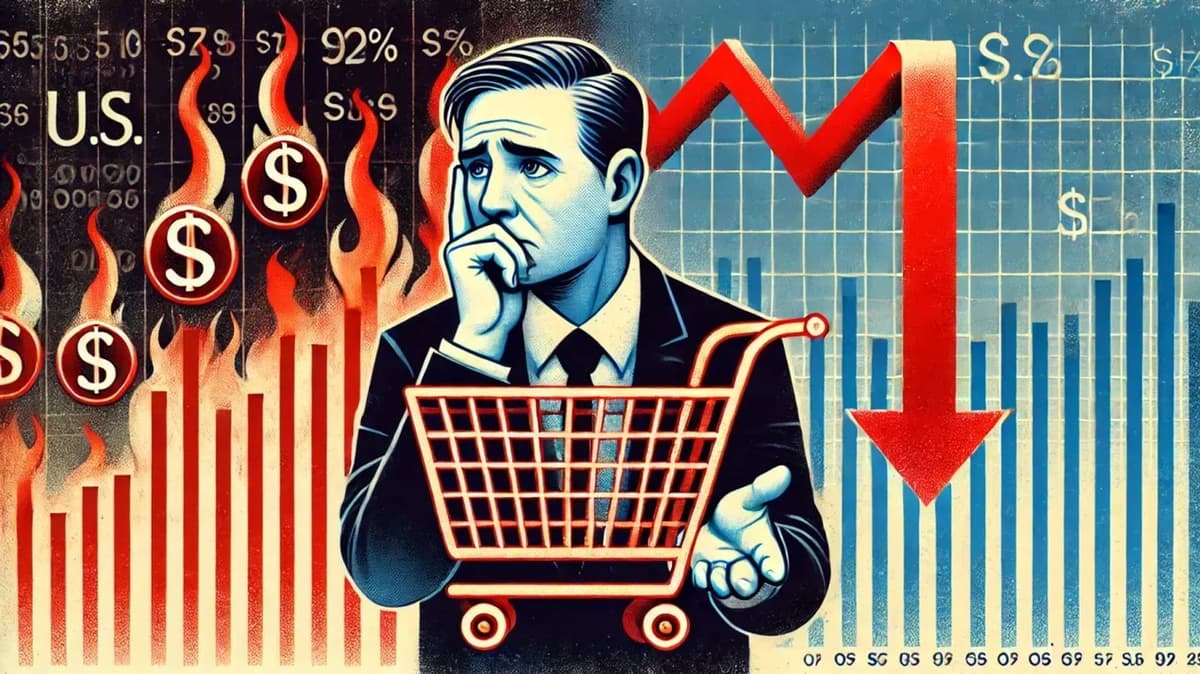
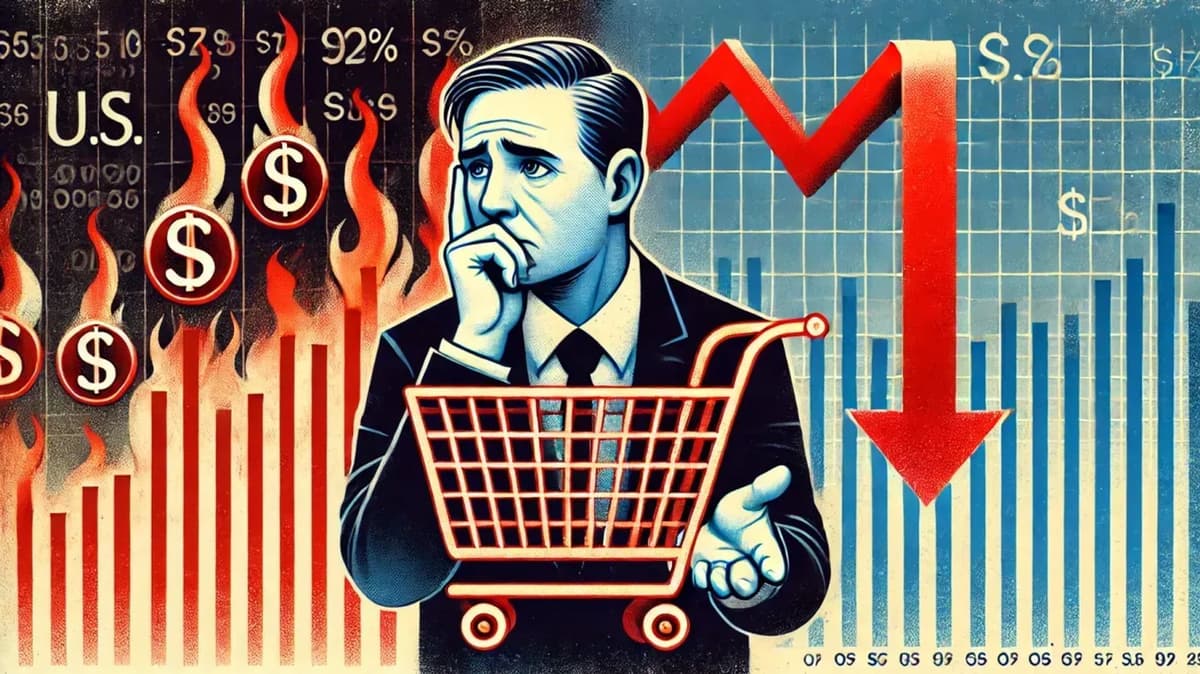
The University of Michigan said on Friday that its preliminary Consumer Sentiment reading for April fell to 47.6. That was sharply below the economist consensus forecast of 52 and also below March’s final reading of 53.3.
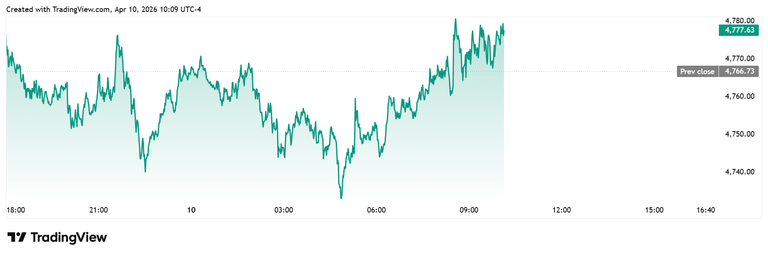
After the 10 a.m. EST release, spot gold held just off its intraday high. Spot gold last traded at $4,777.68 per troy ounce, up 0.23% on the day.
For the global market, this reaction makes sense. Softer sentiment raises concerns about growth, while higher inflation expectations can reduce confidence in paper currencies and support XAUUSD and other precious metals.
For Indian buyers, stronger international gold prices can push up local bullion rates, especially if the Indian rupee weakens against the U.S. dollar. Even when COMEX and spot prices move modestly, INR depreciation can amplify gains in domestic gold price quotations.
What did the University of Michigan survey show in April?
The April survey showed a broad-based deterioration in confidence across the U.S. economy. Consumers reported weaker views on business conditions, personal finances, and buying conditions.
According to Joanne Hsu, Director of the Surveys of Consumers, consumer sentiment sank about 11% this month, extending a decline that began with the start of the Iran conflict. She added that sentiment is now about 9% below a year ago.
Hsu said the weakness was widespread. She noted that demographic groups across age, income, and political party all posted setbacks in sentiment, and every component of the index declined.
How much did business conditions weaken?
Expected business conditions fell sharply in the April index. Hsu wrote that one-year expected business conditions plunged about 20% and are now 6% below last April.
That scale of decline suggests households are becoming more cautious about the near-term economy. When confidence in growth fades, investors often increase exposure to safe-haven assets such as gold.
What happened to personal finances and spending plans?
Consumers also grew more worried about their finances and the cost of major purchases. Hsu said assessments of personal finances declined about 11%, with consumers citing more concern over high prices and weaker asset values.
She added that buying conditions for durables and vehicles worsened, again because of high prices. This matters for markets because weaker consumer willingness to spend can signal broader economic stress.
Why are inflation expectations important for gold prices?
Inflation expectations matter because gold often performs well when households expect prices to rise faster. Higher expected inflation can increase demand for bullion as a store of value and inflation hedge.
The survey showed that year-ahead inflation expectations surged from 3.8% in March to 4.8% in April. The report said this was the largest one-month increase since April 2025.
That jump is significant. The report also said the latest 4.8% reading is above levels seen in 2024 and remains well above the 2.3%-3.0% range seen in the two years before the pandemic.
What happened to long-run inflation expectations?
Longer-term inflation expectations also moved higher. Long-run inflation expectations rose from 3.2% last month to 3.4% this month, the highest reading since November 2025.
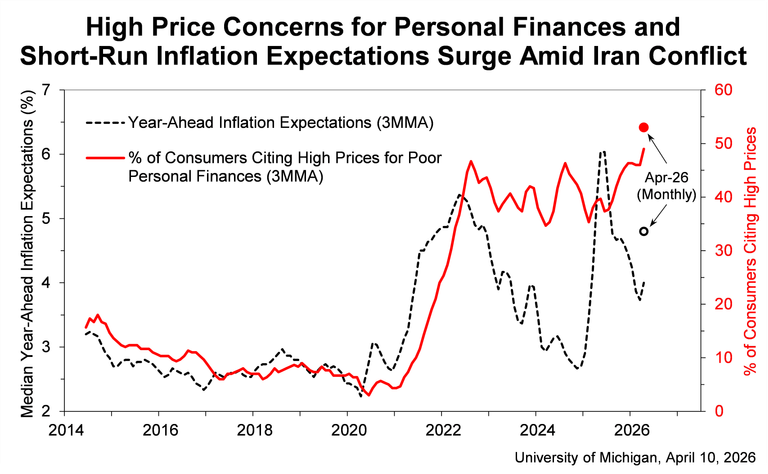
For context, the report noted that in 2024, long-run inflation expectations ranged between 2.8% and 3.2%. In 2019 and 2020, they were consistently below 2.8%.
When both short-term and long-term inflation expectations climb, markets often reassess the path for Federal Reserve policy, real yields, and the U.S. dollar. That mix can create a supportive backdrop for gold price action, even if policy expectations remain volatile.
How did the Iran conflict influence consumer sentiment and inflation fears?
The Iran conflict appears to have been a major factor behind the drop in confidence and the rise in inflation worries. According to Joanne Hsu, many consumers linked the conflict to a worsening economic outlook.
Hsu said open-ended comments showed that many consumers blame the Iran conflict for unfavorable changes to the economy. She also noted that 98% of interviews were completed before the April 7 announcement of a temporary cease-fire.
That timing matters because the survey may have captured peak concern around conflict-related supply disruptions and energy prices. Hsu said economic expectations will likely improve after consumers gain confidence that supply disruptions stemming from the Iran conflict have ended and gas prices have moderated.
For gold, geopolitical stress often adds another layer of support beyond macroeconomic data. In periods of conflict, investors typically rotate toward safe-haven assets such as gold, silver, and U.S. Treasuries.
For India, conflict-driven moves in oil and the U.S. dollar are especially relevant. Higher crude prices can pressure India’s import bill and inflation outlook, while a stronger dollar can lift the domestic gold price in rupee terms even if international bullion prices rise only modestly.
What does this mean for Indian gold investors now?
Indian gold investors should watch the combination of U.S. inflation expectations, Federal Reserve expectations, geopolitics, and USD/INR. That combination can have a direct effect on local bullion prices.
The immediate signal from Friday’s data is supportive for gold. A 47.6 consumer sentiment reading, well below the 52 forecast, and a jump in one-year inflation expectations to 4.8% suggest that growth fears and inflation concerns are building at the same time.
That environment often benefits safe-haven assets, including gold and other precious metals. If U.S. real yields soften or geopolitical tensions remain elevated, XAUUSD could remain supported near recent highs.
For Indian buyers, the next watchpoint is whether international gold can hold above the $4,777.68 per ounce area while the rupee remains stable. If the dollar strengthens against the rupee or oil prices stay elevated, domestic gold rates could remain firm even without a major fresh breakout in global bullion.