Gold price rose on Wednesday even as oil prices fell because easing energy prices, a softer US dollar, and renewed safe-haven demand supported bullion after ceasefire headlines tied to the Iran conflict. ING strategists Warren Patterson and Ewa Manthey said gold and oil moved in opposite directions after the first concrete ceasefire plan since the conflict began, creating a more complicated near-term outlook for bullion and XAUUSD.
Why is gold price rising even as oil prices fall?
Gold price is rising because lower oil prices reduced immediate inflation pressure, while a softer US dollar made bullion more attractive to buyers. According to ING commodity strategists Warren Patterson and Ewa Manthey, gold gained as energy prices pulled back even though crude sold off sharply.
The shift followed reports that the United States drafted a 15-point proposal aimed at ending the conflict and reportedly delivered it to Iran via Pakistan. ING said details remain unclear, but the headlines were strong enough to move both crude and precious metals markets.
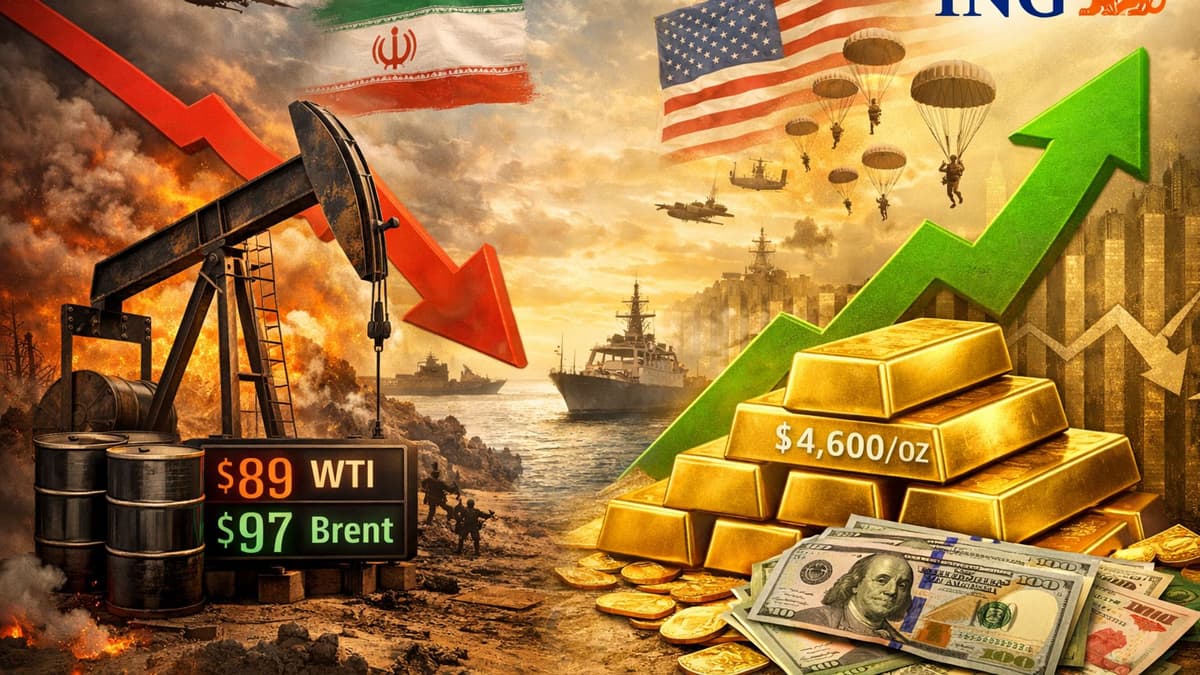
Oil reacted first and fell sharply. ING said Brent crude dropped as much as 7% toward $97 per barrel before paring losses, while WTI traded near $89 per barrel.
Gold moved differently. Patterson and Manthey said the combination of easing oil, a weaker dollar, and fresh safe-haven demand helped gold recover, showing that bullion is still trading as both an inflation hedge and a geopolitical refuge.
For Indian investors, that matters because domestic gold prices do not track global prices one-for-one. When the rupee moves against the US dollar, imported bullion costs in India can rise faster or slow down even if the international gold price changes only modestly.
What is happening in the Iran conflict and why does it matter for gold?
The Iran conflict still matters for gold because ceasefire hopes have not removed the risk of escalation. ING said uncertainty remains high despite the market's initial relief after the reported proposal.
Patterson and Manthey wrote that Tehran fired a fresh wave of missiles at Israel and showed little willingness to compromise. They added that Iran reiterated foreign ships can transit the Strait of Hormuz only if they comply with Tehran's regulations and are not supporting acts of aggression.
The United States also ordered the deployment of around 2,000 troops from the 82nd Airborne Division to the region. ING said that step underscored the risk that the conflict could widen rather than cool quickly.
That backdrop supports gold because geopolitical stress usually lifts safe-haven demand for bullion and other precious metals. ING said volatility remains elevated and that a geopolitical risk premium is still embedded in the market.
How does the Strait of Hormuz risk affect bullion markets?
The Strait of Hormuz risk affects bullion markets by keeping investors focused on inflation, supply disruptions, and broader market instability. ING warned that Iran retains control over the Strait of Hormuz while Israel continues operations against Iranian assets.
If traders start to fear disruptions to energy flows, they often buy gold as a hedge against geopolitical and inflation shocks. At the same time, higher oil prices can lift inflation expectations, which can influence Federal Reserve policy and feed directly into gold price action in XAUUSD and the wider bullion market.
For India, the Strait of Hormuz is especially important because the country is a major energy importer. Any oil shock can pressure the rupee, worsen imported inflation, and indirectly change the outlook for Indian gold prices in INR.
What did ING say about the Federal Reserve and currency moves?
ING said gold will remain highly sensitive to Federal Reserve rate expectations, currency moves, and geopolitical developments in the near term. That means investors cannot look only at war headlines when assessing the gold price outlook.
Patterson and Manthey said ongoing tensions continue to support higher prices, stoke inflation concerns, and reinforce expectations that policymakers may delay easing or even tighten monetary policy. Those forces can pull gold in opposite directions.
Safe-haven demand supports bullion when geopolitical risks rise. But a more hawkish Federal Reserve and higher real rates can cap gains in non-yielding assets such as gold, even when risk aversion stays elevated.
What role are central banks playing in the gold market?
Central banks are becoming a bigger factor because some may use gold holdings to stabilize their currencies. ING said there are tentative signs that some central banks, especially those exposed to higher energy import costs, may tap gold reserves to manage currency volatility.
The report specifically cited Turkey. ING said Turkey's central bank is preparing measures to limit war-related volatility in the lira.
This currency angle also matters for Indian investors. Even if global gold prices rise in US dollars per troy ounce, INR moves can amplify or soften the domestic impact, especially when oil prices and currency volatility shift together.
How did gold trade on Wednesday?
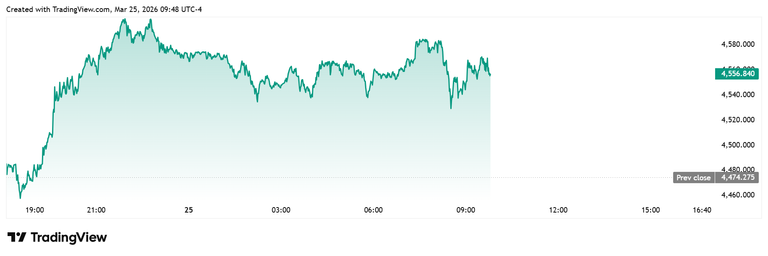
Gold extended gains for a second straight trading session on Wednesday after ending a nine-day losing streak. ING said prices pushed back above $4,600 per ounce early Wednesday morning.
Support came from comments by US President Trump suggesting Iran had offered a goodwill gesture linked to energy flows through the Strait of Hormuz. Patterson and Manthey also said diplomatic signals from China encouraging negotiations supported sentiment.
Easing oil prices and a softer US dollar added to the recovery. That combination helped bullion stay firm even as crude retreated, reinforcing gold's role as a safe-haven asset during unstable geopolitical conditions.
What are the key gold price levels to watch now?
The key near-term gold price levels are the session high of $4,602.64 per ounce and support near $4,530 per ounce. After reaching $4,602.64 in overnight trading, gold successfully retested support around $4,530 per ounce.
ING said gold continued to trade in the upper half of its daily range after that retest. Spot gold was last at $4,557.93 per ounce, up 1.87% on the session.
For Indian bullion buyers, these international levels matter because they influence landed import costs and dealer pricing. But the final retail impact in India will also depend on rupee moves, import dynamics, and whether energy-driven inflation changes local interest-rate expectations.
What should Indian investors watch next in gold?
Indian investors should watch three things next: Iran-Israel headlines, Federal Reserve rate expectations, and US dollar moves. ING's analysis shows that gold is no longer reacting only to safe-haven demand; it is also responding to oil, currencies, and possible central-bank gold sales.
If ceasefire efforts gain credibility, oil may remain under pressure while gold could still hold support if the US dollar weakens. If the conflict escalates again, especially around the Strait of Hormuz, inflation fears and safe-haven demand could quickly push bullion higher.
For investors in India, the most important watchpoint is whether global gold strength is reinforced or offset by rupee volatility. A weaker rupee can magnify gains in domestic gold prices even if international bullion pauses, while a stronger rupee can cushion the move despite rising global prices.