# Gold Price Nears Session Lows After Strong US Durable Goods Data
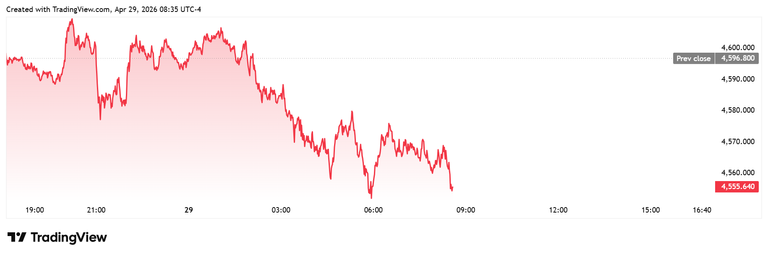
Gold prices slipped toward session lows after stronger-than-expected U.S. durable goods data signaled resilience in the American economy and reduced immediate support for safe-haven bullion. Spot gold last traded at $4,555.82 per ounce, down 0.89% on the session, after briefly hovering near $4,550 per ounce.
For Indian investors, the move matters because global XAUUSD weakness can weigh on domestic bullion prices, although any parallel move in the USD/INR exchange rate may cushion or amplify the impact in rupee terms.
Why Did Gold Price Fall After the US Durable Goods Report?
Gold prices fell because the latest U.S. economic data beat market expectations, reducing the immediate appeal of safe-haven assets such as bullion. Stronger macroeconomic numbers can support the U.S. dollar and Treasury yields, both of which often pressure non-yielding assets like gold.
The U.S. Commerce Department said on Wednesday that durable goods orders rose 0.8% in March. That followed February’s unrevised decline of -1.4%.
Economists had expected a smaller increase of 0.5% in March. Because the actual reading came in above forecast, traders reacted by pushing gold lower in early trading.
What Did the March Durable Goods Data Show?
The March durable goods report showed broad strength beyond the headline number. That stronger underlying trend suggested business demand held up better than markets had anticipated.
How Strong Was the Headline Durable Goods Reading?
The headline figure showed durable goods orders increased 0.8% in March. This was stronger than the 0.5% consensus forecast and marked a rebound from February’s -1.4% decline.
Durable goods are big-ticket manufactured items designed to last at least three years. Markets watch the data closely because it offers a read on industrial demand, capital spending, and economic momentum.
What Happened in Core Durable Goods Orders?
Core durable goods orders, which exclude the volatile transportation sector, rose 0.9% in March. That was stronger than the 0.4% consensus forecast.
However, the March core reading came after February’s revised 1.2% print. Even so, the latest number still pointed to firmer-than-expected underlying demand.
Why Did Capital Goods Orders Matter for Markets?
Non-defense capital goods orders excluding aircraft manufacturing posted one of the strongest surprises in the report. This category rose 3.3% in March, well above the expected 0.5% increase.
That reading also topped February’s revised 1.6% print. Investors often track this measure as a proxy for business investment, so the upside surprise added to pressure on gold price sentiment.
How Did Spot Gold React Immediately?
Spot gold stayed near the day’s lows immediately after the data release. The market showed little sign of a quick rebound once the numbers crossed the wires at 8:30 am EDT.
According to the report, spot gold continued to trade near session lows following the release and was last seen at $4,555.82 per troy ounce. That left XAUUSD down 0.89% on the session.
The article also noted that gold was trading just off session lows near $4,550 per ounce. That level became the key intraday reference point after the stronger U.S. macro print.
What Does Strong US Economic Data Mean for Gold Investors in India?
Strong U.S. economic data can pressure global gold prices because it may reduce expectations for looser monetary conditions and weaken safe-haven demand. For Indian investors, the final impact depends on both international bullion prices and the rupee’s movement against the U.S. dollar.
If gold price weakness in dollar terms continues while the Indian rupee remains stable, domestic gold rates may soften. But if the USD/INR rises at the same time, Indian bullion buyers could see a smaller decline in local prices than the drop in XAUUSD might suggest.
Indian investors should also watch how U.S. macro data shapes expectations for the Federal Reserve, because shifts in rate outlook often influence bullion, the dollar, and global precious metals flows. In the near term, the key watchpoint is whether gold can hold the $4,550 per ounce area after the stronger March durable goods data or whether more upbeat U.S. numbers trigger deeper selling.