
# Gold Price Near $4,730 After Weak US Home Sales Surprise
Spot gold held near session highs after the latest U.S. housing data showed only a modest improvement in existing-home sales in April while still missing market forecasts. For Indian investors, the move matters because softer-than-expected U.S. macro data can support bullion by reinforcing expectations that economic momentum is cooling, even when gold prices remain slightly lower on the day.
What happened to gold price after the U.S. existing-home sales data?
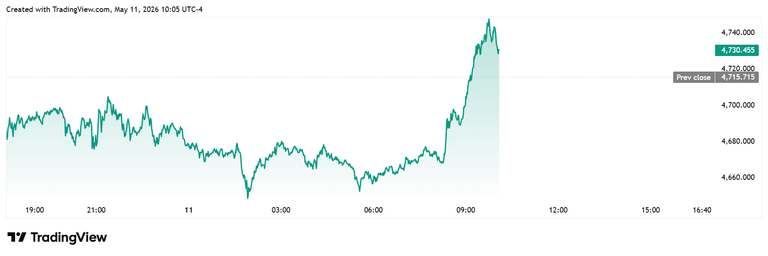
Gold price stayed near the top of its daily range after the U.S. existing-home sales report was released at 10 am EST on Monday. Spot gold last traded at $4,730.55 per troy ounce, down 0.31% on the day at the time of writing.The market reaction suggested that bullion traders saw the housing data as supportive for safe-haven sentiment, or at least not strong enough to pressure XAUUSD lower. Although gold remained in negative territory on the day, it did not retreat meaningfully after the data release.
For Indian investors tracking international gold price moves, resilience in XAUUSD near $4,730/oz can influence domestic bullion rates, especially when paired with rupee-dollar moves and local import cost trends.
What did the U.S. existing-home sales report show in April?
U.S. existing-home sales rose slightly in April, but the increase fell short of economists’ expectations. The National Association of Realtors said total existing-home sales, including single-family homes, townhomes, condominiums and co-ops, increased 0.2% to a seasonally adjusted annual rate of 4.02 million in April.Economists had expected sales to rise to 4.05 million, so the actual reading came in below consensus. March’s total was revised higher to 4.01 million from 3.98 million units.
That mix matters for gold price because markets often respond not just to whether data improves, but whether it beats or misses expectations. In this case, the U.S. housing market improved on paper, but the miss versus forecast helped keep bullion near intraday highs.
How did home sales vary across U.S. regions?
The regional picture was mixed, which reinforced the view that the U.S. housing market is improving unevenly. On a month-over-month basis, existing-home sales increased in the Midwest and South, were unchanged in the Northeast, and declined in the West.On a year-over-year basis, sales rose in the South, were flat in the West, and fell in both the Northeast and Midwest. That split suggests housing demand remains sensitive to affordability, mortgage rates and local market conditions.
For precious metals traders, uneven regional data can strengthen the case that the broader U.S. economy is not firing on all cylinders. That kind of backdrop can limit downside pressure on gold, which often benefits when growth signals stay mixed.
Why did the housing data matter for bullion markets?
The housing data mattered because gold traders use U.S. macro releases to assess growth momentum, interest-rate expectations and safe-haven demand. A softer-than-expected report can support bullion because it may reduce pressure for tighter financial conditions and can keep investors interested in defensive assets such as gold.In this case, spot gold did not surge after the release, but it remained close to session highs. That reaction indicated that the market viewed the report as mildly supportive for XAUUSD, even with gold down 0.31% on the session.
For Indian gold buyers, U.S. data surprises can feed into global price discovery quickly. If international bullion prices stay firm while the Indian rupee weakens against the U.S. dollar, domestic gold rates can remain elevated even on days when spot gold posts a small decline.
What did NAR Chief Economist Lawrence Yun say about the housing market?
NAR Chief Economist Dr. Lawrence Yun said housing affordability improvements provided a modest lift to sales despite conflicting macroeconomic signals. According to Dr. Lawrence Yun, “Despite mixed macroeconomic signals—including a record-high stock market and historically low consumer confidence—home sales were modestly boosted by the continued improvement in housing affordability.”He added that “Mortgage rates are lower from a year ago, and average income growth is outpacing home price gains.” That combination suggests some support for housing demand, even if activity remains constrained.
Dr. Lawrence Yun also flagged supply-side limits. He said, “Inventory still remains tight.” He added, “Multiple offers, though not as intense as a few years ago, are still occurring. At the same time, days on market are lengthening on average, implying that consumers are taking their time before making decisions.”
These comments matter for gold investors because they point to a U.S. economy showing both resilience and strain. That kind of mixed macro backdrop often keeps safe-haven demand for gold intact.
What should Indian investors watch next for gold price?
Indian investors should watch whether upcoming U.S. macro data strengthens or weakens the case for gold holding above the $4,700 area. The next key signals will likely come from U.S. growth data, inflation readings, Treasury yield movements and the U.S. dollar, all of which can shape bullion demand.For the Indian market, the global gold price is only part of the story. Investors should also monitor USD/INR, local physical demand and import-linked pricing because even a stable international gold price near $4,730.55 per ounce can translate into sharper domestic price moves if the rupee shifts. If U.S. data continues to miss expectations, gold could retain safe-haven support in the sessions ahead.