# Gold Price Jumps Near $4,900 After Hormuz Reopening Shock
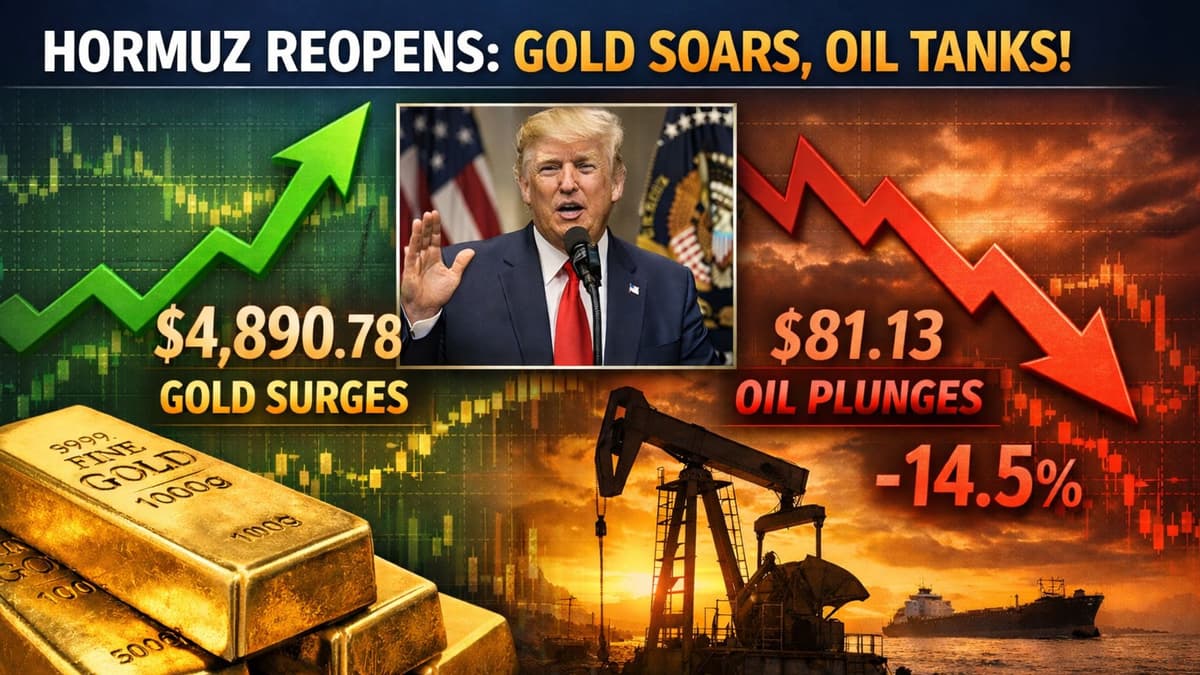
Gold prices surged on Friday after U.S. President Donald Trump announced that Iran had completely reopened the Strait of Hormuz to all maritime traffic. The announcement intensified an existing breakout in bullion, pushing spot gold close to the psychologically important $4,900 per troy ounce level while crude oil prices plunged.
For Indian investors, the move matters because sharp swings in global gold price benchmarks such as XAUUSD often feed directly into domestic bullion rates, especially when global geopolitical risk and energy prices shift at the same time.
Why did gold price jump near $4,900 today?
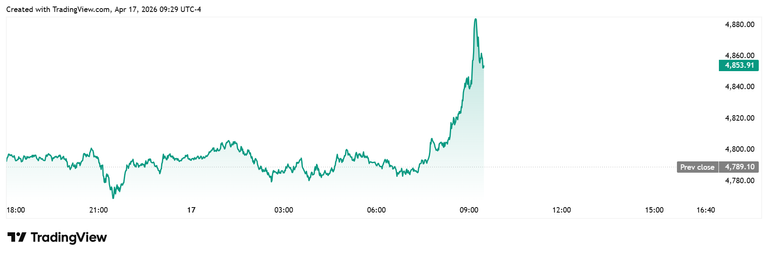
Gold price jumped because bullish momentum was already building above a major technical resistance level, and the Strait of Hormuz headline accelerated buying. Spot gold had already been rallying after breaking decisively above $4,800 per ounce shortly after 8:20 a.m. Eastern on Friday.
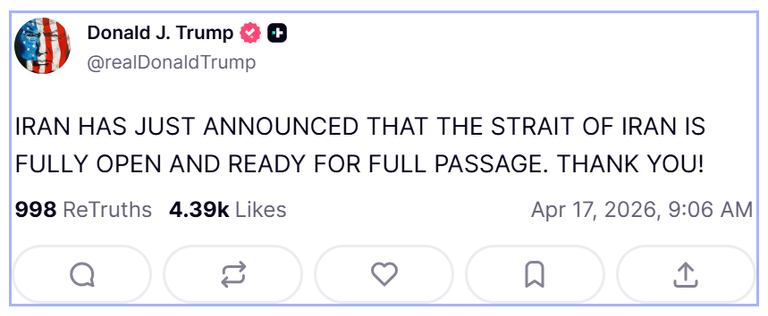
At 9:06 a.m. Eastern, U.S. President Donald Trump announced that Iran had completely reopened the Strait of Hormuz to all maritime traffic. That update acted as a fresh catalyst for precious metals markets.
Just five minutes later, spot gold hit an intraday high of $4,890.78 per troy ounce. The speed of the move showed how aggressively traders reacted once the geopolitical development hit the market.
What was the key technical level for XAUUSD?
The key level was $4,800 per ounce. According to the source report, spot gold broke definitively above that resistance shortly after 8:20 a.m. Eastern, and that breakout set the stage for the next leg higher.
In market terms, a clean break above resistance often triggers momentum buying, short covering, and additional algorithmic trades. That appears to have happened in XAUUSD before the Trump announcement added what the original report described as "rocket fuel" to the move.
What happened in the Strait of Hormuz announcement?
The market-moving development was President Donald Trump’s Friday morning statement that Iran had fully reopened the Strait of Hormuz to all maritime traffic. Commodities markets reacted immediately and dramatically to that news.
The Strait of Hormuz is one of the world’s most important energy shipping chokepoints. Any reopening or disruption there can quickly alter expectations for oil flows, geopolitical risk, inflation, and safe-haven positioning across global markets, including gold and other precious metals.
Why did commodities react so sharply?
Commodities reacted sharply because the Hormuz route plays a central role in global energy trade. When traders receive a major headline tied to that passage, they rapidly reprice oil, inflation expectations, and cross-asset risk sentiment.
In this case, the source article said commodities markets were reacting "dramatically" to the announcement. Gold extended gains, while Nymex crude oil futures dropped hard.
Why did oil prices fall sharply after the news?
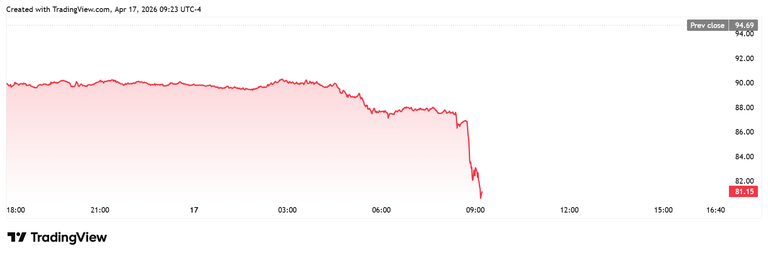
Oil prices fell because the reopening of the Strait of Hormuz eased immediate concerns around maritime disruption and crude supply flows. Nymex crude oil futures were last trading at $81.13 per barrel, down more than 14% on the daily chart.
That is a major one-day move in the oil market. A sharp decline of that scale suggests traders quickly priced in lower supply risk after the announcement.
What does the oil drop mean for gold?
The oil drop creates a more complex backdrop for gold. Lower oil prices can reduce near-term inflation pressure, but sudden geopolitical headlines can still drive strong safe-haven and momentum flows into bullion, especially when gold has already broken a major resistance level.
The source article shows exactly that pattern: gold was already rallying above $4,800, and the Hormuz update accelerated the move instead of reversing it.
How does this affect Indian gold investors?
Indian gold investors should watch both the global gold breakout and the sharp oil selloff because both can influence domestic prices. International gold benchmarks such as spot gold and XAUUSD typically shape Indian bullion rates after adjusting for the rupee-dollar exchange rate, import costs, and local premiums.
If gold holds near $4,890.78 per ounce, Indian bullion prices could remain elevated even if falling crude oil offers some relief to India’s broader import bill. Lower oil prices can support India’s macro outlook and reduce inflation pressure, but a strong global gold price can still keep domestic gold expensive in rupee terms.
Why does INR matter here?
The Indian rupee matters because domestic gold is priced using global dollar-denominated bullion rates converted into INR. If the rupee weakens against the U.S. dollar, Indian gold prices can rise even more sharply.
If the rupee stays stable or strengthens, it may cushion part of the international gold rally for local buyers. That makes both XAUUSD and USD/INR important watchpoints for Indian investors.
What should traders watch next in gold and crude oil?
Traders should now watch whether spot gold can sustain its breakout above $4,800 and challenge the $4,900 zone again. They should also monitor whether Nymex crude oil futures remain near $81.13 per barrel or stabilize after the more than 14% daily drop.
Key levels and market signals to monitor
- Spot gold resistance breakout: Above $4,800 per ounce
- Spot gold intraday high: $4,890.78 per ounce
- Breakout timing: Shortly after 8:20 a.m. Eastern
- Trump announcement: 9:06 a.m. Eastern on Friday
- Time to daily high after announcement: 5 minutes
- Nymex crude oil futures: $81.13 per barrel
- Oil daily move: Down more than 14%