
# Gold Price Holds Near Highs as U.S. Jobless Claims Miss Forecasts
Gold prices stayed near session highs on Thursday after fresh U.S. labour market data showed new unemployment claims rose more than expected. For Indian investors, the move matters because softer U.S. economic data can support bullion by boosting expectations that the Federal Reserve may lean less hawkish, a trend that can influence both international gold price action and domestic rates in rupee terms.
Why did gold price trade near session highs today?
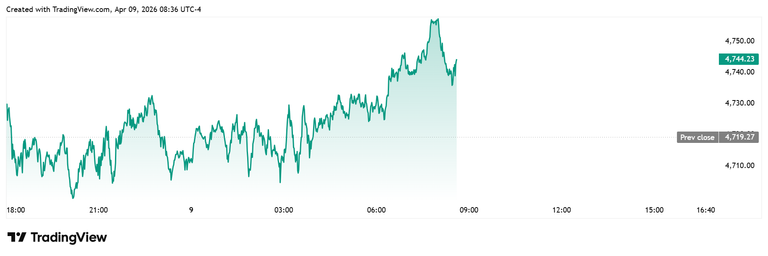
Gold price held near session highs because U.S. weekly jobless claims came in above economists’ forecasts, signalling some softness in the labour market. That data helped support safe-haven demand for bullion and kept XAUUSD elevated in early trading.
Spot gold spiked to $4,759.70 per troy ounce just after 8:00 a.m. on Thursday. It was last trading at $4,744.28 per ounce, up 0.53% on the daily chart.
The market reaction showed that traders focused on the weaker-than-expected headline for initial claims. In gold markets, any sign of cooling U.S. economic momentum can reinforce the case for lower yields or a less aggressive Federal Reserve path, which is typically constructive for precious metals.
What did the latest U.S. weekly jobless claims data show?
The latest U.S. labour data was mixed, but the headline initial claims number was weaker than expected. According to the U.S. Labor Department, initial claims for state unemployment benefits rose to a seasonally adjusted 219,000 in the week ending April 4.
That reading was above the consensus forecast of 210,000 claims. It was also higher than the previous week’s figure, which was revised up to 203,000 from 202,000.
How did the four-week moving average compare?
The four-week moving average came in lower than expected, which offered a more balanced read on the labour market. This measure, often seen as more reliable because it smooths week-to-week volatility, stood at 209,500.
That compares with the previous week’s revised average of 208,000. Economists had expected the four-week average to rise to 216,000.
What happened to continuing jobless claims?
Continuing jobless claims actually fell, which is why the overall labour market signal was mixed. These claims, which track the number of people already receiving benefits, were at 1.794 million in the week ending March 28.
That was below expectations for 1.840 million. It also came in under the previous week’s downwardly revised level of 1.832 million.
How does mixed U.S. labour data affect gold prices?
Mixed U.S. labour data can still support gold price if the headline suggests economic softness. In this case, the higher-than-expected initial claims figure helped bullion stay firm even though continuing claims declined.
Gold often responds quickly to U.S. macro data because traders use these releases to reassess Federal Reserve expectations, U.S. Treasury yields and the dollar. When the labour market looks less robust, gold can benefit because lower rate expectations tend to reduce the opportunity cost of holding a non-yielding asset like bullion.
At the same time, the drop in continuing claims limited the bullish impulse. That is why spot gold traded near session highs rather than extending into a much larger breakout after the data release.
What does this mean for Indian gold investors?
For Indian investors, firm international gold prices can support domestic bullion rates, especially if the rupee weakens against the U.S. dollar. Since global gold is priced in dollars per troy ounce, any sustained strength in XAUUSD can feed into higher gold prices in India.
The latest U.S. claims data matters because it shapes expectations for the Federal Reserve, and those expectations influence global risk sentiment, the dollar and precious metals pricing. If softer U.S. data continues, gold could remain well bid as a safe-haven asset.
Indian buyers should also watch the USD/INR exchange rate alongside international bullion moves. Even if global gold price gains are modest, rupee depreciation can amplify local gold price moves.
What should traders watch next for XAUUSD?
Traders should watch whether upcoming U.S. data confirms a softer labour trend or contradicts it. Gold’s immediate reaction showed that the market is highly sensitive to labour-market surprises, but the mixed nature of this report means follow-through will depend on the next round of macro releases.
Key watchpoints now include additional U.S. employment indicators, bond yields, Federal Reserve rate expectations and the U.S. dollar. For Indian investors, the near-term setup suggests keeping an eye on both international gold price momentum and rupee moves, as those two forces will likely determine whether domestic bullion extends higher from here.