# Gold Price Firms Above $4,500 but Oil Shock Caps Upside
Spot gold edged higher in early U.S. trading on Monday, but the rebound remained limited as crude oil stayed above $100 a barrel, U.S. Treasury yields hovered near 4.6%, and fresh Strait of Hormuz tensions kept inflation fears elevated. For Indian investors, that mix matters because higher global gold prices can be partly offset or amplified by rupee moves against the U.S. dollar, shaping domestic bullion rates.
Why is gold price rising but still capped today?
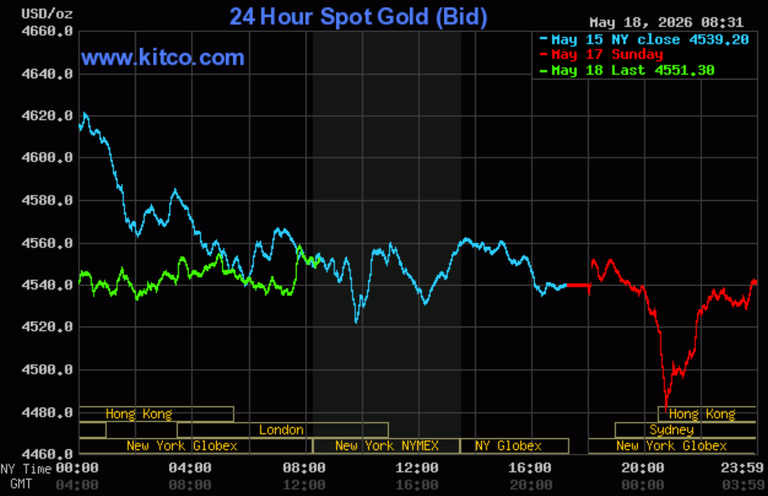
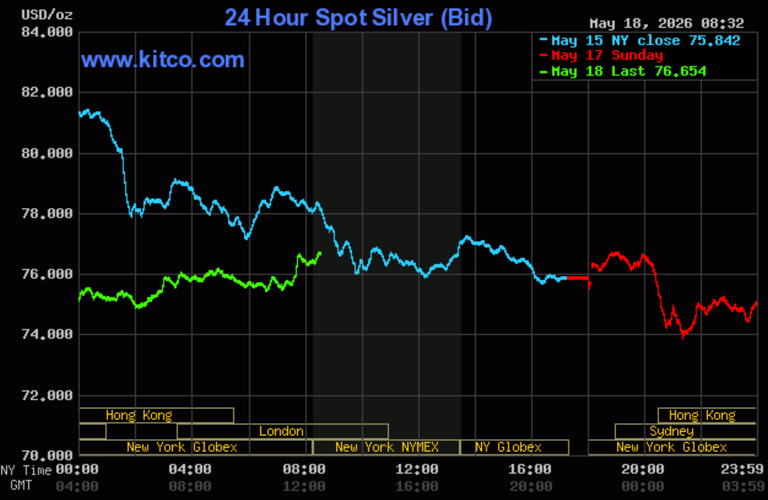
Gold price is rising because bargain hunting emerged after bullion fell to a more than six-week low, but the upside is capped by higher oil prices, a firmer U.S. dollar, and elevated bond yields. At the time of writing, spot gold traded near $4,552.80 per troy ounce, up 0.30%, while spot silver traded at $76.770, up 1.23% on the session.
Gold is trying to stabilize above the key $4,500 level after recent weakness in XAUUSD. However, the macro backdrop remains difficult for non-yielding precious metals because investors can earn more from interest-bearing assets when yields rise.
Crude oil is a major reason the rally is restrained. Oil above $100 a barrel is lifting inflation expectations, and that is pushing markets to price a more hawkish Federal Reserve path.
What is driving pressure on gold from oil, yields and the U.S. dollar?
The main pressure on gold comes from the way rising oil prices feed inflation, which then lifts Treasury yields and boosts expectations of higher U.S. interest rates. That combination reduces the appeal of non-yielding bullion.
The U.S. dollar index held near 99 after touching a six-week high overnight. At the same time, the yield on the benchmark 10-year U.S. Treasury note traded near 4.6%.
Fed funds futures now price in a meaningful chance of a rate hike by year-end. That marks a sharp shift from the earlier rate-cut bias that had supported gold during the first part of 2026.
For Indian investors, a stronger dollar can matter as much as the gold price itself. If the rupee weakens against the dollar while international gold holds firm, local gold prices in INR may remain supported even if global bullion upside stays limited.
What did Simon-Peter Massabni say about gold?
Simon-Peter Massabni, Head of Business Development at XS.com, said gold was holding near an important support area but remained vulnerable to fresh geopolitical stress.
“Gold prices are holding steady just above $4,500 per ounce, close to the lowest level recorded so far this May,” said Simon-Peter Massabni, Head of Business Development at XS.com. “Gold could face further downward pressure in the coming days as the market braces for more escalation in the Middle East.”
His view reflects the market’s current dilemma: geopolitical risk would normally support safe-haven demand for gold, but this time the inflation impact from oil is also pushing yields higher and limiting gains.
How is the Strait of Hormuz closure affecting gold and silver prices?
The Strait of Hormuz is the dominant market risk because it is lifting oil prices and injecting a supply-risk premium into global markets. That is helping safe-haven sentiment only partially, while the inflation shock is weighing more heavily on gold through yields.
Iran’s top security body announced a new Persian Gulf Strait Authority on Monday to manage Hormuz operations. Tehran is also continuing to seek control and fees over traffic through the chokepoint.
Meanwhile, the U.S.-Iran peace track remains stalled. President Donald Trump warned that the “clock is ticking,” reinforcing market expectations that diplomacy has not yet removed the energy supply threat.
The immediate market response has not been a straightforward haven rush into precious metals. Instead, stronger oil prices are raising inflation expectations, pressuring global bond markets, and increasing rate-hike pricing.
Where are Brent and WTI crude trading?
Brent crude traded near $110.05 a barrel, while Nymex WTI crude traded near $101.77. Earlier in the session, Brent touched nearly $112 and WTI nearly $104.
Those oil levels are important for Indian investors because India is a major crude importer. Sustained energy strength can widen inflation risks domestically, affect the rupee, and influence local demand for gold as both an inflation hedge and a safe-haven asset.
What economic data and Federal Reserve signals are traders watching this week?
Monday’s U.S. data calendar is light, but the rest of the week carries important event risk for gold, silver and broader financial markets. Traders are watching whether incoming data and Federal Reserve communication reinforce the inflation-risk narrative.
The May NAHB housing market index is due at 10 a.m. ET on Monday. March net long-term TIC flows are due at 4 p.m. ET.
The bigger event comes on Wednesday at 2 p.m. ET, when the Federal Reserve’s April meeting minutes are released. Markets will scan the minutes for any shift in how Federal Reserve officials are discussing inflation risk after the latest oil shock.
The housing data matters mainly for what it says about rate-sensitive demand. The Fed minutes matter more directly because any sign of stronger concern over inflation could further lift yields and keep pressure on XAUUSD and silver.
How did global markets react overnight?
Global markets traded defensively overnight as the combination of higher oil prices and rising yields hit risk appetite. Equities weakened across Asia, Europe and U.S. futures.
Japan’s Nikkei 225 fell 1.99%. Hong Kong’s Hang Seng lost 1.62%.
In Europe, markets were mixed to lower, with Germany’s DAX down more than 2% earlier in the session. U.S. equity futures were also softer as the oil-yield mix weighed on the previous AI-led stock rally.
This broader risk-off tone can sometimes support precious metals. But in the current environment, the inflation-and-yields channel is proving just as important as safe-haven demand.
What are the key technical levels for gold price now?
Gold bulls need to reclaim the $4,597 to $4,670 resistance zone to regain stronger upside momentum. If spot gold sustains a move above that area, the next upside targets are $4,744.35 and then $4,800.
On the downside, bears are targeting a break below the $4,538 to $4,500 support zone. If gold falls through that area, the next downside targets are $4,495.33 and then $4,401.82.
Gold price resistance and support levels
- First resistance: $4,597
- Next resistance: $4,670
- Upside targets: $4,744.35, then $4,800
- First support: $4,538
- Next support: $4,500
- Downside targets: $4,495.33, then $4,401.82
What are the key technical levels for silver price now?
Silver bulls need to push spot silver back above the $78.00 to $78.71 area to revive stronger momentum. If silver clears that zone, the next upside targets are $80 to $82, followed by $89.
On the downside, bears are looking for a break below $74.94. If that level gives way, the next targets are $73.91 and then $72.00.
Silver price resistance and support levels
- First resistance: $78.00
- Next resistance: $78.71
- Upside targets: $80 to $82, then $89
- First support: $76.50
- Next support: $74.94
- Downside targets: $73.91, then $72.00
For now, Indian investors should watch three variables closely: whether Brent holds near $110.05, whether the 10-year U.S. Treasury yield stays near 4.6% or rises further, and whether the Federal Reserve minutes on Wednesday deepen rate-hike expectations. Those signals are likely to determine whether gold can build on its rebound above $4,552.80 per ounce or whether the market retests the $4,500 support zone.