# Chinese Gold ETFs Hit Record Q1 Inflows as Buyers Pounce
Chinese gold ETFs posted their strongest quarter on record in Q1 as investors, wholesalers and the People’s Bank of China bought into March’s price dip, according to Ray Jia, Head of Research for China at the World Gold Council.
Gold prices weakened sharply in March, but demand in China did not collapse. Instead, lower bullion prices triggered opportunistic buying across ETFs, wholesale channels and official reserves. For Indian investors, that matters because strong Chinese demand often supports global gold price floors and can influence local rupee gold trends.
Why did Chinese gold ETFs attract record inflows in Q1?
Chinese gold ETFs attracted record inflows because investors used March’s price drop to buy gold as a safe-haven and portfolio hedge. Weak local equities, yuan depreciation and geopolitical risk all reinforced bullion demand.
According to Ray Jia of the World Gold Council, Chinese gold ETFs recorded inflows for the seventh straight month in March. Funds attracted RMB12 billion (US$1.7 billion) during the month, lifting holdings by 8.4 tonnes.
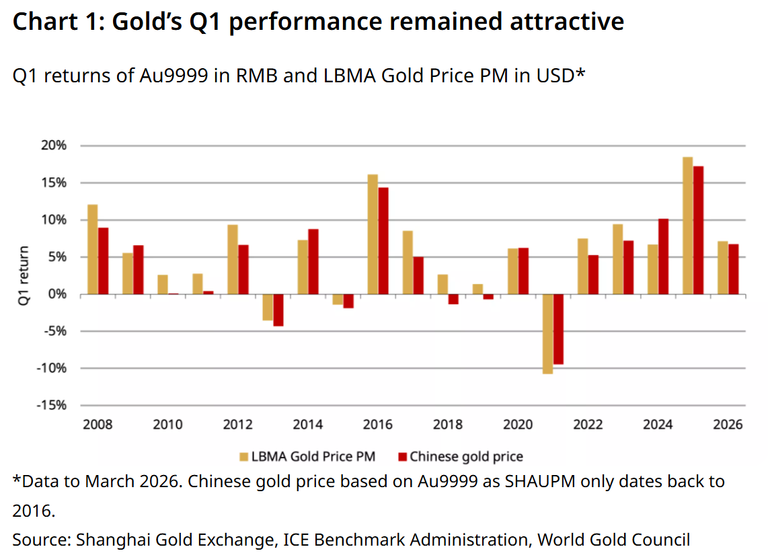
Jia said the sharp fall in the local gold price did not interrupt investor appetite. In March, the CSI300 stock index fell 6%, while the local currency depreciated 0.8% against the U.S. dollar. He added that safe-haven demand linked to the U.S.-Israel-Iran war and ongoing regional geopolitical tensions also supported ETF buying.
How strong were Q1 inflows overall?
Q1 was the strongest quarter ever for Chinese gold ETFs. Investors bought RMB59 billion (US$8.5 billion, 50 tonnes) of gold ETFs during the quarter, surpassing the previous all-time record.
Jia said total assets under management in Chinese gold ETFs rose 26% to RMB304 billion (US$44 billion). Holdings climbed to 298 tonnes, and both figures reached quarter-end record highs.
For Indian investors, sustained ETF demand in China is a key signal. It shows that when gold prices correct, large Asian buyers may step in quickly, helping stabilize international gold price sentiment and affecting domestic prices in INR.
What happened to gold prices in March and Q1?
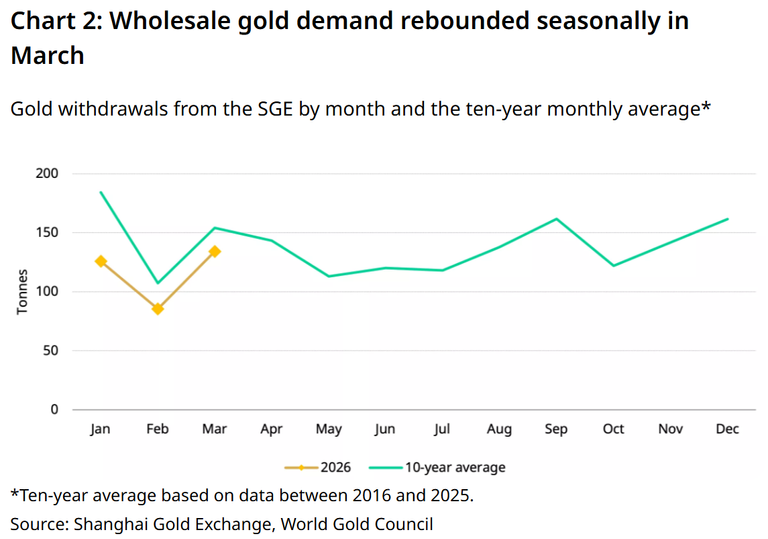
Gold prices fell sharply in March, although both international and Chinese benchmark prices still ended Q1 higher. March weakness cut into earlier gains, but recovery signs appeared toward the end of the month and in early April.
Jia wrote that the LBMA Gold Price PM in USD fell 12% in March. He said the decline was driven by rapidly cooling expectations for future Federal Reserve rate cuts, inflation fears linked to the Middle East war, and momentum-driven unwinding by investors in futures, ETFs and options.
China’s benchmark gold price, the SHAUPM, saw a similar decline of 11% in March. However, a weaker local currency limited the extent of that pullback.
Did gold still rise in Q1 despite March losses?
Yes, gold still rose 7% in Q1 in both U.S. dollar and Chinese yuan terms. Jia said, “The international gold price in dollars and the Chinese benchmark in RMB both registered a 7% rise in the first quarter.”
He also noted that despite a turbulent quarter, “signs of recovery were evident towards the end of March and in early April.” That matters for XAUUSD watchers in India because global price recoveries, combined with rupee moves, can amplify domestic bullion price swings.
How did lower gold prices affect wholesale demand in China?
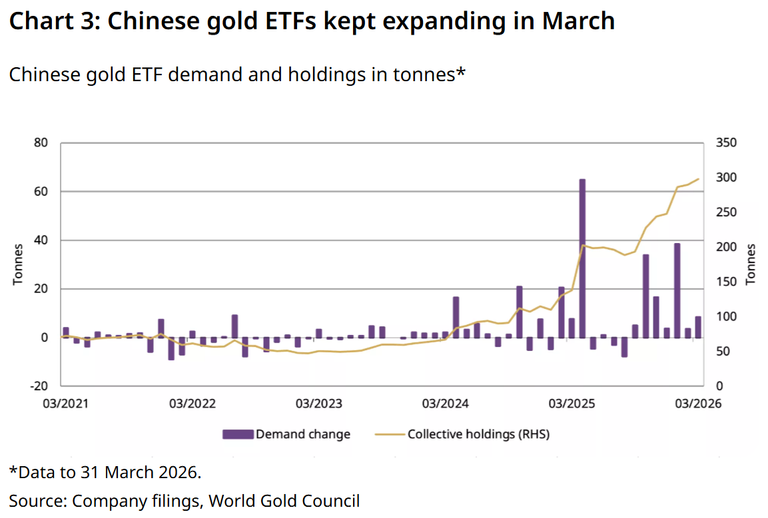
Lower gold prices boosted wholesale restocking demand in March. Banks, jewellers and refiners increased withdrawals from the Shanghai Gold Exchange as they replenished inventory after the Chinese New Year and took advantage of cheaper prices.
Jia said 134 tonnes of gold were withdrawn from the Shanghai Gold Exchange (SGE) in March. That represented a 57% month-on-month rebound and a 12% year-on-year increase.
He said the monthly recovery was largely seasonal because March had 22 working days, compared with 14 in February. Post-Chinese New Year restocking by industry participants also helped, while the gold price pullback encouraged opportunistic replenishment.
Was wholesale demand fully strong again?
No, wholesale demand improved but remained below long-term norms. Jia said March demand stayed below its ten-year average, showing that China’s jewellery sector is still weak.
The stronger March reading lifted Q1 wholesale gold demand to 345 tonnes. That was 3% higher year-on-year, but still 23% below the ten-year average.
Jia said Chinese gold demand continued to diverge in line with trends seen in 2025. As gold prices surged through most of Q1, strong investment demand offset continued weakness in gold jewellery consumption.
For India, this split is relevant. It suggests that even if jewellery demand softens at high prices, investment demand through bars, coins and ETFs can still keep the broader gold market firm.
What did the People’s Bank of China do in March?
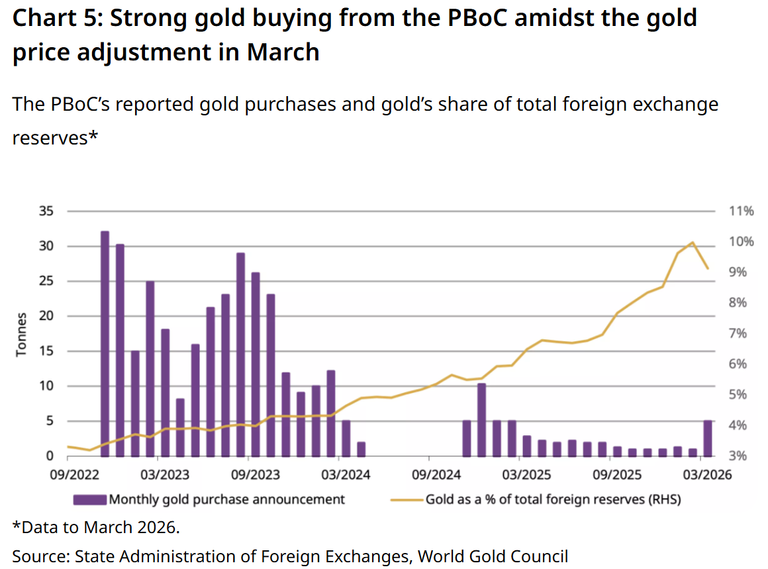
The People’s Bank of China added more gold to its reserves in March, extending its buying streak to 17 straight months. The central bank appears to have used the price correction to build reserves at a more attractive level.
Jia said the PBoC bought 5 tonnes of gold in March, its largest monthly addition since February 2025. That purchase raised China’s official gold holdings to 2,313 tonnes.
How significant was the PBoC’s Q1 buying?
The PBoC added 7 tonnes of gold over Q1. Jia said that was the largest quarterly increase since Q1 2025.
Gold now makes up 9% of China’s foreign exchange reserves, down from 10% in February. Jia said the decline in share was mainly due to the gold price pullback in March rather than reduced central bank interest.
For Indian investors, central bank buying remains an important structural support for gold. When major central banks keep accumulating bullion, it strengthens the long-term case for holding some exposure to precious metals.
What happened in China’s gold futures market and imports?
China’s gold futures trading slowed in March, but volumes remained well above historical averages in Q1. At the same time, gold imports rose strongly in January and February, showing underlying demand stayed resilient.
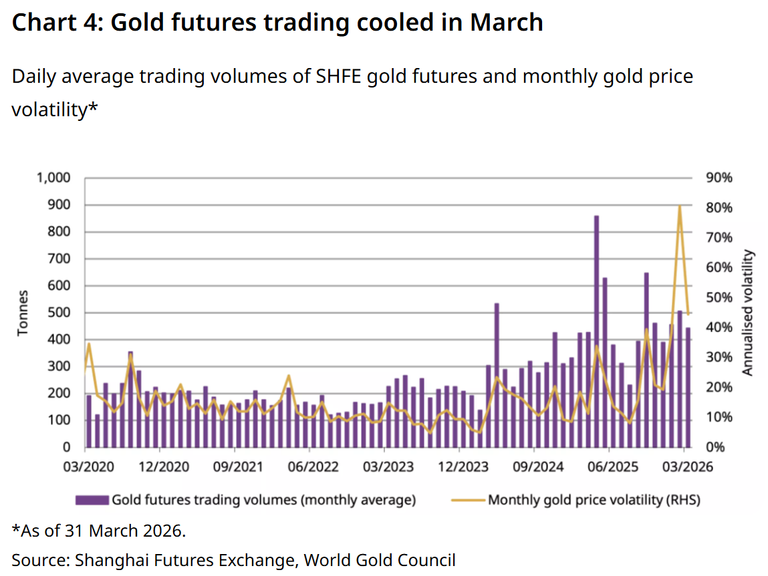
Jia said average daily trading volumes in Chinese gold futures fell 12% month-on-month to 443 tonnes per day in March. He attributed the decline mainly to lower gold price volatility and weaker price performance, which reduced trader interest.
Were Q1 futures volumes still elevated?
Yes, Q1 futures activity remained strong by historical standards. Gold futures trading on the Shanghai Futures Exchange (SHFE) averaged 468 tonnes per day during the quarter.
That was well above the five-year average of 265 tonnes per day. Even with March cooling, speculative and hedging interest in gold stayed robust across the quarter.
How strong were gold imports?
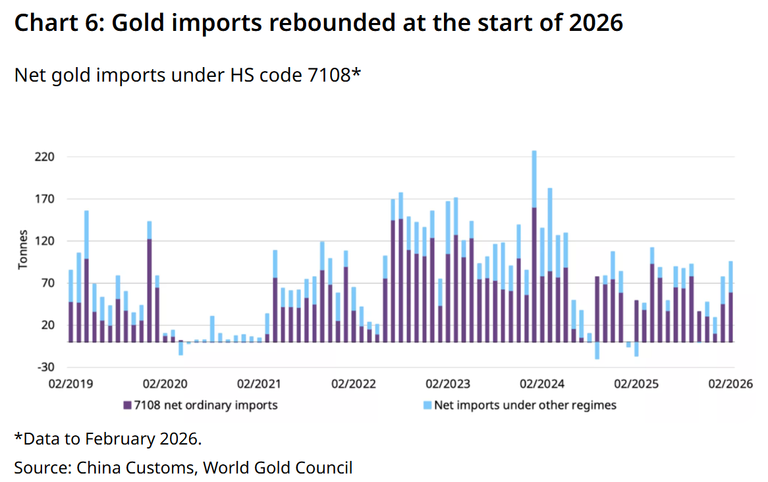
China’s net gold imports rose sharply at the start of the year. According to China Customs data cited by Jia, January net imports reached 77 tonnes, versus net exports of 6 tonnes in the same period last year.
In February, net imports totalled 96 tonnes, which was 63 tonnes higher year-on-year. Jia said resilient demand and a rebound in the local gold price premium supported importer interest.
What is the outlook for Chinese gold demand in Q2?
Q2 could be softer for jewellery demand, but investment demand may remain supported if bond yields fall and local investment alternatives stay limited. The path of the gold price will remain the key driver.
Jia said Q2 is traditionally the off-season for Chinese jewellery consumption. Still, he added that demand could improve if the gold price stabilizes.
He also said investment demand may gain support from declining bond yields and the lack of other local investment opportunities. However, he stressed that the gold price trajectory will remain central to investor decisions.
For Indian investors, that outlook is worth tracking closely. If Chinese ETF buying and official-sector demand stay strong while jewellery demand stabilizes, global bullion prices could stay supported, especially if the Indian rupee weakens against the U.S. dollar. The next major watchpoint is the World Gold Council’s Gold Demand Trends report due on 29 April, which should provide a fuller Q1 review and a more detailed Q2 outlook.