# Gold Mining Cash Flow Boom Exposes a Powerful Growth Problem
Gold producers are generating record free cash flow, profits, cash balances, and shareholder returns, but they still face a core problem: production growth remains limited. According to Joe Mazumdar, editor of Exploration Insights, higher gold prices have widened margins across the mining sector without fixing reserve replacement and new mine development challenges.
For Indian investors, this matters because mining-sector discipline, mergers and acquisitions, and constrained supply can shape the long-term outlook for global gold prices, bullion sentiment, and listed precious-metals equities linked to XAUUSD.
Why are gold miners generating record cash flow but still struggling to grow?
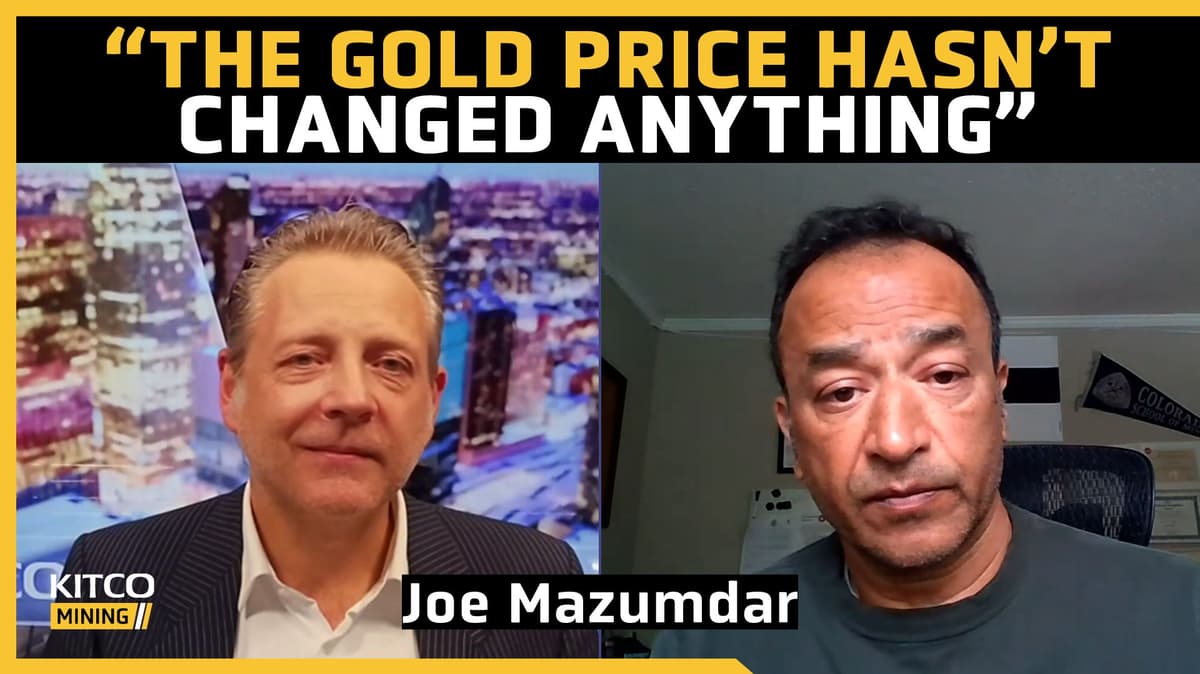
Gold miners are making more money because higher realized gold prices have boosted margins, but they are still struggling to replace reserves and add new production. Joe Mazumdar said during Kitco Mining’s Digging Deep on May 7 that the first-quarter 2026 earnings season showed a clear divide between stronger profitability and weak organic growth.
Mazumdar said higher gold prices have not changed the sector’s underlying growth problem. In his words, “The gold price hasn't changed anything,” referring to the limited impact that stronger bullion prices have had on expanding mineral inventories.
The issue is not access to cash. Producers are benefiting from higher realized prices, lower leverage, and better margins, but they still face difficulty advancing new projects without taking on greater development risk.
What is limiting organic production growth in gold mining?
The main constraint is not profitability but execution. Gold miners must replace depleted ounces, advance new mines, secure permits, and control capital costs, all while avoiding value destruction.
Mazumdar said producers are weighing whether it makes more sense to build new mines or buy producing assets. That choice has become more important as construction inflation, permitting delays, and underground project risk increase across the sector.
Which gold producers stood out in Q1 2026?
Newmont and Lundin Gold were standout performers in Q1 2026, according to Joe Mazumdar. He said both companies showed how higher gold prices can translate into stronger earnings, cash flow, and shareholder returns, even while broader sector growth remains constrained.
How did Newmont perform in Q1 2026?
Newmont impressed despite producing less gold. Mazumdar said Newmont produced 16% less gold in Q1 2026 than in Q1 2025, yet a 66% increase in the company’s recognized gold price helped lift EBITDA to about $5.1 billion, nearly double the prior-year period.
He also highlighted Newmont’s balance sheet strength, dividend commitments, and planned share buybacks. That combination suggests large producers can still reward shareholders even when output declines, as long as realized prices remain high.
Why did Lundin Gold stand out?
Lundin Gold stood out because of its free cash flow, strong margins, and high shareholder returns. Mazumdar said the company generated some of the highest shareholder returns in his peer group, with those returns supported entirely by dividends.
He added that the dividend also compensates investors for Lundin Gold’s single-asset exposure in Ecuador. That is an important distinction because concentrated asset risk can justify a higher payout profile.
Why are some gold producers not fully benefiting from higher gold prices?
Not all gold companies gain equally from a rising gold price because contract structures, cost inflation, financing charges, and project spending can dilute their exposure to bullion upside. Mazumdar said streaming agreements, elevated all-in sustaining costs, financing costs, and heavy capital deployment can all reduce leverage to the gold price.
How do streaming deals affect realized gold prices?
Streaming agreements can lower realized gold prices for miners even when spot gold rises. Mazumdar cited Centerra Gold’s Mount Milligan stream as a factor that reduced the company’s realized gold price in 2025.
That matters for investors because headline moves in XAUUSD or the international gold price do not always translate directly into earnings growth for every producer.
Why can project builders look weaker on cash flow metrics?
Companies building new mines or expanding projects can appear weaker on a free-cash-flow-yield basis because they are deploying capital upfront. Mazumdar said these businesses may look less attractive in the short term while project spending remains high.
For equity investors, this means free cash flow must be read alongside project stage, capital intensity, and long-term production potential.
Why is M&A becoming more attractive than building new gold mines?
Acquisitions are becoming more attractive because producing assets can be cheaper and less risky than developing new mines. Mazumdar said he has tracked 18 material transactions since July 2024, underscoring how strongly the industry is leaning toward M&A.
He said producers in his 30-company peer group were trading at more than $1,500 per reserve ounce after Q1 2026. By contrast, acquired assets were valued at roughly $828 per reserve ounce.
What do the reserve-ounce valuations tell investors?
The valuation gap suggests acquisitions can be accretive. If producers trade at more than $1,500 per reserve ounce but can buy assets at around $828 per reserve ounce, they may be able to add reserves more cheaply through deals than through new discoveries or mine builds.
Mazumdar said this also helps companies avoid permitting risk and capital escalation risk. He asked, “Why take the permitting risk? Why take the capital escalation risk that we're seeing in some of these underground projects when you could just get a producing asset that you like?”
Why are new mine builds becoming harder to justify?
New mine builds are becoming harder to justify because costs are rising fast. Mazumdar said higher construction costs are hurting the viability of some projects, especially underground developments, even with a stronger gold price environment.
He said, “The problem has been that the costs have been going up to build some of these projects, such that they might not be viable in this current environment.” That is a key signal for the long-term gold supply outlook.
For Indian investors, tighter global mine supply growth can support the medium-term gold price trend, especially when rupee weakness amplifies imported bullion costs in the domestic market.
How is exploration spending changing across the gold sector?
Exploration spending is rising, but Mazumdar said companies should not treat it as a short-term reaction to higher gold prices. He argued that exploration works best when companies run stable, multi-year programs rather than sharply increasing budgets every time bullion prices rally.
He summed it up clearly: “If the gold price goes up, you don't double it.”
Why is disciplined exploration important?
Disciplined exploration matters because resource growth takes time and requires geological understanding, not just larger budgets. Companies that chase short-term results may spend inefficiently or push projects forward before they properly understand a deposit.
That risk becomes more serious when early exploration success creates pressure to accelerate resource definition.
What execution problems are junior miners facing?
Junior miners are getting better financing conditions, which is supporting larger drill programs, but execution risk is also rising. Mazumdar said companies are competing for drill rigs, experienced crews, and assay capacity as exploration programs expand across Canada, Alaska, and other active jurisdictions.
He noted that assay turnaround times have stretched from roughly three to four weeks in more favorable periods to as long as three months during busy field seasons. He also said smaller programs may struggle to secure top drilling crews because contractors often prioritize larger, longer-term commitments.
What geological risk did Mazumdar highlight?
Mazumdar warned that some companies may move too quickly into infill drilling before they fully understand the geometry of a deposit. That can happen when strong early drill results encourage management teams to accelerate too fast.
For investors, that means early-stage gold discoveries may still carry significant execution and technical risk, even during a strong precious-metals market.
How are gold and mining companies simplifying their portfolios?
Mining companies are increasingly moving non-core assets into more focused vehicles. Mazumdar pointed to transactions involving Teck Resources, Kodiak Copper, BMetals, and Prospector Metals as examples of this trend.
Why are non-core asset spinouts gaining attention?
Non-core assets can become more valuable in a focused structure. Mazumdar said an asset that is non-core for one company is not necessarily immaterial; it may simply sit outside current capital allocation priorities.
In a more focused vehicle, that same asset can become central to the investment case. This type of portfolio optimization can unlock value while sharpening commodity or jurisdictional exposure.
What does this mean for gold prices and Indian investors?
The gold mining sector is financially stronger, but supply growth remains difficult. Record cash generation, higher margins, and stronger balance sheets are improving returns today, yet producers still face few easy growth options.
That combination matters for Indian investors because constrained mine supply can reinforce long-term support for global gold prices, especially when safe-haven demand, central bank buying, and rupee volatility already influence domestic bullion rates. If miners continue to favor acquisitions, disciplined exploration, and portfolio optimization over risky mine construction, the sector may stay profitable without delivering rapid output growth.
The key watchpoint now is whether gold producers use record cash flow to buy reserves, expand exploration carefully, or return even more capital to shareholders. That decision will shape future bullion supply, mining valuations, and the broader gold price outlook for investors tracking both international troy ounce prices and India’s rupee-based gold market.